Modi @ 12: Transforming India's National Psyche
NewsBharati 10-Jun-2026 15:29:28 PM
Total Views |


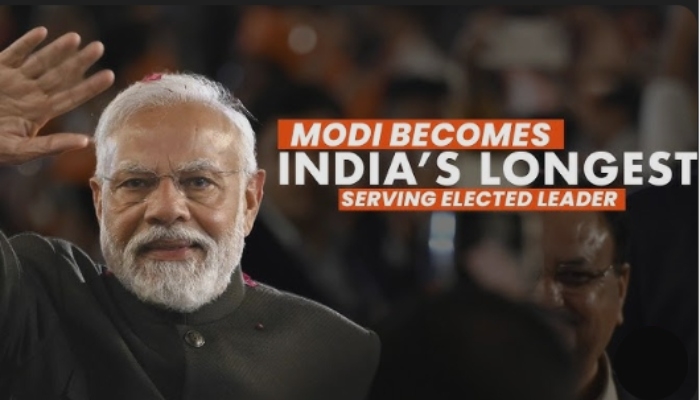
Narendra Modi has become the longest-serving Prime Minister by completing 12 consecutive years in office. Having served for 4,399 days and counting, his contribution to the nation and his years of public service place him in a category of his own, making comparisons with others largely redundant. He brought Hindutva to the centre stage of both national and state-level politics, reconnecting the nation with its civilisational ethos and cultural spirit. His leadership has not been confined to politics alone; it has influenced every sphere of national life, inspiring a new awakening, self-confidence, and sense of national purpose.
The political journey of Prime Minister Narendra Modi cannot be measured solely through electoral victories, governance initiatives, economic policies, or administrative reforms. His most enduring contribution may lie in the profound psychological transformation he has triggered within Indian society. Beyond politics and policy, Modi has reshaped the national mindset, replacing years of pessimism, frustration, and self-doubt with a renewed sense of confidence, pride, and aspiration. This shift has gradually become intertwined with a larger civilisational vision: the emergence of India as a Vishwaguru, a nation capable of providing leadership and direction to the world.
The political change of 2014 marked a significant break from this mindset. Modi's leadership style, characterised by clarity, decisiveness, and direct communication, introduced a new energy into public discourse. His ability to articulate a larger national purpose resonated with millions who were seeking hope and direction. Initiatives such as Swachh Bharat Abhiyan, Make in India, and Skill India were not merely government programmes. They served as instruments of psychological mobilisation, encouraging citizens to see themselves as active participants in national development rather than passive observers. The result was a visible shift from cynicism to engagement, from resignation to participation.

Whether every promise has been fulfilled remains open to debate, and political opponents continue to question the government's record. Yet the psychological impact of these initiatives cannot be ignored. Large sections of society began to believe once again that governance could deliver tangible outcomes and that the machinery of the state could function in the interests of ordinary people. Perhaps even more significant has been the shift from self-criticism to self-esteem. Post-independence India often struggled with a lingering colonial mindset. National achievements were frequently judged against Western standards, and there was a tendency to underestimate India's own civilisational strengths. Modi's political discourse has consciously challenged this tendency.

Perhaps the most visible psychological change has been the transition from a sense of defeat to a spirit of confidence. For much of its modern history, India was often perceived as reactive in its strategic outlook. Its responses to international challenges were frequently viewed as cautious and defensive. The Modi era has attempted to replace that image with one of confidence and assertiveness. Whether in matters of national security, diplomacy, economic policy, or technological advancement, the narrative of a "New India" has consistently emphasised strength, resilience, and ambition. Citizens increasingly see their country as capable of shaping events rather than merely responding to them.
The evidence of this psychological transformation can be found across society. The widespread public participation in cleanliness campaigns under Swachh Bharat reflected more than compliance with a government initiative; it reflected a growing sense of ownership and responsibility. The rapid adoption of digital payments demonstrated a willingness to embrace change and technological innovation. India's outreach during the COVID-19 pandemic through vaccine diplomacy enhanced the perception that the country could contribute meaningfully to global welfare. Likewise, the successful hosting of international events such as the G20 Summit reinforced India's image as an emerging global power.
 It would be simplistic, however, to suggest that this transformation has been universal or uncontested. Critics continue to point to economic challenges, social tensions, unemployment concerns, and persistent inequalities that complicate the narrative of unqualified optimism. These concerns remain part of India's democratic discourse and deserve attention. Yet even these disagreements reflect the emergence of a new psychological environment. Public expectations from leadership have risen considerably. Citizens are more politically engaged, more vocal, and more invested in the country's future. The intensity of contemporary debates itself suggests a society that is increasingly conscious of its national trajectory.
Ultimately, Narendra Modi's most significant achievement may not lie in any single policy, programme, or electoral success. It lies in his ability to reshape perceptions and aspirations. By transforming frustration into enthusiasm, anger into satisfaction, self-doubt into self-esteem, and defeatism into confidence, he has altered the emotional architecture of contemporary India. Simultaneously, he has embedded within public consciousness the larger aspiration of India reclaiming its place as a Vishwaguru. Such transformations are never permanent and cannot be sustained by rhetoric alone. They require continued economic progress, effective governance, and inclusive development. Nevertheless, the psychological shift that has occurred over the past decade remains one of the defining features of the Modi era.
Leadership, after all, is not merely about administering institutions. At its highest level, it is about shaping the collective consciousness of a people. By that measure, Narendra Modi's political legacy extends beyond government and enters the realm of national psychology. The imprint of that transformation may well outlast his tenure and continue to influence India's journey in the decades to come.
The political journey of Prime Minister Narendra Modi cannot be measured solely through electoral victories, governance initiatives, economic policies, or administrative reforms. His most enduring contribution may lie in the profound psychological transformation he has triggered within Indian society. Beyond politics and policy, Modi has reshaped the national mindset, replacing years of pessimism, frustration, and self-doubt with a renewed sense of confidence, pride, and aspiration. This shift has gradually become intertwined with a larger civilisational vision: the emergence of India as a Vishwaguru, a nation capable of providing leadership and direction to the world.
For several decades before Modi's rise to national prominence, a deep sense of disillusionment had taken root in public life. Governance was often synonymous with bureaucratic inertia, corruption scandals, indecisiveness, and policy paralysis. Many citizens had come to accept inefficiency as a permanent feature of the system. The prevailing belief was that meaningful change was difficult, if not impossible.
ALSO READ: Modi Government’s War Against Unnatural Demographic Change
The political change of 2014 marked a significant break from this mindset. Modi's leadership style, characterised by clarity, decisiveness, and direct communication, introduced a new energy into public discourse. His ability to articulate a larger national purpose resonated with millions who were seeking hope and direction. Initiatives such as Swachh Bharat Abhiyan, Make in India, and Skill India were not merely government programmes. They served as instruments of psychological mobilisation, encouraging citizens to see themselves as active participants in national development rather than passive observers. The result was a visible shift from cynicism to engagement, from resignation to participation.
An equally important transformation has been the movement from anger to satisfaction. Public anger had accumulated over years of corruption scandals, governance failures, and administrative inefficiency. Under Modi, a perception emerged that the government was becoming more responsive, accountable, and result-oriented. Schemes such as the Pradhan Mantri Jan Dhan Yojana, direct benefit transfers, and the rapid expansion of digital governance mechanisms created an impression of a state that was increasingly accessible to ordinary citizens.
Whether every promise has been fulfilled remains open to debate, and political opponents continue to question the government's record. Yet the psychological impact of these initiatives cannot be ignored. Large sections of society began to believe once again that governance could deliver tangible outcomes and that the machinery of the state could function in the interests of ordinary people. Perhaps even more significant has been the shift from self-criticism to self-esteem. Post-independence India often struggled with a lingering colonial mindset. National achievements were frequently judged against Western standards, and there was a tendency to underestimate India's own civilisational strengths. Modi's political discourse has consciously challenged this tendency.
By emphasising India's ancient heritage, cultural traditions, spiritual legacy, and intellectual contributions, he has sought to instil a renewed sense of national pride. Whether through the global promotion of yoga, the revival of cultural symbols, the celebration of India's civilisational continuity, or the assertion of India's interests on the world stage, the message has remained consistent: India should not view itself through the lens of inferiority. This rediscovery of self-worth has encouraged many Indians to see their nation not merely as a developing country striving to catch up with others, but as a civilisation with unique contributions to make to humanity. The idea that India can lead, rather than simply follow, has gained increasing acceptance.
It is within this context that the concept of Vishwaguru has acquired psychological and political significance. Far from being a mere slogan, it represents a larger reimagining of India's role in global affairs. The idea suggests that India can provide moral, cultural, intellectual, and civilisational leadership to a world grappling with challenges of conflict, identity, sustainability, and social fragmentation. Through the promotion of principles such as Vasudhaiva Kutumbakam, leadership in initiatives like the International Solar Alliance, and advocacy for a more balanced global order, India has increasingly projected itself as a nation capable of offering solutions rather than merely seeking them. For ordinary citizens, this vision generates a powerful sense of pride. It reinforces the belief that India's rise is not confined to economic growth alone but encompasses a broader mission of global relevance and responsibility.
Perhaps the most visible psychological change has been the transition from a sense of defeat to a spirit of confidence. For much of its modern history, India was often perceived as reactive in its strategic outlook. Its responses to international challenges were frequently viewed as cautious and defensive. The Modi era has attempted to replace that image with one of confidence and assertiveness. Whether in matters of national security, diplomacy, economic policy, or technological advancement, the narrative of a "New India" has consistently emphasised strength, resilience, and ambition. Citizens increasingly see their country as capable of shaping events rather than merely responding to them.
The success of programmes such as Digital India, the rapid expansion of technological infrastructure, and significant achievements in the space sector have reinforced this perception. India's lunar missions, particularly Chandrayaan, have become symbols of national capability and scientific excellence. They have strengthened the belief that India can accomplish goals once considered beyond its reach.
The evidence of this psychological transformation can be found across society. The widespread public participation in cleanliness campaigns under Swachh Bharat reflected more than compliance with a government initiative; it reflected a growing sense of ownership and responsibility. The rapid adoption of digital payments demonstrated a willingness to embrace change and technological innovation. India's outreach during the COVID-19 pandemic through vaccine diplomacy enhanced the perception that the country could contribute meaningfully to global welfare. Likewise, the successful hosting of international events such as the G20 Summit reinforced India's image as an emerging global power.
Ultimately, Narendra Modi's most significant achievement may not lie in any single policy, programme, or electoral success. It lies in his ability to reshape perceptions and aspirations. By transforming frustration into enthusiasm, anger into satisfaction, self-doubt into self-esteem, and defeatism into confidence, he has altered the emotional architecture of contemporary India. Simultaneously, he has embedded within public consciousness the larger aspiration of India reclaiming its place as a Vishwaguru. Such transformations are never permanent and cannot be sustained by rhetoric alone. They require continued economic progress, effective governance, and inclusive development. Nevertheless, the psychological shift that has occurred over the past decade remains one of the defining features of the Modi era.
Leadership, after all, is not merely about administering institutions. At its highest level, it is about shaping the collective consciousness of a people. By that measure, Narendra Modi's political legacy extends beyond government and enters the realm of national psychology. The imprint of that transformation may well outlast his tenure and continue to influence India's journey in the decades to come.

Editor's Desk
Editor's Desk