Modi Government’s War Against Unnatural Demographic Change
NewsBharati 27-May-2026 11:08:31 AM
Total Views |


India has finally decided to confront a truth that generations of political leadership either ignored, concealed, or cynically exploited for vote-bank gains unnatural demographic change is not merely a statistical issue; it is a civilisational, national security, and socio-political challenge. The Narendra Modi government’s decision to constitute a High-Level Committee on Demographic Change is therefore not just another administrative exercise. It is a historic national intervention aimed at protecting India’s sovereignty, social stability, and future identity.
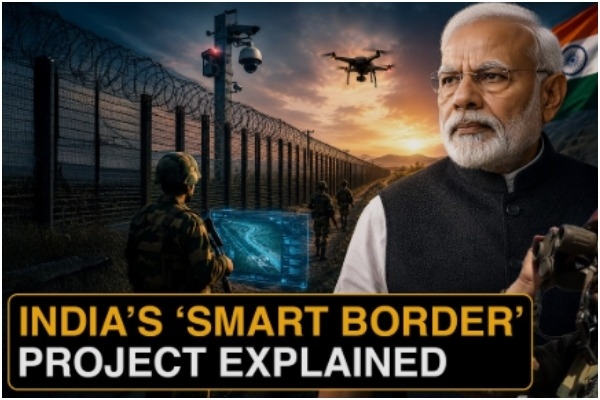 When Prime Minister Narendra Modi announced from the ramparts of the Red Fort on 15 August 2025 that the government would establish a committee to examine demographic change caused by illegal immigration and other unnatural factors, it sent a strong and overdue message the Indian state will no longer remain a silent spectator to systematic demographic distortions threatening national cohesion.
For decades, India has witnessed disturbing demographic shifts in several border and strategically sensitive states. Assam remains the most glaring example. Entire districts have seen dramatic population changes over the years, fundamentally altering the socio-political balance. What was once dismissed as “paranoia” by pseudo-secular commentators has now become undeniable reality. Illegal infiltration from Bangladesh, facilitated by porous borders, corrupt political patronage, and appeasement-driven silence, has transformed the demographic composition of several regions.
The consequences are visible everywhere. Indigenous communities feel culturally cornered. Land ownership patterns have changed. Political representation has shifted. Social tensions have intensified. Tribal identities face erosion. In many areas, the original inhabitants increasingly feel like minorities in their own homeland.
West Bengal presents another alarming case. Border districts have experienced rapid demographic shifts that have directly influenced electoral politics, local administration, and social dynamics. Successive regimes, particularly under appeasement-oriented politics, refused to acknowledge the scale of infiltration because illegal entrants gradually became a political constituency. National interest was sacrificed at the altar of electoral arithmetic.
The impact is not confined to the Northeast or eastern India. Border states and regions across the country have faced similar pressures. Illegal immigration affects employment patterns, strains welfare resources, increases pressure on land and infrastructure, and alters local economies. It also creates fertile ground for document fraud, human trafficking, smuggling networks, radicalisation, and organised crime.
Those who trivialise demographic change deliberately ignore global realities. No sovereign nation can remain indifferent to unchecked illegal migration and abnormal demographic transformation. Across the world, demographic balance influences politics, security policies, resource distribution, and cultural continuity. Yet in India, merely raising the issue invited accusations of “communalism” for decades. The result was paralysis.
The Modi government has broken that paralysis.
The significance of this committee lies in its recognition that demographic change is not only about numbers. It is about the future character of the nation. It directly affects law and order, electoral integrity, social harmony, and national security. Sudden and unnatural demographic alterations can produce deep fault lines within society. Competition for jobs, land, political power, and state benefits intensifies. Social distrust rises. Communal polarisation sharpens. Administrative systems become vulnerable to political manipulation.
More importantly, border infiltration weakens national sovereignty itself. A nation unable to identify who enters, settles, votes, and influences local power structures risks gradual internal destabilisation. History across continents shows that demographic aggression often achieves what military aggression cannot.
The tragedy is that previous governments lacked either the courage or the conviction to act decisively. They reduced national security concerns into electoral calculations. Illegal infiltration was often ignored because it served the interests of parties dependent on bloc voting and identity politics. Instead of protecting indigenous populations, these regimes frequently mocked those raising genuine concerns. Voices warning about demographic imbalance were labelled “extremist,” “divisive,” or “majoritarian.”
_202605271338539642_H@@IGHT_400_W@@IDTH_600.jpg "Modi Government’s War Against Unnatural Demographic Change 2") Today, many of those warnings stand vindicated.
Today, many of those warnings stand vindicated.
The Modi government’s approach represents a fundamental shift from denial to diagnosis, and from diagnosis to action. This committee’s mandate to conduct a comprehensive assessment of demographic changes due to illegal immigration and other unnatural causes is therefore crucial. Equally important is its task of analysing abnormal population shifts across religious and social communities and proposing planned, time-bound solutions.
This is precisely what responsible governance looks like.
Critics will inevitably attempt to communalise the issue because they have no substantive counterargument. But demographic stability is not a communal issue; it is a constitutional and national imperative. Every sovereign state has the right and duty to protect its borders, preserve social balance, and ensure lawful citizenship processes. Ignoring illegal demographic transformation in the name of fake secularism is not liberalism it is national negligence.
The committee also carries enormous significance for tribal and indigenous societies. Several tribal communities in border regions have long feared cultural extinction due to large-scale settlement patterns and demographic pressure. Protecting these vulnerable communities is not only a constitutional responsibility but also a moral obligation. Their language, culture, land rights, and identity cannot be sacrificed for political expediency.
India stands at a historic crossroads. One path leads toward continued denial, appeasement politics, and gradual internal fragmentation. The other path leads toward national clarity, demographic accountability, and long-term stability. By constituting this committee, the Modi government has chosen the second path.
This decision will likely be remembered as one of the most consequential governance measures of modern India a moment when the Indian state finally acknowledged that sovereignty is not protected only at the borders but also through demographic integrity within them.
The time for political cowardice is over. The time for decisive national action has arrived. Under the leadership of Narendra Modi, India is finally addressing a challenge that previous governments lacked the will to confront. This is not merely policy. It is national duty. It is historic correction. And above all, it is an assertion that India’s future will not be surrendered to infiltration, appeasement, and demographic manipulation.
The newly constituted committee, chaired by Justice Prakash Prabhakar Naolekar (Retd), with distinguished members including Dr. Shamika Ravi, former IAS officer Durga Shankar Mishra, and former IPS officer Balaji Srivastava, carries immense responsibility. The inclusion of the Census Commissioner and the Ministry of Home Affairs underlines the seriousness of the matter. This is not rhetoric. It is structured state action.
For decades, India has witnessed disturbing demographic shifts in several border and strategically sensitive states. Assam remains the most glaring example. Entire districts have seen dramatic population changes over the years, fundamentally altering the socio-political balance. What was once dismissed as “paranoia” by pseudo-secular commentators has now become undeniable reality. Illegal infiltration from Bangladesh, facilitated by porous borders, corrupt political patronage, and appeasement-driven silence, has transformed the demographic composition of several regions.
The consequences are visible everywhere. Indigenous communities feel culturally cornered. Land ownership patterns have changed. Political representation has shifted. Social tensions have intensified. Tribal identities face erosion. In many areas, the original inhabitants increasingly feel like minorities in their own homeland.
West Bengal presents another alarming case. Border districts have experienced rapid demographic shifts that have directly influenced electoral politics, local administration, and social dynamics. Successive regimes, particularly under appeasement-oriented politics, refused to acknowledge the scale of infiltration because illegal entrants gradually became a political constituency. National interest was sacrificed at the altar of electoral arithmetic.
The impact is not confined to the Northeast or eastern India. Border states and regions across the country have faced similar pressures. Illegal immigration affects employment patterns, strains welfare resources, increases pressure on land and infrastructure, and alters local economies. It also creates fertile ground for document fraud, human trafficking, smuggling networks, radicalisation, and organised crime.
Those who trivialise demographic change deliberately ignore global realities. No sovereign nation can remain indifferent to unchecked illegal migration and abnormal demographic transformation. Across the world, demographic balance influences politics, security policies, resource distribution, and cultural continuity. Yet in India, merely raising the issue invited accusations of “communalism” for decades. The result was paralysis.
The Modi government has broken that paralysis.
The significance of this committee lies in its recognition that demographic change is not only about numbers. It is about the future character of the nation. It directly affects law and order, electoral integrity, social harmony, and national security. Sudden and unnatural demographic alterations can produce deep fault lines within society. Competition for jobs, land, political power, and state benefits intensifies. Social distrust rises. Communal polarisation sharpens. Administrative systems become vulnerable to political manipulation.
More importantly, border infiltration weakens national sovereignty itself. A nation unable to identify who enters, settles, votes, and influences local power structures risks gradual internal destabilisation. History across continents shows that demographic aggression often achieves what military aggression cannot.
The tragedy is that previous governments lacked either the courage or the conviction to act decisively. They reduced national security concerns into electoral calculations. Illegal infiltration was often ignored because it served the interests of parties dependent on bloc voting and identity politics. Instead of protecting indigenous populations, these regimes frequently mocked those raising genuine concerns. Voices warning about demographic imbalance were labelled “extremist,” “divisive,” or “majoritarian.”
The Modi government’s approach represents a fundamental shift from denial to diagnosis, and from diagnosis to action. This committee’s mandate to conduct a comprehensive assessment of demographic changes due to illegal immigration and other unnatural causes is therefore crucial. Equally important is its task of analysing abnormal population shifts across religious and social communities and proposing planned, time-bound solutions.
This is precisely what responsible governance looks like.
Critics will inevitably attempt to communalise the issue because they have no substantive counterargument. But demographic stability is not a communal issue; it is a constitutional and national imperative. Every sovereign state has the right and duty to protect its borders, preserve social balance, and ensure lawful citizenship processes. Ignoring illegal demographic transformation in the name of fake secularism is not liberalism it is national negligence.
The committee also carries enormous significance for tribal and indigenous societies. Several tribal communities in border regions have long feared cultural extinction due to large-scale settlement patterns and demographic pressure. Protecting these vulnerable communities is not only a constitutional responsibility but also a moral obligation. Their language, culture, land rights, and identity cannot be sacrificed for political expediency.
ALSO RAED: Saffron Surge In Falta
This decision will likely be remembered as one of the most consequential governance measures of modern India a moment when the Indian state finally acknowledged that sovereignty is not protected only at the borders but also through demographic integrity within them.
The time for political cowardice is over. The time for decisive national action has arrived. Under the leadership of Narendra Modi, India is finally addressing a challenge that previous governments lacked the will to confront. This is not merely policy. It is national duty. It is historic correction. And above all, it is an assertion that India’s future will not be surrendered to infiltration, appeasement, and demographic manipulation.

Editor's Desk
Editor's Desk