From ‘Politics of Patronage’ to ‘Politics of Performance’
NewsBharati 12-Jun-2026 17:05:50 PM
Total Views |


In recent months, many high-visibility infrastructure inaugurations and project completions have brought the question of governance delivery back into focus. These events are no longer mere administrative milestones; they have become central to political messaging and public evaluation of the state’s effectiveness.
This renewed attention to execution merits a study on how governance is being assessed in India today. The emphasis seems to be shifting from intent and announcement to measurable outcomes and delivery. Does this represent a deeper structural change in India’s political and administrative approach, or is it a continuation of existing patterns under a different narrative?
The Era of Leaky Buckets
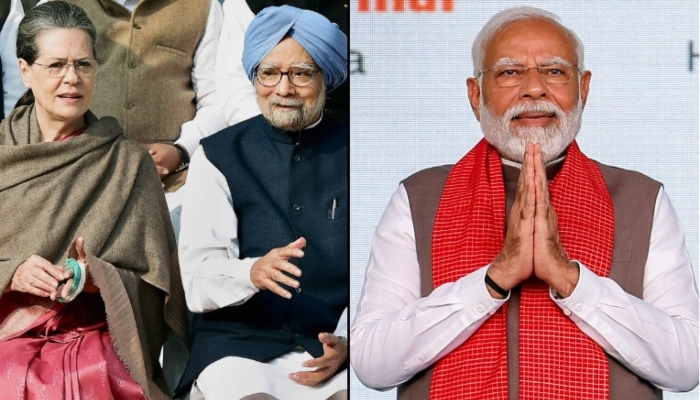
The UPA era was described as “One of its most glaring legacies was the hardest to measure: the deep sense of uncertainty that pervades the economy, an affliction Indians have dubbed “policy paralysis.”
The leadership of that era often found itself entangled in the "compulsions of coalition politics”. In this ecosystem, the "middleman" was king. Resources intended for the poor were often siphoned off long before they reached the intended doorstep.
Political Will: From Foundation Stones to Ribbon Cutting
In the old paradigm, the laying of a foundation stone was often the climax of a project, often followed by years of neglect. The politics of performance has flipped this script. There is now a visible commitment to execution and timelines.
The construction work for the soon-to-be inaugurated Delhi-Dehradun expressway started in 2021. Construction of AIIMS Rajkot started in December 2020 and was completed in February 2024. The speed of National Highway construction rose by 143%, from 12.1 km/day in 2014 to 28.3 km/day in 2024, with a peak of 37 km/day in 2020–21 (PIB, 2024). Railway electrification expanded from 21,801 km in 2014 to over 61,500 km (about 94% of the Broad Gauge network) by late 2023 (PIB, 2024).

Breaking the Dynastic Ceiling
A defining feature of the pre-2014 landscape was the prevalence of dynastic politics. Many political parties often functioned like family enterprises. Leadership was inherited rather than achieved. This created a glass ceiling for grassroots workers and fostered an environment where loyalty to a Family superseded accountability to the electorate.
The Rise of the 'Labharthi'
Perhaps the most significant shift is the weakening of traditional divisive agendas. For decades, electoral arithmetic was a calculation of caste blocs and linguistic identities. Earlier, the goal of politics was to consolidate specific voters by appeasing them.

By delivering services directly via the JAM (Jan Dhan-Aadhaar-Mobile) Trinity, the system intends to bypass the corrupt middlemen. Direct Benefit Transfer has brought revolutionary change in this scenario. DBT replaced subsidy pipelines with direct, targeted transfers. The newly developed Welfare Efficiency Index (WEI), which quantifies fiscal and social gains, surged from 0.32 in 2014 to 0.91 in 2023, underscoring systemic improvements.
When a toilet is built or electricity reaches a remote village, it does not ask for the residents' caste. This model of governance blurs the lines of identity politics, replacing them with a shared identity of empowered citizenship.
The New Equilibrium
The transition from 2014 to the present represents a maturing of Indian democracy. The vested interests that held the administration hostage are being slowly dismantled by digitisation and transparency. While challenges like bureaucratic inertia and regional disparities remain, the benchmark for political success has been irrevocably altered.
This renewed attention to execution merits a study on how governance is being assessed in India today. The emphasis seems to be shifting from intent and announcement to measurable outcomes and delivery. Does this represent a deeper structural change in India’s political and administrative approach, or is it a continuation of existing patterns under a different narrative?
The Era of Leaky Buckets
Until a decade ago, the Indian administrative system was frequently described as a leaky bucket. A former Prime Minister himself described the system as one that only delivers 15 paise where 1 rupee ought to have been given. It was a system where decisions were often suspended in a web of multi-layered clearances and discretionary powers.
The UPA era was described as “One of its most glaring legacies was the hardest to measure: the deep sense of uncertainty that pervades the economy, an affliction Indians have dubbed “policy paralysis.”
The leadership of that era often found itself entangled in the "compulsions of coalition politics”. In this ecosystem, the "middleman" was king. Resources intended for the poor were often siphoned off long before they reached the intended doorstep.
Political Will: From Foundation Stones to Ribbon Cutting
The Saryu Nahar National Project was officially launched in 1978. The project remained incomplete due to inadequate funding and inter-departmental delays. It was finally inaugurated in 2021 to provide water to farmers in eastern UP. A feasibility study of the Atal Tunnel in Rohtang was done in 1990, its approach road was initiated in 2002, and the foundation was laid in 2010. The tunnel was completed after over a decade of construction in October 2020.
In the old paradigm, the laying of a foundation stone was often the climax of a project, often followed by years of neglect. The politics of performance has flipped this script. There is now a visible commitment to execution and timelines.
The construction work for the soon-to-be inaugurated Delhi-Dehradun expressway started in 2021. Construction of AIIMS Rajkot started in December 2020 and was completed in February 2024. The speed of National Highway construction rose by 143%, from 12.1 km/day in 2014 to 28.3 km/day in 2024, with a peak of 37 km/day in 2020–21 (PIB, 2024). Railway electrification expanded from 21,801 km in 2014 to over 61,500 km (about 94% of the Broad Gauge network) by late 2023 (PIB, 2024).
This is a hallmark of political will to ensure "conception to completion". The focus is no longer just on announcing a scheme, but on its delivery.
Breaking the Dynastic Ceiling
A defining feature of the pre-2014 landscape was the prevalence of dynastic politics. Many political parties often functioned like family enterprises. Leadership was inherited rather than achieved. This created a glass ceiling for grassroots workers and fostered an environment where loyalty to a Family superseded accountability to the electorate.
The post-2014 era challenged this status quo by emphasising meritocracy and grassroots mobilisation. While dynasties still exist, they now face a "performance tax” levied by an aware populace. The narrative has shifted: the voter no longer asks who your father was, but, "What have you delivered?" This mindset shift has strengthened the democratic setup of this country.
The Rise of the 'Labharthi'
Perhaps the most significant shift is the weakening of traditional divisive agendas. For decades, electoral arithmetic was a calculation of caste blocs and linguistic identities. Earlier, the goal of politics was to consolidate specific voters by appeasing them.
Post-2014, a new demographic emerged that transcends these ancient fault lines: the "Labharthi". This group is defined not by whom they worship or the language they speak, but by the tangible assets they have received from the state - be it a gas connection (Ujjwala), a bank account (Jan Dhan), or a roof over their heads (Awas Yojana).
By delivering services directly via the JAM (Jan Dhan-Aadhaar-Mobile) Trinity, the system intends to bypass the corrupt middlemen. Direct Benefit Transfer has brought revolutionary change in this scenario. DBT replaced subsidy pipelines with direct, targeted transfers. The newly developed Welfare Efficiency Index (WEI), which quantifies fiscal and social gains, surged from 0.32 in 2014 to 0.91 in 2023, underscoring systemic improvements.
When a toilet is built or electricity reaches a remote village, it does not ask for the residents' caste. This model of governance blurs the lines of identity politics, replacing them with a shared identity of empowered citizenship.
The New Equilibrium
The transition from 2014 to the present represents a maturing of Indian democracy. The vested interests that held the administration hostage are being slowly dismantled by digitisation and transparency. While challenges like bureaucratic inertia and regional disparities remain, the benchmark for political success has been irrevocably altered.

Varada Marathe
Varada Marathe