Balambhatdada Deodhar: The man who turned a wooden pole into a civilisational legacy
NewsBharati 15-Jun-2026 18:07:35 PM
Total Views |


Every year, Mallakhamb practitioners across India celebrate June 15 as Mallakhamb Day. The date is associated with a remarkable episode from the life of Balambhat Dada Deodhar, the legendary wrestling guru credited with developing the wooden Mallakhamb as a training discipline.
Tradition holds that it commemorates his famous victory over powerful wrestlers patronised by the Nizam of Hyderabad, a triumph that became more than a sporting achievement. It symbolised the power of skill, discipline, and indigenous knowledge over brute strength.
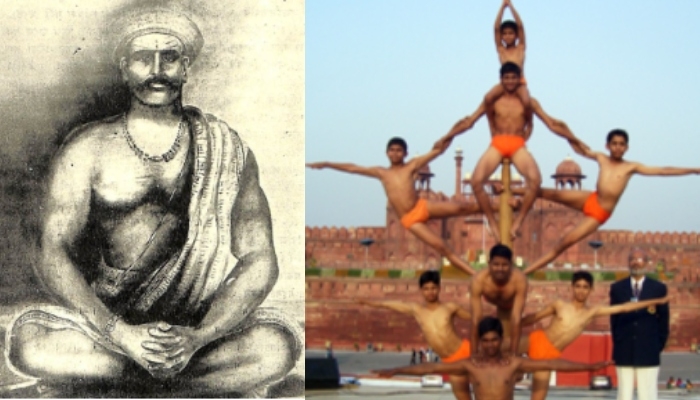
Balambhat lived during the closing years of the Maratha Empire and served as the court gymnast and wrestling guru of Peshwa Bajirao II in Pune. When two celebrated wrestlers, Ali and Gulab, arrived from Hyderabad and challenged the Peshwa's champions, the stakes were high. Their reputation was formidable, and defeat would have dented the prestige of the Maratha court. Faced with this challenge, Balambhat sought time to prepare, setting in motion a journey that would eventually give birth to Mallakhamb itself.
The training proved transformative. When the long-awaited wrestling contest took place, Balambhat Dada reportedly defeated Ali using innovative techniques and holds. His victory was not merely personal. It demonstrated that creativity, discipline, and indigenous knowledge could overcome seemingly insurmountable odds.
Yet his greatest achievement lay beyond the wrestling arena.

Balambhat's influence spread through his students and disciples. Talims across Pune adopted Mallakhamb training. His pupils came from diverse social and religious backgrounds, reflecting the inclusive spirit of traditional Indian akharas. One of his most famous disciples, Takejamal, was an orphan whom Balambhat Dada adopted and trained. Such stories reveal that his vision extended beyond physical excellence; it was also about nurturing human potential.
His reputation travelled so far that traditions associated with him endured long after his lifetime. In parts of North India, wrestlers would reportedly offer a coconut in his honour alongside prayers to Lord Hanuman. Such reverence is rarely granted to a mere sports instructor. It reflects the esteem reserved for a guru who shaped an entire tradition.
Today, Mallakhamb is gaining recognition worldwide. Demonstrations are held across continents, and efforts are underway to secure broader international acceptance for the sport. Yet in celebrating Mallakhamb's growing popularity, India must not forget the man who laid its foundations.
Balambhat's story carries a lesson that remains relevant in the twenty-first century. A society that loses touch with its indigenous knowledge systems risks losing confidence in itself. Mallakhamb is not simply an athletic discipline; it is a living expression of Indian ingenuity, resilience, and cultural memory.
Protecting Mallakhamb, therefore, is about much more than preserving a sport. It is about safeguarding a legacy of self-reliance, self-respect, and civilisational confidence. Every time a young athlete climbs a Mallakhamb pole, they are unknowingly participating in a tradition that began with one man's determination to find answers within his own culture.
Balambhat Dada Deodhar may not occupy the pages of mainstream history books, but his legacy continues to stand tall, quite literally, on every Mallakhamb pole across India.
Tradition holds that it commemorates his famous victory over powerful wrestlers patronised by the Nizam of Hyderabad, a triumph that became more than a sporting achievement. It symbolised the power of skill, discipline, and indigenous knowledge over brute strength.
Long before Mallakhamb became a competitive sport, long before it found a place in international demonstrations and modern gymnasiums, it emerged from a quest for self-improvement and innovation. At the centre of that story stands Balambhat, a figure whose contribution extends far beyond physical culture. His life represents a deeper Indian idea: the confidence to look within one's own traditions for solutions, inspiration, and strength.
Balambhat Dada Deodhar, the legendary wrestling guru credited with developing the wooden Mallakhamb (L)
Balambhat lived during the closing years of the Maratha Empire and served as the court gymnast and wrestling guru of Peshwa Bajirao II in Pune. When two celebrated wrestlers, Ali and Gulab, arrived from Hyderabad and challenged the Peshwa's champions, the stakes were high. Their reputation was formidable, and defeat would have dented the prestige of the Maratha court. Faced with this challenge, Balambhat sought time to prepare, setting in motion a journey that would eventually give birth to Mallakhamb itself.
Observing monkeys leaping, swinging, and balancing effortlessly among trees, Balambhat Dada recognised movements that could strengthen the human body in extraordinary ways. He erected a wooden pole and began practising on it, adapting these observations into a training system. Whether one views the story as history, legend, or a blend of both, its deeper message is significant. Instead of borrowing from elsewhere, he looked within his own surroundings, traditions, and cultural worldview to solve a problem. That is the essence of swabodh—the confidence to discover answers from one's own civilisational resources.
The training proved transformative. When the long-awaited wrestling contest took place, Balambhat Dada reportedly defeated Ali using innovative techniques and holds. His victory was not merely personal. It demonstrated that creativity, discipline, and indigenous knowledge could overcome seemingly insurmountable odds.
Yet his greatest achievement lay beyond the wrestling arena.
The wooden pole he developed evolved into Mallakhamb, one of India's most unique physical traditions. Combining strength, flexibility, balance, agility, concentration, and courage, Mallakhamb became far more than a training aid for wrestlers. It emerged as a complete system of physical culture rooted in Indian thought.
Balambhat's influence spread through his students and disciples. Talims across Pune adopted Mallakhamb training. His pupils came from diverse social and religious backgrounds, reflecting the inclusive spirit of traditional Indian akharas. One of his most famous disciples, Takejamal, was an orphan whom Balambhat Dada adopted and trained. Such stories reveal that his vision extended beyond physical excellence; it was also about nurturing human potential.
The fall of the Peshwa in 1818 did not end his mission. Accompanying Bajirao II to Bithoor, Balambhat established wrestling schools and gymnasiums across North India. His students learned wrestling, Mallakhamb, swordsmanship, stick fighting, and other traditional disciplines. Through these institutions, he ensured that indigenous systems of physical education survived a period of profound political upheaval.
His reputation travelled so far that traditions associated with him endured long after his lifetime. In parts of North India, wrestlers would reportedly offer a coconut in his honour alongside prayers to Lord Hanuman. Such reverence is rarely granted to a mere sports instructor. It reflects the esteem reserved for a guru who shaped an entire tradition.
Today, Mallakhamb is gaining recognition worldwide. Demonstrations are held across continents, and efforts are underway to secure broader international acceptance for the sport. Yet in celebrating Mallakhamb's growing popularity, India must not forget the man who laid its foundations.
Balambhat's story carries a lesson that remains relevant in the twenty-first century. A society that loses touch with its indigenous knowledge systems risks losing confidence in itself. Mallakhamb is not simply an athletic discipline; it is a living expression of Indian ingenuity, resilience, and cultural memory.
Protecting Mallakhamb, therefore, is about much more than preserving a sport. It is about safeguarding a legacy of self-reliance, self-respect, and civilisational confidence. Every time a young athlete climbs a Mallakhamb pole, they are unknowingly participating in a tradition that began with one man's determination to find answers within his own culture.
Balambhat Dada Deodhar may not occupy the pages of mainstream history books, but his legacy continues to stand tall, quite literally, on every Mallakhamb pole across India.
Rajesh Korde
Journalist having more than three decades of experience with many newspapers in Goa, Pune, Karnavati (Ahmedabad) and Abu Dhabi (UAE). A visting faculty at many Journalism Schools, is now pursuing third Masters – MA in Indology. Also an avid traveller and a photographer