UBT Sena's Empty Chairs Tell a Bigger Story
Across the country, voters are increasingly questioning the automatic transfer of political leadership from one generation to another.
NewsBharati 15-Jun-2026 16:57:34 PM
Total Views |


Politics is often about symbolism. Sometimes what happens inside a meeting is less important than who chooses not to attend it. The absence of five out of nine MPs at the parliamentary meeting convened by Uddhav Thackeray on Sunday has triggered precisely such a debate. While party leaders are busy offering explanations, the empty chairs have raised uncomfortable questions about the state of the Shiv Sena (UBT), the authority of its leadership, and its future as a political force.
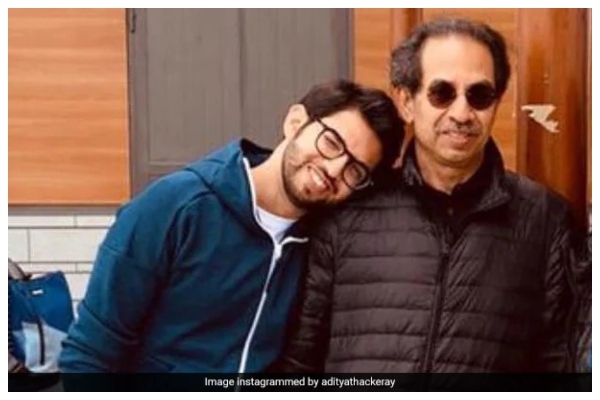
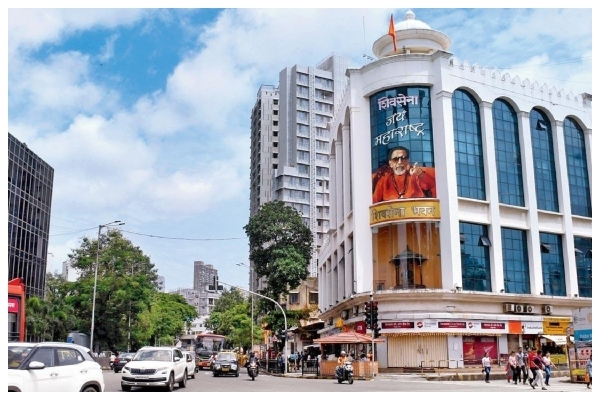
The immediate attempt has been to dismiss the issue as routine. However, in politics, numbers matter. When a majority of a party's MPs stay away from a meeting called by the party chief, it is difficult to portray the development as insignificant. The incident has strengthened the growing perception that all is not well within the party and that the possibility of another split can no longer be ruled out.
More importantly, it reflects a deeper crisis of authority. Uddhav Thackeray inherited the Shiv Sena from Balasaheb Thackeray, whose word was final within the organisation. Whether one agreed with him or not, Balasaheb commanded unquestioned loyalty. Today, the situation appears markedly different. The absence of a majority of MPs from a meeting called by Uddhav raises an unavoidable question: has he lost the moral and political authority required to hold the organisation together?
The answers offered by the absentee MPs have only added to the scepticism. Their explanations sounded less like convincing political reasons and more like excuses crafted in haste. If anything, the explanations have fuelled speculation rather than silenced it. Maharashtra's political circles are unlikely to accept such reasons at face value.
The larger reality is that the Shiv Sena (UBT) appears to be struggling with an existential crisis. As an organisation, it looks increasingly inactive and directionless. Since its crushing setbacks in recent political battles, the party has largely retreated into a shell. It lacks visible mass programmes, sustained political campaigns, or any organisational expansion strategy. A party that once dominated Maharashtra's political discourse now finds itself reacting to events rather than shaping them.ALSO READ: The final question of belonging: A marriage, a funeral, and the power of religion
Geographically too, its influence appears increasingly restricted. What was once a statewide force has gradually shrunk into a party dependent on a handful of pockets in Mumbai and its surrounding areas. Beyond these strongholds, its political footprint appears weak and uncertain. Elections have repeatedly exposed this reality.
The leadership style has also come under scrutiny. Uddhav Thackeray continues to operate with methods that may have worked in a different era but appear increasingly ineffective in contemporary politics. Politics today demands constant public engagement, organisational mobility, and aggressive communication. But Uddhav is often criticised for remaining confined to Matoshree and maintaining a distant style of leadership. While rivals travel extensively, build grassroots networks and remain visible among workers, the UBT leadership often appears detached from the political battlefield.The party's internal tensions are no longer a matter of speculation. Reports of factionalism, dissatisfaction, and competing power centres have become regular features of Maharashtra's political discourse. When such reports persist for months and begin manifesting themselves in public events such as Sunday's meeting, they can no longer be dismissed as rumours.
Perhaps the clearest indication of the party's desperation was Uddhav Thackeray's decision to join hands with his cousin Raj Thackeray. For decades, the two represented rival political streams and engaged in bitter political battles. The sudden attempt at reconciliation was presented as a historic moment. In reality, it appeared more like a survival strategy than a political vision. More importantly, it failed to generate the expected enthusiasm among voters. Political arithmetic cannot always overcome a credibility deficit.
At the heart of the crisis lies a question of ideology. Uddhav Thackeray's biggest political mistake was abandoning the ideological foundation on which the Shiv Sena was built. By aligning with forces that many traditional Sena supporters view as hostile to Hindutva, he alienated a substantial section of the party's natural voter base. Elections thereafter delivered a clear verdict. Voters felt betrayed and punished the party accordingly. The belief that the party could retain its traditional supporters while simultaneously embracing ideological opposites proved to be a grave miscalculation.
Politics offers second chances, but only when parties are willing to introspect honestly. There is little evidence that such introspection has taken place. Instead, the leadership appears determined to continue on the same path while expecting different results.
ALSO READ: 'Pushpa' folds hands in apology as police parade him through Bengal streets; know here why was he arrested
Adding to these concerns is the visible effort to promote Aaditya Thackeray as the party's future leader. Political succession within families is not new in India, but public patience with dynastic politics is visibly declining. Across the country, voters are increasingly questioning the automatic transfer of political leadership from one generation to another. The assumption that a surname alone can guarantee political legitimacy is no longer as secure as it once was.
The experience of several regional parties demonstrates this reality. Political inheritance can provide an initial advantage, but it cannot substitute for organisational strength, ideological clarity, or popular acceptance. The challenges facing the UBT camp today are far deeper than the question of succession.
The five empty chairs at Sunday's meeting therefore represent more than mere absenteeism. They symbolise a party confronting uncomfortable realities: declining organisational strength, shrinking political relevance, ideological confusion, leadership challenges, and growing internal dissatisfaction. The writing on the wall is becoming increasingly difficult to ignore.
Satyajit Shriram Joshi
Satyajit Shriram Joshi is Pune based senior journalist.