Congress's Politics of Intellectual Untouchability in Kerala
The real issue is whether India"s democratic space will permit engagement across ideological lines. If attending a lecture becomes an offence, then the threat is not to secularism but to freedom itself.
NewsBharati 16-Jun-2026 10:56:01 AM
Total Views |


The outrage expressed by Kerala Chief Minister of Congress V.D. Satheeshan over the participation of three university Vice-Chancellors in an Rashtriya Swayamsevak Sangh (RSS) programme has once again exposed a deeply ingrained tendency within the Congress ecosystem, which is marked by intolerance towards ideological opponents. While Congress leaders routinely preach constitutional values, pluralism and freedom of expression, their conduct often reveals a very different reality when it comes to the RSS.
 The question is simple. What exactly was the crime committed by these Vice-Chancellors? Did they violate any law? The Constitution of India guarantees every citizen fundamental rights, including freedom of thought, association and expression. Vice-Chancellors do not cease to be citizens merely because they occupy academic offices. They possess the same constitutional protections as every other Indian. Ironically, those who constantly claim ownership of the Constitution appear unwilling to extend its protections to individuals whose views differ from their own.
What makes Satheeshan's criticism even more remarkable is the charge of hypocrisy surrounding it. BJP leader K. Surendran quickly shared photographs showing Satheeshan himself inaugurating a birth centenary programme of the second RSS Sarsanghchalak Golwalkar Guruji, in 2006. If attending or addressing an RSS-linked event is such a grave offence, then Satheeshan owes Kerala an explanation before demanding apologies from others.
This hostility is rooted not merely in political competition but also in an inability to accept ideological diversity. Congress often speaks of inclusiveness but struggles to tolerate viewpoints outside its own ecosystem. Whether it was Dr. B.R. Ambedkar's sharp criticism of Congress leadership, opposition from Communist movements, or the rise of Hindutva-based politics, Congress has frequently reacted with suspicion rather than engagement.
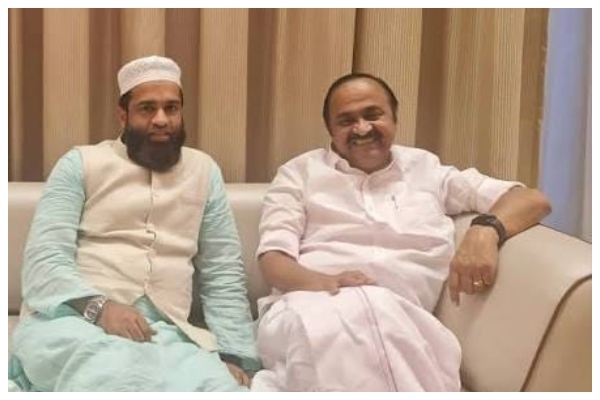
Kerala itself offers a revealing example. The same political class that sees danger in academics attending an RSS programme has rarely shown comparable concern when Congress enters electoral understandings with organisations, whose ideological positions are far more contentious. Satheeshan has never displayed similar outrage over Congress's association with the Indian Union Muslim League. Nor has the Congress ecosystem consistently maintained the same distance from organisations like Popular Front of India that seeks to mobilize Muslim community explicitly on religious lines. This happens as such alliances appear politically beneficial.
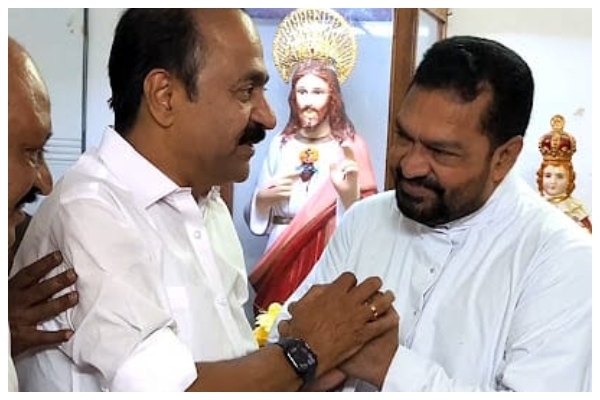
This selective outrage exposes the real issue. The objection is not communalism. The objection is Hindutva. Had these Vice-Chancellors attended a gathering organised by influential Christian institutions or Muslim organisations, it is difficult to imagine a similar political storm. Congress's discomfort with ideological opponents has historical roots. Even Prime Minister Jawaharlal Nehru was not immune to this tendency. In 1959, the Nehru-led Central Government dismissed Kerala's elected Communist government headed by E.M.S. Namboodiripad through Article 356. Whatever justification was offered at the time, the episode remains one of the most controversial uses of Central power against a democratically elected state government. Those lecturing others today about democratic propriety would do well to remember that history.
Equally telling is the silence that has often surrounded political violence against RSS workers in Kerala. For decades, numerous RSS volunteers became victims of brutal political clashes. But the moral outrage displayed over Vice-Chancellors attending a lecture was never visible when ideological workers were losing their lives. Such selective morality weakens claims of constitutional commitment.
What truly worries Congress is not the attendance of three Vice-Chancellors. It is the growing social acceptance of the RSS. The Sangh today engages with professionals, academics, entrepreneurs, students and civil society figures across the country. Attempts to isolate it politically have repeatedly failed. Every effort to stigmatise engagement with the RSS only reinforces the perception that its critics fear open debate. Similar attitudes have surfaced elsewhere. Karnataka minister Priyank Kharge's repeated remarks targeting RSS-linked activities reflect the same political instinct like delegitimize engagement rather than confront ideas through argument. Former Chief Minister of Rajasthan Ashok Gehlot also said that Indira Gandhi would have banned BJP. All this shows a serious allergy to Hindutva. But such strategies have yielded diminishing returns. The more the RSS is attacked merely for existing, the more unreasonable its critics appear.
Satheeshan's remarks therefore deserve serious scrutiny. When a senior political leader suggests that academics should apologise simply for attending a public lecture by a lawful organisation, it raises troubling questions about intellectual freedom. Universities are meant to encourage inquiry, discussion and exposure to diverse viewpoints not ideological conformity. For the RSS, these attacks are unlikely to matter. The organisation has survived bans, political hostility, misinformation campaigns and sustained opposition over the past century. It has emerged stronger after every challenge because its growth has been rooted in society rather than state patronage.
The real issue is not the RSS. The real issue is whether India's democratic space will permit engagement across ideological lines. If attending a lecture becomes an offence, then the threat is not to secularism but to freedom itself. Satheeshan's comments reveal less about the RSS and more about the insecurity of those who cannot accept that ideas they oppose continue to find acceptance among the people. The deeper problem is the growing culture of intellectual untouchability being promoted by sections of the political establishment. In a democracy, disagreement cannot become a ground for social or boycott. Treating engagement with certain ideas as illegitimate is fundamentally authoritarian.
The latest episode took place after three Vice-Chancellors in Kerala, including Dr. Mohanan Kunnummel, Dr. D. Mavoothu and Dr. Prasad attended a special invitees’ programme in Thiruvananthapuram addressed by RSS Sarsanghchalak Dr. Mohanrao Bhagwat as part of the organisation’s centenary celebrations. Dr. Bhagwat spoke on the hundred-year journey of the RSS and interacted with the audience. The Vice-Chancellors attended the event and listened to a public address and participated in an intellectual discussion. For Satheeshan, however, this amounted to a “grave lapse.” He demanded that the Vice-Chancellors apologise to the people of Kerala, arguing that their participation lent legitimacy to communalism and undermined the dignity of their offices. Kerala's Higher Education Minister Roji M. John echoed similar sentiments, while the Left leadership also joined the criticism.
What makes Satheeshan's criticism even more remarkable is the charge of hypocrisy surrounding it. BJP leader K. Surendran quickly shared photographs showing Satheeshan himself inaugurating a birth centenary programme of the second RSS Sarsanghchalak Golwalkar Guruji, in 2006. If attending or addressing an RSS-linked event is such a grave offence, then Satheeshan owes Kerala an explanation before demanding apologies from others.
The reality is that Congress's hostility towards the RSS is neither new nor accidental. Since Independence, portraying the RSS as an enemy has been a standard political strategy of Congress. The organisation's steady expansion among students, professionals, academics, workers and ordinary citizens has long unsettled sections of the Congress leadership. The Sangh's growth directly challenges Congress's claim to represent the mainstream national consensus.
This hostility is rooted not merely in political competition but also in an inability to accept ideological diversity. Congress often speaks of inclusiveness but struggles to tolerate viewpoints outside its own ecosystem. Whether it was Dr. B.R. Ambedkar's sharp criticism of Congress leadership, opposition from Communist movements, or the rise of Hindutva-based politics, Congress has frequently reacted with suspicion rather than engagement.
Kerala itself offers a revealing example. The same political class that sees danger in academics attending an RSS programme has rarely shown comparable concern when Congress enters electoral understandings with organisations, whose ideological positions are far more contentious. Satheeshan has never displayed similar outrage over Congress's association with the Indian Union Muslim League. Nor has the Congress ecosystem consistently maintained the same distance from organisations like Popular Front of India that seeks to mobilize Muslim community explicitly on religious lines. This happens as such alliances appear politically beneficial.
This selective outrage exposes the real issue. The objection is not communalism. The objection is Hindutva. Had these Vice-Chancellors attended a gathering organised by influential Christian institutions or Muslim organisations, it is difficult to imagine a similar political storm. Congress's discomfort with ideological opponents has historical roots. Even Prime Minister Jawaharlal Nehru was not immune to this tendency. In 1959, the Nehru-led Central Government dismissed Kerala's elected Communist government headed by E.M.S. Namboodiripad through Article 356. Whatever justification was offered at the time, the episode remains one of the most controversial uses of Central power against a democratically elected state government. Those lecturing others today about democratic propriety would do well to remember that history.
ALSO READ: Jaipur, Rajasthan: CJP founder, leftist Abhijeet Dipke slapped and roughed up by locals, video viral
What truly worries Congress is not the attendance of three Vice-Chancellors. It is the growing social acceptance of the RSS. The Sangh today engages with professionals, academics, entrepreneurs, students and civil society figures across the country. Attempts to isolate it politically have repeatedly failed. Every effort to stigmatise engagement with the RSS only reinforces the perception that its critics fear open debate. Similar attitudes have surfaced elsewhere. Karnataka minister Priyank Kharge's repeated remarks targeting RSS-linked activities reflect the same political instinct like delegitimize engagement rather than confront ideas through argument. Former Chief Minister of Rajasthan Ashok Gehlot also said that Indira Gandhi would have banned BJP. All this shows a serious allergy to Hindutva. But such strategies have yielded diminishing returns. The more the RSS is attacked merely for existing, the more unreasonable its critics appear.
Satheeshan's remarks therefore deserve serious scrutiny. When a senior political leader suggests that academics should apologise simply for attending a public lecture by a lawful organisation, it raises troubling questions about intellectual freedom. Universities are meant to encourage inquiry, discussion and exposure to diverse viewpoints not ideological conformity. For the RSS, these attacks are unlikely to matter. The organisation has survived bans, political hostility, misinformation campaigns and sustained opposition over the past century. It has emerged stronger after every challenge because its growth has been rooted in society rather than state patronage.
The real issue is not the RSS. The real issue is whether India's democratic space will permit engagement across ideological lines. If attending a lecture becomes an offence, then the threat is not to secularism but to freedom itself. Satheeshan's comments reveal less about the RSS and more about the insecurity of those who cannot accept that ideas they oppose continue to find acceptance among the people. The deeper problem is the growing culture of intellectual untouchability being promoted by sections of the political establishment. In a democracy, disagreement cannot become a ground for social or boycott. Treating engagement with certain ideas as illegitimate is fundamentally authoritarian.

Editor's Desk
Editor's Desk