Ram Mandir donation theft allegations and politics: All that you need to know so far
Apart from cash-related allegations, some reports have also highlighted claims of missing valuables, including gold and ornaments donated by devotees


_202606161732531690_H@@IGHT_400_W@@IDTH_700.jpg "Tinnu yadav")
These claims quickly gained political traction, with opposition leaders suggesting that alleged irregularities in donation handling could not be ignored given the scale of contributions made by devotees across India.
Formation of SIT investigation
The Ram Mandir Trust, on the other hand, has consistently maintained that its financial systems are transparent and regularly audited. According to trust statements, donations are counted under supervision, recorded, and deposited into bank accounts, primarily with the State Bank of India, under monitored procedures.
दैनिक भास्कर ने मजबूती के साथ राम मंदिर चंदा चोरी मामले को जानता के सामने रखा। अब संस्थान ने इस चोरी के पीछे 3 ज़िम्मेदारों के नाम बताए हैं।
— Devanshu Mani Tripathi (@devanshu_mani) June 15, 2026
पहला: चंपत राय (ट्रस्ट के महासचिव)
दूसरा: अनिल मिश्रा (ट्रस्टी)
तीसरा: गोपाल राव (व्यवस्थापक राम मंदिर परिसर)
भास्कर ने लिखा-
Champat… pic.twitter.com/40aujEz5BY
Raipur, Chhattisgarh:| "The SIT team's probe into the Ayodhya Ram temple donation row will bring out the truth," says VHP President Alok Kumar (@AlokKumarLIVE )
— Rakesh Pandey (@iRakeshPanday) June 14, 2026
(Full video available on PTI Videos - https://t.co/IhicRd4HWg) pic.twitter.com/Oz3VeWKwMA
Reports claim gold found at Ram Mandir worker Tinnu’s home
Apart from cash-related allegations, some reports have also highlighted claims of missing valuables, including gold and ornaments donated by devotees. As per the reports, on June 15, the SIT spent nearly six hours at the temple complex, interacting with Trust General Secretary Champat Rai, questioning staff members, and reviewing records related to the alleged irregularities.
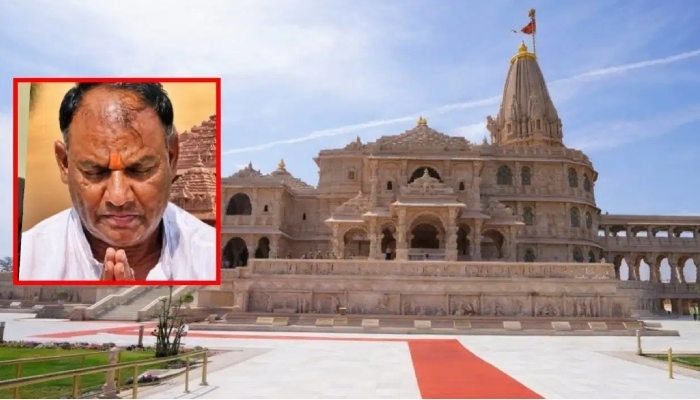
A six-member team associated with the Trust and temple security reportedly searched his ancestral home in Ayodhya’s Swargdwar area on June 13 and recovered the gold. As per the media reports, Tinnu is the driver of Rai and that sudden change in his lifestyle dragged him into the investigation. However, VHP stated that Tinnu was an ex-employee of Rai and that the latter or the trust has nothing to do with the change in the former's personal lifestyle.
Previously known in the area as an auto-rickshaw driver, Tinnu is now said to own a hostel with approximately 70 rooms near Ayodhya Airport. As part of the ongoing probe, officials are considering conducting additional searches at the property. Tinnu is currently being interrogated at the PCF Pilgrim Facilitation Centre within the temple complex.
Other individuals probed by SIT
Authorities have also conducted searches at the residence of K.D. Tiwari, who was entrusted with handling gold and silver ornaments donated to the temple. While officials have not disclosed the findings of the search, they are examining his acquisition of land reportedly worth around Rs 1.5 crore. Responding to the scrutiny, Tiwari stated that his responsibilities were limited to weighing donated ornaments, issuing receipts to donors, and transferring the items to authorized Trust officials. He maintained that he had no role in any subsequent procedures.
Beyond Tinnu, investigators are examining the roles and financial activities of several individuals associated with temple operations. These include:
Manish Yadav, Tinnu’s nephew, who was allegedly employed within the temple complex and is reportedly linked to the recovery of ₹36 lakh in cash.
K.D. Tiwari, who oversaw the handling of donated jewellery.
Rajesh Pathak, a staff member responsible for counting currency donations, whose changing financial circumstances are under review.
Lavkush and his brother-in-law Anukalp Mishra, both involved in counting donations and whose reported financial growth is also being scrutinized.
Political Dimension: SP vs UP Government
The controversy has quickly taken a political shape. The Samajwadi Party has positioned itself as demanding transparency and accountability in the management of temple donations. SP leaders argue that public faith should not be used as a shield against scrutiny, especially when large financial transactions are involved.
🚨 Akhilesh Yadav has objected to Govt officers investigating IRREGULARITIES in Ram Mandir donation funds.
— The Analyzer (News Updates🗞️) (@Indian_Analyzer) June 14, 2026
— Earlier, he had demanded that those responsible be identified. Now, he is opposing the SIT probe into the matter 🤡 pic.twitter.com/jP5W5lFwYM
The issue also connects to a broader history of concerns around donation-based systems in large religious and charitable campaigns in India. Over the years, there have been cases of fake donation drives and fraudulent fund collection in the name of the Ram Mandir.
In 2023, a racket involved in deception and fraud in the guise of collecting donations for the construction of Ram Mandir from devotees came to light, leading to a call for action by the Vishva Hindu Parishad (VHP). The body then issued a warning on social media asking people not to fall prey to the scam.
In 2021, a door-to-door campaign for collecting donations was launched by the Trust. However, several instances were reported in which devotees were defrauded by unknown miscreants pretending to be Trust associates even after the campaign ended. The same was also called out by the Trust.
In 2021, again, 5 were arrested for creating a fake Ram Temple donation website.
Given this, even current unverified claims tend to generate strong public reactions and rapid political escalation. As of now, the SIT investigation is ongoing. No official conclusion has been reached regarding whether any theft or embezzlement actually occurred. The temple trust continues to deny wrongdoing, while opposition parties continue to demand deeper and possibly judicial oversight of the matter.
Authorities are currently examining records, donation handling procedures, and financial systems to determine whether any irregularities exist. Until the investigation concludes, the case remains an allegation-based controversy rather than a proven scam.