Shyama Prasad Mukherjee & Battle for Bengal
Dr. Shyama Prasad Mukherjee is remembered for something far greater. He changed the course of history.
NewsBharati 22-Jun-2026 10:44:55 AM
Total Views |


By the mid-1940s, Bengal had become a laboratory of the Muslim League's politics. The horrific Great Calcutta Killings of August 1946, followed by the massacres in Noakhali and other parts of eastern Bengal, had exposed the dangers of communal separatism. Thousands of Hindus were killed, displaced, or forced to live under constant fear. The demand for Pakistan was no longer an abstract political slogan but it had become a grim reality for millions of ordinary Bengalis.
What made the situation even more dangerous was the proposal for an "Independent United Bengal." Supported by some influential political leaders, the scheme sought to keep Bengal united and outside both India and Pakistan. On paper, it sounded attractive. In reality, Dr. Mukherjee understood that such an arrangement would eventually place Bengal under the dominance of forces sympathetic to Pakistan. Given the demographic realities and the political climate of the time, Bengal's Hindus would have been left vulnerable and politically marginalized.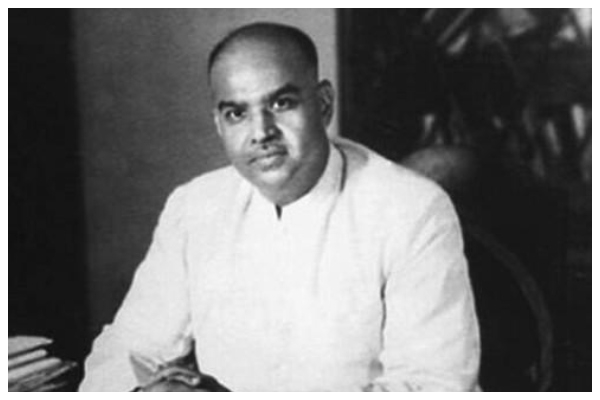 His efforts transformed public opinion. Through meetings, memoranda, and relentless political campaigning, he convinced both the British authorities and the national leadership that Bengal's Hindu-majority regions deserved a place in India. The Bengal Legislative Assembly eventually voted on the issue, and the demand for partition gained decisive support in western Bengal.
The significance of this achievement cannot be overstated. Had Dr. Mukherjee failed, Kolkata, the city that had served as the capital of British India and the inspirational source for the freedom movement, could have become part of Pakistan. The land of Bankim Chandra, Vivekananda, Sri Aurobindo, and countless freedom fighters might have been separated from India. The great centres of learning, literature, journalism, and spiritual awakening that shaped modern Indian nationalism would have been cut off from the national mainstream.
There is also a deeper civilizational dimension to Mukherjee's contribution. Bengal was not merely a geographical unit; it was one of the principal centres of Hindu intellectual and cultural resurgence. From the singing of Vande Mataram to the spiritual message of Ramakrishna and Vivekananda, Bengal had played a pivotal role in awakening India's national consciousness. Mukherjee believed that preserving this heritage within India was a historic responsibility.
Today, many political figures are remembered for occupying high office. Dr. Shyama Prasad Mukherjee is remembered for something far greater. He changed the course of history. His role in securing West Bengal's place in India ensured that a substantial part of Bengal's cultural, intellectual, and spiritual legacy remained connected to the Indian nation.
When modern Indians look at the map of India, they often take West Bengal's existence for granted. But that map was not drawn by destiny alone. It was shaped by the vision, courage, and determination of Dr. Shyama Prasad Mukherjee. If Kashmir represents his sacrifice, Bengal represents his foresight. And among the many services he rendered to the nation, helping save Bengal from complete absorption into Pakistan remains one of his most enduring and consequential achievements.
What made the situation even more dangerous was the proposal for an "Independent United Bengal." Supported by some influential political leaders, the scheme sought to keep Bengal united and outside both India and Pakistan. On paper, it sounded attractive. In reality, Dr. Mukherjee understood that such an arrangement would eventually place Bengal under the dominance of forces sympathetic to Pakistan. Given the demographic realities and the political climate of the time, Bengal's Hindus would have been left vulnerable and politically marginalized.
Mukherjee therefore launched a determined movement for the partition of Bengal. This may sound paradoxical today. Why would a Bengali leader advocate the division of his own province? His answer was simple. If Partition had become unavoidable, then Hindu-majority districts must remain in India. He was not dividing Bengal. He was saving a part of Bengal from being swallowed entirely by Pakistan.
The significance of this achievement cannot be overstated. Had Dr. Mukherjee failed, Kolkata, the city that had served as the capital of British India and the inspirational source for the freedom movement, could have become part of Pakistan. The land of Bankim Chandra, Vivekananda, Sri Aurobindo, and countless freedom fighters might have been separated from India. The great centres of learning, literature, journalism, and spiritual awakening that shaped modern Indian nationalism would have been cut off from the national mainstream.
For millions of Hindu refugees who later crossed into West Bengal from East Pakistan, Mukherjee's efforts proved to be a lifeline. West Bengal became a refuge, a homeland, and a symbol of hope. While the tragedy of Partition could not be prevented, he ensured that those fleeing persecution had a place within India where they could rebuild their lives.
Today, many political figures are remembered for occupying high office. Dr. Shyama Prasad Mukherjee is remembered for something far greater. He changed the course of history. His role in securing West Bengal's place in India ensured that a substantial part of Bengal's cultural, intellectual, and spiritual legacy remained connected to the Indian nation.
When modern Indians look at the map of India, they often take West Bengal's existence for granted. But that map was not drawn by destiny alone. It was shaped by the vision, courage, and determination of Dr. Shyama Prasad Mukherjee. If Kashmir represents his sacrifice, Bengal represents his foresight. And among the many services he rendered to the nation, helping save Bengal from complete absorption into Pakistan remains one of his most enduring and consequential achievements.
Satyajit Shriram Joshi
Satyajit Shriram Joshi is Pune based senior journalist.