AIMPLB: Vote Bank to Victim Bank
NewsBharati 23-Jun-2026 14:53:54 PM
Total Views |


The All India Muslim Personal Law Board's June 22 meeting produced exactly what seasoned observers expected. Another resolution lamenting Muslim "marginalisation," another call for a nationwide agitation, and another attempt to portray Indian Muslims as perpetual victims of forces beyond their control. The trigger points are familiar, which include Uniform Civil Code, Vande Mataram, alleged attacks on mosques and madrasas, bulldozer actions, and recent court verdicts. AIMPLB spokesperson S.Q.R. Ilyas declared that the lives, property, honour, faith and identity of Muslims were under attack.
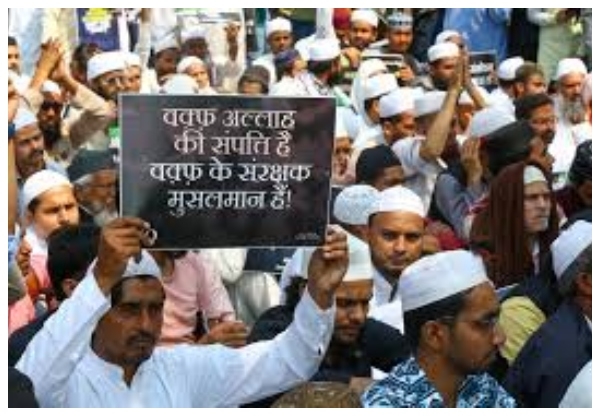
The AIMPLB is neither a constitutional body nor a statutory institution. It is a private organisation registered under the Societies Registration Act. No election among Indian Muslims confers legitimacy upon it. No law recognises it as the official representative of the Muslim community. But it routinely behaves as if it were a parallel parliament of Indian Muslims.
The most striking aspect of AIMPLB resolutions is their extraordinary resistance to the passage of time. Read resolutions from the 1980s, the 1990s, the 2000s, and today. The language changes slightly, but the substance remains frozen in amber. The enemy may have changed. The slogans may have evolved. But the narrative remains identical like personal law is under threat, mosques are under threat, madrasas are under threat, Muslims are under threat.
The world moved from landlines to smartphones, from fax machines to artificial intelligence, from local economies to global competition. Entire communities transformed themselves through education, entrepreneurship and technological adaptation. But AIMPLB remains mentally stationed in 1973. What is particularly revealing is what the Board does not discuss.
There is no comprehensive programme for modern education. No roadmap for increasing Muslim participation in high-skilled sectors. No serious conversation on entrepreneurship. No long-term strategy for enhancing female workforce participation. No blueprint for producing the next generation of scientists, innovators, administrators or business leaders. Its political imagination begins and ends with grievance.
This is not leadership. It is institutional nostalgia masquerading as activism. The Board's concerns regarding mosque and madrasa demolitions deserve scrutiny as well. Whenever an illegal structure faces action, AIMPLB instinctively treats it as an attack on religion. But legality matters in a constitutional democracy. If a temple is built on encroached land, it faces action. If a church violates municipal regulations, authorities intervene. Why should a mosque enjoy immunity unavailable to every other structure in the country?
Instead of asking why illegal constructions emerge in the first place, the Board prefers to convert every dispute into a religious confrontation. Every notice becomes persecution. Every court order becomes discrimination. Every administrative action becomes proof of a conspiracy.
The Board's repeated invocation of Muslim marginalisation raises another uncomfortable question. If Indian Muslims are indeed politically and socially disadvantaged, who bears responsibility? For decades after Independence, governments claiming to be secular dominated Indian politics. Congress ruled for most of the post-1947 period. Several states with substantial Muslim populations were governed for decades by parties that openly cultivated Muslim votes. What did those decades produce? Did they create world-class educational institutions for Muslim youth? Did they produce widespread economic empowerment? Did they build pathways to professional excellence? The answer is totally negative. Vote-bank politics created dependency, not empowerment.
Political parties found it convenient to keep Muslim voters emotionally mobilised. Organisations like AIMPLB found it convenient to keep Muslims psychologically anxious. The result was a mutually beneficial arrangement for elites and a deeply damaging arrangement for ordinary citizens. Congress used Muslims as a vote bank. AIMPLB used Muslims as a constituency of grievance. Neither produced meaningful transformation.
The Board's opposition to the Uniform Civil Code reveals the deeper ideological problem.
Article 25 guarantees religious freedom. It does not guarantee immunity from reform.
The irony is striking. Organisations that routinely speak about justice and equality suddenly become fierce defenders of legal exceptionalism whenever reform touches their own domain.
 Indian Muslims possess enormous talent, resilience and potential. They contribute to every sphere of national life from business and technology to sports, public service and the armed forces. They do not need perpetual reminders that they are victims. They need leadership that speaks the language of aspiration rather than anxiety.
The June 22 resolution demonstrates why AIMPLB increasingly appears disconnected from that aspiration. Its politics remains rooted in fear. Its vocabulary remains rooted in grievance. Its solutions remain rooted in resistance to change.
For fifty years the Board has warned of impending catastrophe. But the greatest obstacle to Muslim advancement may not be the dangers it constantly identifies. It may be the mindset that sees every challenge through the prism of victimhood and every reform through the lens of suspicion. The future belongs to communities that embrace confidence, competition and progress. AIMPLB remains committed to preserving fears.
For anyone who has followed AIMPLB's statements over the decades, there was only one new element in this declaration the date. The script remains unchanged. Before examining the resolution, one question must be asked. Who exactly gave the AIMPLB the authority to speak on behalf of India's Muslims? The answer is simple: nobody.
The AIMPLB is neither a constitutional body nor a statutory institution. It is a private organisation registered under the Societies Registration Act. No election among Indian Muslims confers legitimacy upon it. No law recognises it as the official representative of the Muslim community. But it routinely behaves as if it were a parallel parliament of Indian Muslims.
For over five decades, this unelected body has projected itself as the sole custodian of Muslim interests. It issues statements, files petitions, negotiates with political parties, and announces nationwide movements without remaining accountable to nobody. If performance reviews were mandatory, the Board would have been dissolved long ago. For fifty years it has sold the same product grievance and delivered the same outcome stagnation.
The most striking aspect of AIMPLB resolutions is their extraordinary resistance to the passage of time. Read resolutions from the 1980s, the 1990s, the 2000s, and today. The language changes slightly, but the substance remains frozen in amber. The enemy may have changed. The slogans may have evolved. But the narrative remains identical like personal law is under threat, mosques are under threat, madrasas are under threat, Muslims are under threat.
ALSO READ: Book Review: Great Maratha General: Mahadaji Scindia
There is no comprehensive programme for modern education. No roadmap for increasing Muslim participation in high-skilled sectors. No serious conversation on entrepreneurship. No long-term strategy for enhancing female workforce participation. No blueprint for producing the next generation of scientists, innovators, administrators or business leaders. Its political imagination begins and ends with grievance.
This is not leadership. It is institutional nostalgia masquerading as activism. The Board's concerns regarding mosque and madrasa demolitions deserve scrutiny as well. Whenever an illegal structure faces action, AIMPLB instinctively treats it as an attack on religion. But legality matters in a constitutional democracy. If a temple is built on encroached land, it faces action. If a church violates municipal regulations, authorities intervene. Why should a mosque enjoy immunity unavailable to every other structure in the country?
Instead of asking why illegal constructions emerge in the first place, the Board prefers to convert every dispute into a religious confrontation. Every notice becomes persecution. Every court order becomes discrimination. Every administrative action becomes proof of a conspiracy.
This approach may generate headlines, but it does not generate credibility. A community that seeks respect must also demonstrate respect for the rule of law.
ALSO READ: Demographic Invasion of Bharat: A Critical Analysis of Demographic Shifts, National Security, and the Path Forward
Political parties found it convenient to keep Muslim voters emotionally mobilised. Organisations like AIMPLB found it convenient to keep Muslims psychologically anxious. The result was a mutually beneficial arrangement for elites and a deeply damaging arrangement for ordinary citizens. Congress used Muslims as a vote bank. AIMPLB used Muslims as a constituency of grievance. Neither produced meaningful transformation.
The Board's opposition to the Uniform Civil Code reveals the deeper ideological problem.
Article 25 guarantees religious freedom. It does not guarantee immunity from reform.
India has repeatedly reformed social practices through legislation. Sati was abolished. Hindu personal laws were codified. Numerous customary practices across communities have been modified in pursuit of constitutional values. But AIMPLB continues to portray every discussion of reform as an existential threat.
The irony is striking. Organisations that routinely speak about justice and equality suddenly become fierce defenders of legal exceptionalism whenever reform touches their own domain.
The same contradiction appears in its objections to Vande Mataram. The first two stanzas of the song have long been accepted within India's constitutional and political framework. But opposition continues because opposition itself has become a political habit. For AIMPLB, disagreement is no longer a response but an identity.
But perhaps the most revealing aspect of the June 22 resolution is not what it contains, but what it omits. There is no campaign for modernising madrasa education. No mission for improving higher education among Muslim girls. No demand for transparency in the management of vast Waqf assets. No serious effort to address internal social challenges. No ambitious vision for Muslim participation in India's emerging economy. Apparently, artificial intelligence, biotechnology, global entrepreneurship and technological transformation can wait. Another protest resolution cannot. This is the real tragedy.
ALSO READ: 'I don't like Bharat; it's gutter,' says queer CJP protestor Ujjwal Singh after yelling 'Mera Gender Meri Marzi' slogans at 'students protest'
The June 22 resolution demonstrates why AIMPLB increasingly appears disconnected from that aspiration. Its politics remains rooted in fear. Its vocabulary remains rooted in grievance. Its solutions remain rooted in resistance to change.
For fifty years the Board has warned of impending catastrophe. But the greatest obstacle to Muslim advancement may not be the dangers it constantly identifies. It may be the mindset that sees every challenge through the prism of victimhood and every reform through the lens of suspicion. The future belongs to communities that embrace confidence, competition and progress. AIMPLB remains committed to preserving fears.

Editor's Desk
Editor's Desk