Emergency: Not Accidental But Logical Outcome of Congress's Culture
The emergency was not an aberration. It was the logical culmination of a political culture that placed family above party, party above institutions, and power above principle.
NewsBharati 24-Jun-2026 10:57:40 AM
Total Views |


As India remembers the dark days of the emergency imposed on June 25, 1975, it is important to go beyond the familiar narrative of censorship, arrests, and suspended freedoms. The emergency was not merely the consequence of one leader's political insecurity or one extraordinary moment in history. It was the inevitable outcome of a political culture that had been nurtured within the Congress for decades. A culture that placed personalities above institutions and loyalty above democratic principles.
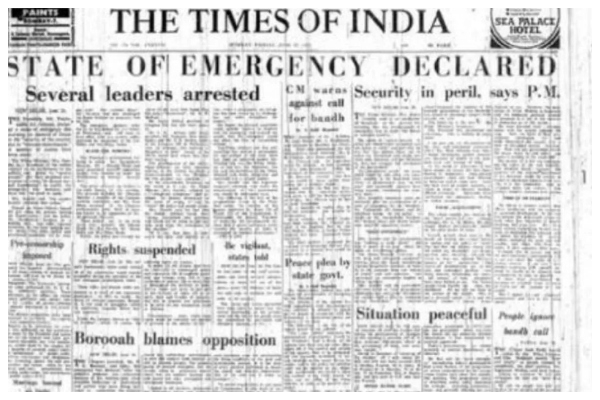
The Congress may have led India's freedom movement, but it never fully transformed itself into a genuinely democratic political party after independence. Instead, it gradually evolved into a personality-centric organisation. What began as reverence for leaders eventually developed into a culture of unquestioning obedience. Internal debate weakened, dissent became unwelcome, and the concentration of power became the norm rather than the exception.
The primary responsibility for this transformation rests with the Nehru-Gandhi political tradition. The emergence of dynastic politics within the Congress fundamentally altered the nature of the party. Democracy is built on competition, accountability, institutional checks, and the periodic renewal of leadership. Dynastic politics, by contrast, privileges inheritance over merit and loyalty over competence. The two are fundamentally incompatible.
Over time, this dynastic culture spread from the national leadership to the state, district, and local levels. Political positions increasingly became family possessions. A new class of political feudal lords emerged in modern India. While democratic institutions formally existed, power often remained concentrated within a handful of families. Such a system could never nurture a deep commitment to democratic values. The Congress increasingly came to resemble a political estate rather than a democratic organisation.
ALSO READ: AIMPLB: Vote Bank to Victim Bank
This was not simply the failure of an individual. It was the failure of a political culture that had long elevated the leader above the institution. When a party ceases to value internal democracy, it eventually develops contempt for democracy outside the party as well. The Emergency exposed that reality before the nation.
The people of India delivered a historic verdict in 1977. They demonstrated that no leader and no party was greater than democracy. The defeat of the Congress shattered the myth that it possessed a natural right to rule India. But the party suffered electoral punishment and it never genuinely confronted the deeper causes that had produced the emergency. That is why the anniversary of the emergency is not merely about remembering a dark chapter of history. It is also about examining whether the mindset that produced the Emergency has truly disappeared.
A disturbing continuity can still be observed. Whenever democratic institutions produce outcomes that are politically inconvenient, leading Congress voices often question the institutions themselves. The judiciary, the Election Commission, Parliament, constitutional bodies, and even the electoral process are subjected to relentless suspicion. Criticism is legitimate in a democracy. Systematically eroding public faith in institutions is something entirely different.
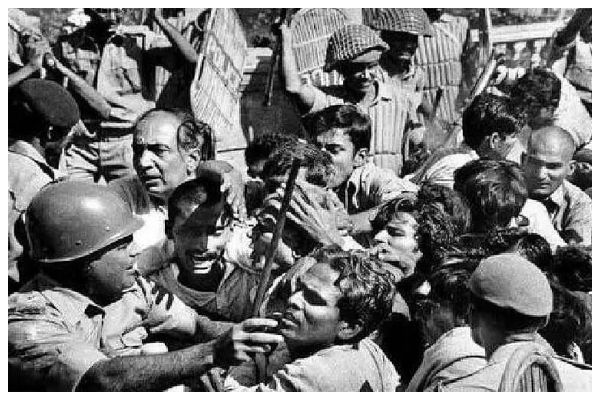
This is where the lessons of the emergency become relevant to contemporary politics. Democracy survives not merely through elections but through public confidence in constitutional processes. When a political party repeatedly tells citizens that institutions cannot be trusted, elections cannot be trusted, courts cannot be trusted, and parliamentary processes cannot be trusted, it is not strengthening democracy. It is weakening the foundations on which democracy rests. This is not the politics of democratic reform. It is the politics of anarchy.
When democratic verdicts are rejected simply because they are unfavourable, the objective is not institutional improvement but political delegitimization. When every constitutional authority is portrayed as compromised, the result is not greater accountability but greater distrust. When citizens are encouraged to believe that every institution is biased and every process is manipulated, society is pushed towards confusion, confrontation, and ultimately anarchy.
The danger of anarchy is not that it appears suddenly. It emerges gradually when public faith in institutions is systematically destroyed. A party that has never fully embraced democracy within its own organisation can easily drift towards encouraging anarchy outside it. The Congress's long history of dynastic control, centralised authority, and personality worship makes this tendency particularly troubling.
The tragedy is that Congress never truly learnt from the emergency. It lost power, but it did not fully abandon the political culture that made the emergency possible. The faces have changed, but the structure remains remarkably similar. The heirs of Indira Gandhi continue to dominate the party. Dynastic authority remains central to its identity. Internal democracy remains limited. The culture of entitlement persists.
Indians must therefore remember an uncomfortable truth. The emergency was not an aberration. It was the logical culmination of a political culture that placed family above party, party above institutions, and power above principle. In 1975, democracy was throttled through the direct exercise of state power. Today, the danger manifests itself differently, through the systematic creation of distrust, division, and anarchy in public life.
The lesson of the Emergency is clear. Democracy survives only when institutions are stronger than individuals, when merit prevails over inheritance, and when political parties practise the democratic values they claim to defend. The Congress leadership of 1975 sought to subvert democracy through authoritarian power. Its successors increasingly appear willing to weaken democracy through the politics of anarchy. The methods may differ, but the impulse remains the same.

Editor's Desk
Editor's Desk