NCP MLA Sana Malik demands implementation of Quran in India, says polygamy not only practiced by Muslims, but other Indian religions too
Total Views |


The Maharashtra government is fully committed to bringing in a Uniform Civil Code (UCC) in the state, with Minister of State for Home Yogesh Kadam expressing complete confidence about its implementation during a legislative assembly session on Tuesday, June 23. He further revealed that a committee, headed by a retired High Court judge, has already been constituted to draft the proposed bill.
Amid this, NCP MLA Sana Malik could be seen allegedly speaking in Pakistan's language and demanding implementation of the Quran in India. She justified the law of polygamy implemented in Pakistan and stated that it was allowed in Islam and that India must also implement the Quran.
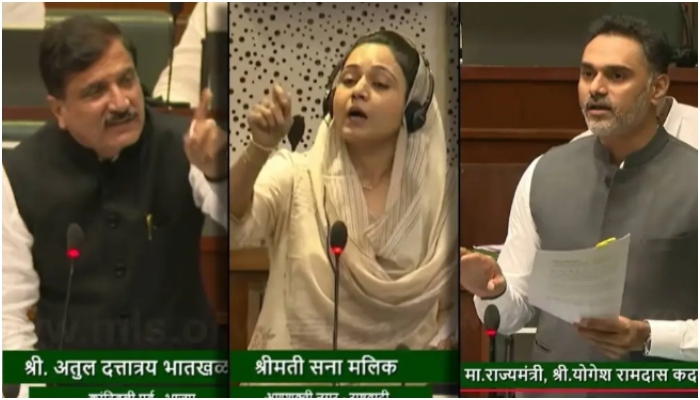
Farande highlighted that three Muslim women had come to her seeking help over the course of the last one and a half months. She stated that while police had registered cases against the accused, the women were yet to receive complete justice. She elaborated that one of the women had been threatened with the circulation of obscene videos, while another had faced a physical attack from her husband.
On the proposed law, he said, "A committee, headed by a retired High Court judge, has already been constituted for preparing the draft of the Uniform Civil Code bill. The committee is working on it." Referring to Uttarakhand's law, he said it had completely prohibited polygamy and provided for imprisonment of up to seven years.
Speaking on triple talaq, she said that it is one method of divorce and indicated that it was unnecessarily abolished in India. "Talaq-e-Hasan and Talaq-e-Ahsan, we follow both. Talaq-e-Biddat is a separate culture and has no mention anywhere in our religion. Triple talaq was abolished, and a law was brought in. Things that did not exist in India were abolished. Had it existed, a law would have been made on it, and if anyone had opposed it, we would have raised our voice against that too," she said.
"Does polygamy exist only among Muslims? Do Muslim men marry multiple women? Is polygamy present in other religions too? The law on polygamy exists only for Muslims," Sana Malik added.
The Uniform Civil Code aims to establish a unified set of personal laws applicable to every citizen of the country, irrespective of their religious background. Currently, personal matters including marriage, divorce, inheritance and adoption are regulated by distinct religious texts and community-specific personal laws.
Uttarakhand made history by becoming the first state in the country to put in place a common legal framework governing marriage, divorce and property inheritance, and also introduced the mandatory registration of live-in relationships. While the state assemblies of Gujarat and Assam have already passed their respective UCC bills, Madhya Pradesh Chief Minister Mohan Yadav has announced that a UCC bill will be tabled during the assembly's monsoon session scheduled for next month.
During Tuesday's session in the Maharashtra assembly, the state government indicated that work on its own draft UCC was progressing, even as members engaged in lively debate over issues of triple talaq, polygamy and the broader question of rights and protections for women.
Amid this, NCP MLA Sana Malik could be seen allegedly speaking in Pakistan's language and demanding implementation of the Quran in India. She justified the law of polygamy implemented in Pakistan and stated that it was allowed in Islam and that India must also implement the Quran.
The matter surfaced during a calling attention motion moved by BJP MLA Devyani Farande, which focused on cases of Muslim women affected by triple talaq. The debate quickly turned heated, with members repeatedly interrupting one another and engaging in sharp exchanges over the issues of triple talaq and polygamy.
Farande highlighted that three Muslim women had come to her seeking help over the course of the last one and a half months. She stated that while police had registered cases against the accused, the women were yet to receive complete justice. She elaborated that one of the women had been threatened with the circulation of obscene videos, while another had faced a physical attack from her husband.
Responding to Farande's concerns, Kadam noted that such grievances were not confined to Nashik alone, but had been reported from various parts of Maharashtra. He said, "A total of 42 such complaints received in 2024 were found to be genuine. (Legal) Action had been taken against 137 accused. 95 people had been arrested in 2025."
On the proposed law, he said, "A committee, headed by a retired High Court judge, has already been constituted for preparing the draft of the Uniform Civil Code bill. The committee is working on it." Referring to Uttarakhand's law, he said it had completely prohibited polygamy and provided for imprisonment of up to seven years.
Meanwhile, NCP MLA Sana Malik allegedly began speaking in Pakistan's language, saying that it was not just Muslims who practice polygamy, but also other religions who perform it. She also demanded a law on polygamy in India and that it was permitted in Islam as stated in the Quran. Further, she was heard demanding implementation of the Quran in India.
ट्रिपल तलाक कायदा लागू करण्यासंबंधी आज विधानसभेत उपस्थित केलेल्या लक्षवेधी दरम्यान माझी भूमिका मांडली. बहुपत्नित्वाची प्रथा अनेक धर्मात सुरू आहे. त्यामुळे कोणताही कायदा लागू होताना तो संविधानाच्या आधारावर असायला हवा. कोणत्याही एका धर्माविरोधातील सूर त्यातून उमटायला नको, असे मत… pic.twitter.com/nWlqFUBihV
— Sana Malik-Shaikh ثنا ملک-شیخ सना मलिक-शेख (@sanamalikshaikh) June 23, 2026
"What kind of questions is Devyani Pharande raising about Muslim women? Is atrocity committed on Muslim women only? Polygamy is permitted in Islam. Pakistan has not done anything new; it has only implemented what is stated in the Quran. We demand that the Quran should be implemented in India as well," Malik said.
"Pakistan ne Quran ko implement kiya hai — Bharat bhi laye, hum iski maang karte hain."
— Treeni (@treeni) June 23, 2026
Ruling NCP MLA Sana Malik said this on the floor of Maharashtra Vidhan Sabha — demanding India implement Quranic law allowing polygamy, just like Pakistan.
She also said polygamy is… pic.twitter.com/wpK6WcUTPa
Speaking on triple talaq, she said that it is one method of divorce and indicated that it was unnecessarily abolished in India. "Talaq-e-Hasan and Talaq-e-Ahsan, we follow both. Talaq-e-Biddat is a separate culture and has no mention anywhere in our religion. Triple talaq was abolished, and a law was brought in. Things that did not exist in India were abolished. Had it existed, a law would have been made on it, and if anyone had opposed it, we would have raised our voice against that too," she said.
"Does polygamy exist only among Muslims? Do Muslim men marry multiple women? Is polygamy present in other religions too? The law on polygamy exists only for Muslims," Sana Malik added.
"Are Muslim women in the country forced to tolerate injustice due to polygamy in their religion? The practice of multiple marriages exists at 1% in Pakistan. Who will tell the worth of these three women? What is the use of a burkha if it does not keep a woman safe? When will the state government bring the Uniform Civil Code Bill? Will the government form a special task force for this?" she said.
The Uniform Civil Code aims to establish a unified set of personal laws applicable to every citizen of the country, irrespective of their religious background. Currently, personal matters including marriage, divorce, inheritance and adoption are regulated by distinct religious texts and community-specific personal laws.
Uttarakhand made history by becoming the first state in the country to put in place a common legal framework governing marriage, divorce and property inheritance, and also introduced the mandatory registration of live-in relationships. While the state assemblies of Gujarat and Assam have already passed their respective UCC bills, Madhya Pradesh Chief Minister Mohan Yadav has announced that a UCC bill will be tabled during the assembly's monsoon session scheduled for next month.
During Tuesday's session in the Maharashtra assembly, the state government indicated that work on its own draft UCC was progressing, even as members engaged in lively debate over issues of triple talaq, polygamy and the broader question of rights and protections for women.