Intelligence in times of Artificial Intelligence (AI): Why learning matters more than ever
Artificial intelligence does not simply store or retrieve information. It processes, organizes, and presents it in forms that ‘mimic’ understanding. Through such simulation, essays are drafted, problems solved, and the arguments constructed.
NewsBharati 03-Jun-2026 11:02:28 AM
Total Views |


Artificial Intelligence (AI) has been a new kind of ease that has been shaping our lives. Perhaps it is a life where ‘thinking has been built,’ if not felt necessary. In other words, it is a life where artificial intelligence has started delivering instant answers, polished arguments, and ready-made solutions much faster than we thought. The effort once required to understand the world is quietly fading. What used to take time in terms of learning, i.e., reading, questioning, struggling, and reflecting, can now be easily circumvented with a prompt or sometimes even without it. Thus, there seems to be a discomforted yet quiet and veiled transformation felt, not in machines but in the human mind.
The post-millennium period is often described as the era of the “Information Revolution”. However, this description is already outdated and obsolete in the present age of the Internet, data, and Artificial Intelligence. Now ‘Information’ is no longer scarce. In fact, it is abundant to the point of excess. Real-time bombardment of Information covertly aided, manipulated, and managed by AI and related algorithms has given rise to such a scenario, perhaps. The real change lies in the collapse of the effort required to convert information into usable knowledge. In the present times, it (the effort) may be less, and the transaction or the process of knowledge gathering may be quicker.
For the present generation of learners, the relationship between learning and AI is being unsettled. The rapid diffusion of artificial intelligence and associated technologies is leading to instantaneous answers that are structured and seemingly authoritative too. What once required time, discipline, and cognitive labour can now be gathered in seconds. This shift raises another uncomfortable question for us as students, parents, teachers, institutions, and nations as a whole: what happens to intelligence when the need to learn begins to deepen its roots in such technologies?
From Effort to Access: AI as the new age Societal learning tool
Due to such approaches, intelligence emerges through a sequence that manifests initially from confusion to effort, which changes from effort to comprehension, subsequently transforms comprehension to application. Each stage strengthens cognitive structures viz. the memory, the reasoning, and the abstraction, respectively. In the present-day AI access-driven paradigm, this sequence is compressed into a single act – request & response. The output may be correct, even sophisticated, but the cognitive process that once generated intelligence is partially bypassed. For a learner (students per se), it can well be the beginning of Prompt-Instinctive Learning.
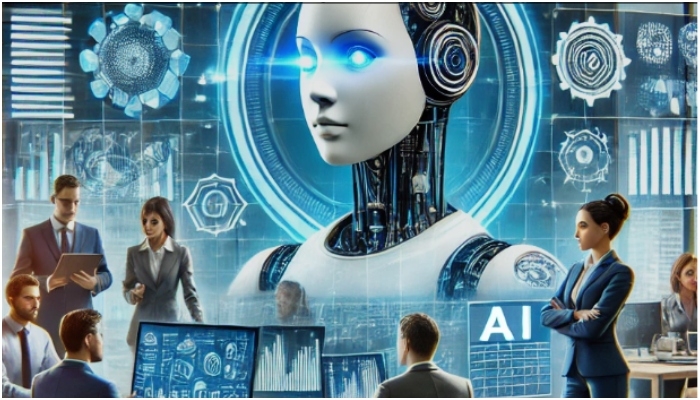
_202606031129539588_H@@IGHT_400_W@@IDTH_700.jpg "Artificial Intelligence")
While discussing the compression of learning, it is important to know and understand what is at stake and useful to consider what learning actually does. Learning is not simply the acquisition of facts and information.
It is a process through which a human brain builds the internal frameworks that psychologists describe as schemas. These schemas allow individuals to interpret, connect, and apply knowledge.
These frameworks are constructed through effort:
Through grappling with difficult concepts,
Through making and correcting mistakes,
Compression of the learning output is efficient as it saves time. But it also raises the possibility of shallow cognition—a condition in which individuals can use knowledge without fully internalizing it. This can be more disadvantageous to a young population of students who may produce a well-formed argument without having developed the intellectual support that sustains independent thinking.
For much of human history, intelligence was inseparable from effort. To know something meant to have struggled with it: to read, to reflect, to err, and to try again. Learning was not merely a pathway to intelligence; it was its very foundation. Today, in the age of AI, that relationship is being unsettled or stirred. This technological disruption, aided by the rapid diffusion of artificial intelligence in the learning frontiers, may lead to silent cognitive dissonance.
This becomes especially urgent in the context of India’s educational transformation under the National Education Policy 2020. The policy does not merely aim to modernize education per se, but it seeks to re-anchor it in critical thinking, experiential learning, and holistic human development. It emphasizes that true education is not the accumulation of information but the cultivation of curiosity, questioning, reflection, and ethical reasoning, which become the paths to knowledge. In many ways, the NEP-2020 anticipates the very dilemma that educationists have posed before adopting artificial intelligence. This dilemma delimits the question – when knowledge becomes instantly accessible, the real challenge is to ensure that learning remains meaningful.
If human intelligence is cultivated through the discipline of learning, then the question arises of what happens when the discipline itself begins to disappear due to AI. As we slip into an almost invisible cognitive autopilot mode, the challenge of the AI age lies not in whether machines can think on our behalf but in whether humans will continue to learn based on new-age thinking.
The post-millennium period is often described as the era of the “Information Revolution”. However, this description is already outdated and obsolete in the present age of the Internet, data, and Artificial Intelligence. Now ‘Information’ is no longer scarce. In fact, it is abundant to the point of excess. Real-time bombardment of Information covertly aided, manipulated, and managed by AI and related algorithms has given rise to such a scenario, perhaps. The real change lies in the collapse of the effort required to convert information into usable knowledge. In the present times, it (the effort) may be less, and the transaction or the process of knowledge gathering may be quicker.
For the present generation of learners, the relationship between learning and AI is being unsettled. The rapid diffusion of artificial intelligence and associated technologies is leading to instantaneous answers that are structured and seemingly authoritative too. What once required time, discipline, and cognitive labour can now be gathered in seconds. This shift raises another uncomfortable question for us as students, parents, teachers, institutions, and nations as a whole: what happens to intelligence when the need to learn begins to deepen its roots in such technologies?
From Effort to Access: AI as the new age Societal learning tool
Artificial intelligence does not simply store or retrieve information. It processes, organizes, and presents it in forms that ‘mimic’ understanding. Through such simulation, the essays are drafted, problems solved, and the arguments constructed. Increasingly, the human role is minimised and reduced merely to prompting rather than producing. This marks a subtle but profound shift—from a culture of learning to a culture of access. This has also given rise to another genre of learning paradigm, especially in Gen Z, and that is the Culture of questioning. In a learning-driven paradigm, the culture of questioning is followed by the culture of answering, leading to the culture of learning, completing the circle of learning. The NEP-2020 precisely aims at the same.
Due to such approaches, intelligence emerges through a sequence that manifests initially from confusion to effort, which changes from effort to comprehension, subsequently transforms comprehension to application. Each stage strengthens cognitive structures viz. the memory, the reasoning, and the abstraction, respectively. In the present-day AI access-driven paradigm, this sequence is compressed into a single act – request & response. The output may be correct, even sophisticated, but the cognitive process that once generated intelligence is partially bypassed. For a learner (students per se), it can well be the beginning of Prompt-Instinctive Learning.
At this juncture of ‘cognitive autopilot’ times, the challenge before us is not simply technological. The present Age of AI demands a recommitment to the very processes that build intelligence without bargaining on less learning. This becomes even more important in a world where machines can provide answers and when the human capacity to question, reflect, and internalize will ultimately define what it means to be intelligent.
While discussing the compression of learning, it is important to know and understand what is at stake and useful to consider what learning actually does. Learning is not simply the acquisition of facts and information.
It is a process through which a human brain builds the internal frameworks that psychologists describe as schemas. These schemas allow individuals to interpret, connect, and apply knowledge.
These frameworks are constructed through effort:
Through grappling with difficult concepts,
Through making and correcting mistakes,
Through repeated engagement over time.
Artificial intelligence, by its very design, reduces this effort. It offers solutions without requiring the user to traverse the path that leads to them. The result is what might be called a compression of learning.
Compression of the learning output is efficient as it saves time. But it also raises the possibility of shallow cognition—a condition in which individuals can use knowledge without fully internalizing it. This can be more disadvantageous to a young population of students who may produce a well-formed argument without having developed the intellectual support that sustains independent thinking.
For much of human history, intelligence was inseparable from effort. To know something meant to have struggled with it: to read, to reflect, to err, and to try again. Learning was not merely a pathway to intelligence; it was its very foundation. Today, in the age of AI, that relationship is being unsettled or stirred. This technological disruption, aided by the rapid diffusion of artificial intelligence in the learning frontiers, may lead to silent cognitive dissonance.
This becomes especially urgent in the context of India’s educational transformation under the National Education Policy 2020. The policy does not merely aim to modernize education per se, but it seeks to re-anchor it in critical thinking, experiential learning, and holistic human development. It emphasizes that true education is not the accumulation of information but the cultivation of curiosity, questioning, reflection, and ethical reasoning, which become the paths to knowledge. In many ways, the NEP-2020 anticipates the very dilemma that educationists have posed before adopting artificial intelligence. This dilemma delimits the question – when knowledge becomes instantly accessible, the real challenge is to ensure that learning remains meaningful.

Saunand Somasi
Two decades (Twenty Two years) of award winning experience in Education industry with expertise Education Policy, Planning & Management, Program Development, General Administration, Research & Development along with establishment of IGNOU regional & study centres at remote locations. Chaired and Co-chaired sessions on International and National platforms with UNICEF, UNESCO, AICTE, Commonwealth Youth Programme (CYP), NCERT and KVS.