THELU: The cloth bag that carries Mumbai's hope
Every plastic bag avoided is a small victory. Every cloth bag reused is a step towards sustainability. Every THELU in circulation is a silent warrior fighting the plastic menace.
NewsBharati 04-Jun-2026 18:02:18 PM
Total Views |


Every city has a story hidden in its waste. Mumbai's story is written every day in discarded cloth, used hotel linen, forgotten bedsheets, old curtains, and worn-out fabrics that quietly make their way towards landfills. At the same time, another story unfolds in the villages surrounding the city, where thousands of rural women seek dignified livelihoods and sustainable sources of income. What if these two stories could meet? What if yesterday's waste could become tomorrow's hope? That is the story of THELU.
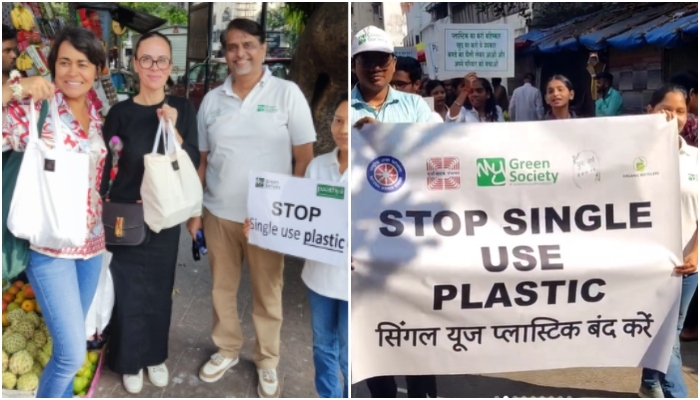
Every plastic bag avoided is a small victory. Every cloth bag reused is a step towards sustainability. Every THELU in circulation is a silent warrior fighting the plastic menace. What makes THELU unique is the extraordinary journey it undertakes. Its story begins in Mumbai. Used linen from five-star hotels, housing societies, institutions, and households is collected before it becomes waste. Material that would otherwise occupy precious landfill space is given a second life.
Mumbai is home to more than six million households. Imagine the impact if every household regularly used reusable cloth bags instead of plastic. If approximately four crore THELUs are put into active circulation across Mumbai, the city can dramatically reduce its dependence on single-use plastic bags. The result would not merely be fewer plastic bags. The result would be cleaner streets, cleaner beaches, cleaner rivers, less landfill burden, lower carbon emissions, and a stronger culture of environmental responsibility.
THELU reminds us that sustainability is not only about technology. It is about participation. It is about people. When someone carries a THELU, they are carrying a statement: that waste can become wealth, that rural livelihoods matter, that climate action belongs to everyone, and that India can lead the world through practical, community-driven solutions. In an age where environmental problems often seem overwhelming, THELU offers something precious: hope.
Hope that cities can reduce waste. Hope that women can find dignified employment. Hope that discarded materials can find new life. Hope that ordinary citizens can become environmental warriors. Because sometimes the most powerful revolutions do not arrive with fanfare. Sometimes they arrive quietly, folded in a shopping basket, hanging from a shoulder, or carried home after a visit to the market. A humble cloth bag. A second chance for waste. A livelihood for a woman. A cleaner Mumbai. A greener India. That is THELU. Not just a bag. A hope.
At first glance, THELU appears to be just another cloth bag. But that would be like calling a seed “just a seed.” Hidden within it is the possibility of a cleaner city, a greener India, and a more empowered rural community. THELU is not a bag. THELU is a solution. India today faces one of the biggest environmental challenges of our time. Single Use Plastic (SUP). Plastic bags are convenient for a few minutes but remain in the environment for hundreds of years. They choke drains, pollute rivers, enter oceans, harm animals, and eventually find their way back into our food chain.
Every plastic bag avoided is a small victory. Every cloth bag reused is a step towards sustainability. Every THELU in circulation is a silent warrior fighting the plastic menace. What makes THELU unique is the extraordinary journey it undertakes. Its story begins in Mumbai. Used linen from five-star hotels, housing societies, institutions, and households is collected before it becomes waste. Material that would otherwise occupy precious landfill space is given a second life.
The cloth then travels to Wada, where tribal and rural women carefully cut, stitch, and transform it into sturdy, reusable bags. These women are not merely workers in a production chain; they are environmental partners helping create a circular economy. Once stitched, THELU returns to Mumbai in a completely new avatar — an avatar with purpose, an avatar of a warrior. Every bag that reaches a grocery store, vegetable market, pharmacy, school, office, or home carries with it the efforts of multiple hands and multiple dreams. It carries the aspirations of a rural woman earning an income. It carries the commitment of a family choosing sustainability over convenience. It carries the hope of a city trying to reduce its environmental footprint.
ALSO READ: India welcomes dissent and criticism, not defiance of the Constitution; how CJP is promoting anarchy to overthrow democracy
Mumbai is home to more than six million households. Imagine the impact if every household regularly used reusable cloth bags instead of plastic. If approximately four crore THELUs are put into active circulation across Mumbai, the city can dramatically reduce its dependence on single-use plastic bags. The result would not merely be fewer plastic bags. The result would be cleaner streets, cleaner beaches, cleaner rivers, less landfill burden, lower carbon emissions, and a stronger culture of environmental responsibility.
THELU's contribution goes beyond waste reduction. Every reused piece of cloth represents carbon emissions that have been avoided. Every kilogram of textile diverted from landfill means resources have been conserved. Every bag that replaces plastic contributes to India's larger journey towards carbon neutrality. When we speak of climate change, people often imagine giant power plants, electric vehicles, or international conferences. Yet climate action also begins with simple everyday choices: a cloth bag, a reusable bottle, a conscious decision.
ALSO READ: Mumbai's illegal Aarey Dargah faces bulldozer action; Read why BMC acted promptly after receiving legal complaint
THELU reminds us that sustainability is not only about technology. It is about participation. It is about people. When someone carries a THELU, they are carrying a statement: that waste can become wealth, that rural livelihoods matter, that climate action belongs to everyone, and that India can lead the world through practical, community-driven solutions. In an age where environmental problems often seem overwhelming, THELU offers something precious: hope.
Hope that cities can reduce waste. Hope that women can find dignified employment. Hope that discarded materials can find new life. Hope that ordinary citizens can become environmental warriors. Because sometimes the most powerful revolutions do not arrive with fanfare. Sometimes they arrive quietly, folded in a shopping basket, hanging from a shoulder, or carried home after a visit to the market. A humble cloth bag. A second chance for waste. A livelihood for a woman. A cleaner Mumbai. A greener India. That is THELU. Not just a bag. A hope.

Vishal Tibrewal
Vishal Tibrewal