Birsa Munda: The young flame that challenged empire and Christian conversion
Total Views |


Some lives are measured in years. Others are measured in the impact they leave on history. Birsa Munda belonged to the latter category.
When he breathed his last inside a British prison in Ranchi 126 years ago (on June 9, 1900), he was not even twenty-five years old. Yet the young tribal leader had shaken the foundations of both colonial authority and the powerful missionary network that had spread across the tribal heartlands of eastern India.
To understand Birsa Munda's significance, one must first understand the conditions prevailing in the tribal regions of Chotanagpur during the late nineteenth century. British colonial policies had disrupted traditional landholding systems, weakened community institutions, and enabled the exploitation of tribal populations by landlords, moneylenders, and administrative intermediaries.
Birsa Munda himself encountered this reality at an early age. As a child, he attended a missionary school and was baptised into Christianity, receiving the name “Birsa David.” His experience was not unusual for the period. Across several tribal regions, conversion was often encouraged through educational institutions that operated under the protective umbrella of colonial authority. However, as he grew older and became more conscious of the changes unfolding around him, Birsa began questioning the forces that were transforming the lives of his people.
_202606091443146117_H@@IGHT_400_W@@IDTH_700.jpg "Birsa Munda")
Rejecting the path laid out before him, Birsa returned to the faith and traditions of his ancestors. Yet his decision was never confined to his own spiritual journey. He emerged as a charismatic leader who urged tribal communities to rediscover their self-respect, preserve their heritage, and resist all forms of exploitation. His message resonated because it addressed both material suffering and cultural insecurity. People saw in him a leader who understood their struggles and who possessed the courage to challenge powerful institutions that had come to dominate their lives. It was during this period that he came to be revered as "Dharti Aba" (the Father of the Earth), a title that reflected the extraordinary faith his followers placed in him.
What distinguished Birsa's movement from many contemporary rebellions was its fusion of cultural revival and political resistance. He openly criticised the practices of missionary organisations that, in his view, burdened impoverished tribal communities while simultaneously undermining their traditional belief systems.
The movement reached its climax during the historic Ulgulan, or "Great Tumult," of 1899-1900. What began as a call for social and cultural renewal transformed into a direct challenge to colonial power.
Alarmed by the growing influence of Birsa Munda and the mobilisation of tribal communities under his leadership, the British administration launched a determined crackdown.
He was eventually arrested and imprisoned in Ranchi, where he died on June 9, 1900, under circumstances that continue to be debated. His death silenced the man, but it could not extinguish the spirit of resistance he had ignited.
The tragedy of Birsa Munda's short life often overshadows the remarkable clarity of his vision. Long before the language of cultural rights, indigenous identity and decolonisation entered public discourse, he understood that political domination and cultural domination frequently advanced together. He recognised that a community stripped of confidence in its traditions becomes vulnerable to control, regardless of who exercises power over it. His resistance was therefore not simply a rebellion against foreign rulers; it was a defence of civilisational continuity, community dignity and the right of people to remain rooted in their inherited way of life.
As India marks the 126th anniversary of his martyrdom, Birsa Munda deserves to be remembered in his full historical context. He was not merely a tribal icon, a regional hero or a symbol appropriated for contemporary politics. He was a young revolutionary who challenged both colonial authority and the missionary-driven cultural transformations that accompanied it. His life serves as a reminder that the struggle for freedom is not confined to political sovereignty alone. It also involves the preservation of memory, identity and cultural self-confidence. In that sense, the legacy of Birsa Munda remains as relevant today as it was in the forests of Chotanagpur more than a century ago.
When he breathed his last inside a British prison in Ranchi 126 years ago (on June 9, 1900), he was not even twenty-five years old. Yet the young tribal leader had shaken the foundations of both colonial authority and the powerful missionary network that had spread across the tribal heartlands of eastern India.
More than a century later, his name continues to evoke pride across India, not only because he fought against British rule, but because he recognised an equally dangerous challenge confronting tribal society: the systematic erosion of its cultural and spiritual identity under colonial patronage and the nefarious missionary activities.
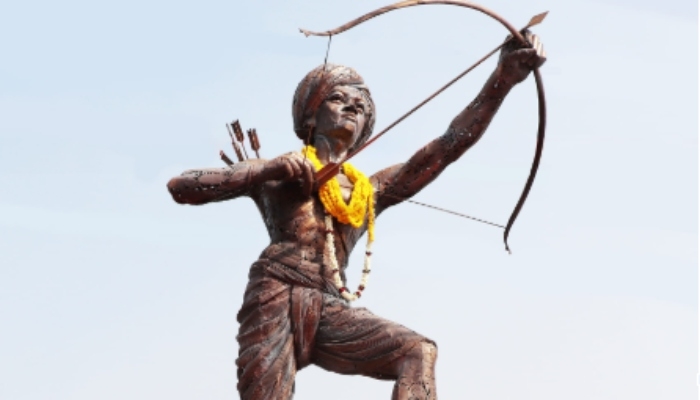
Bhagwan Birsa Munda's statue at Bansera Park in New Delhi. (Photo courtesy: Vishwa Samvad Kendra)
To understand Birsa Munda's significance, one must first understand the conditions prevailing in the tribal regions of Chotanagpur during the late nineteenth century. British colonial policies had disrupted traditional landholding systems, weakened community institutions, and enabled the exploitation of tribal populations by landlords, moneylenders, and administrative intermediaries.
Alongside this political and economic transformation came an aggressive missionary presence that sought to reshape tribal society through conversion, education and social intervention. While missionary institutions presented themselves as agents of upliftment, many tribal communities increasingly experienced them as instruments of cultural displacement, particularly when access to education and social opportunities became intertwined with religious conversion.
Birsa Munda himself encountered this reality at an early age. As a child, he attended a missionary school and was baptised into Christianity, receiving the name “Birsa David.” His experience was not unusual for the period. Across several tribal regions, conversion was often encouraged through educational institutions that operated under the protective umbrella of colonial authority. However, as he grew older and became more conscious of the changes unfolding around him, Birsa began questioning the forces that were transforming the lives of his people.
He observed how traditional customs were being ridiculed, ancestral beliefs were being abandoned, and tribal communities were becoming increasingly detached from their cultural roots. What began as personal introspection eventually evolved into a larger social awakening.
Birsa Munda was arrested from the forest, near the Santara village in West Singhbhum on February 3, 1900,. He was then sent to Ranchi, where he died in prison on June 9, the same year.
Rejecting the path laid out before him, Birsa returned to the faith and traditions of his ancestors. Yet his decision was never confined to his own spiritual journey. He emerged as a charismatic leader who urged tribal communities to rediscover their self-respect, preserve their heritage, and resist all forms of exploitation. His message resonated because it addressed both material suffering and cultural insecurity. People saw in him a leader who understood their struggles and who possessed the courage to challenge powerful institutions that had come to dominate their lives. It was during this period that he came to be revered as "Dharti Aba" (the Father of the Earth), a title that reflected the extraordinary faith his followers placed in him.
What distinguished Birsa's movement from many contemporary rebellions was its fusion of cultural revival and political resistance. He openly criticised the practices of missionary organisations that, in his view, burdened impoverished tribal communities while simultaneously undermining their traditional belief systems.
He also challenged the colonial structures that protected these activities and enabled widespread exploitation. For Birsa, the struggle was not merely about economic grievances or administrative injustice. It was about safeguarding the very identity of a people whose customs, faith, and social institutions were under sustained pressure from external forces operating under the authority of the British Empire.
The movement reached its climax during the historic Ulgulan, or "Great Tumult," of 1899-1900. What began as a call for social and cultural renewal transformed into a direct challenge to colonial power.
Alarmed by the growing influence of Birsa Munda and the mobilisation of tribal communities under his leadership, the British administration launched a determined crackdown.
He was eventually arrested and imprisoned in Ranchi, where he died on June 9, 1900, under circumstances that continue to be debated. His death silenced the man, but it could not extinguish the spirit of resistance he had ignited.
The tragedy of Birsa Munda's short life often overshadows the remarkable clarity of his vision. Long before the language of cultural rights, indigenous identity and decolonisation entered public discourse, he understood that political domination and cultural domination frequently advanced together. He recognised that a community stripped of confidence in its traditions becomes vulnerable to control, regardless of who exercises power over it. His resistance was therefore not simply a rebellion against foreign rulers; it was a defence of civilisational continuity, community dignity and the right of people to remain rooted in their inherited way of life.
As India marks the 126th anniversary of his martyrdom, Birsa Munda deserves to be remembered in his full historical context. He was not merely a tribal icon, a regional hero or a symbol appropriated for contemporary politics. He was a young revolutionary who challenged both colonial authority and the missionary-driven cultural transformations that accompanied it. His life serves as a reminder that the struggle for freedom is not confined to political sovereignty alone. It also involves the preservation of memory, identity and cultural self-confidence. In that sense, the legacy of Birsa Munda remains as relevant today as it was in the forests of Chotanagpur more than a century ago.