RJD, AJUP, TMC, PDP, and Hurriyat's Mirwaiz sign joint letter with Pakistani leaders seeking India-Pak dialogue post Operation Sindoor


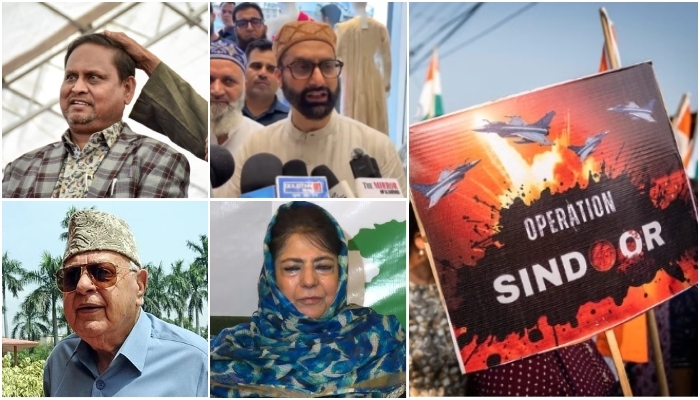
_202607011227273045_H@@IGHT_700_W@@IDTH_586.jpg "Operation Sindoor")
Shameful statement by Mirwaiz Umar Farooq- If the United States and Iran can return to the negotiating table after escalation, why can’t India and Pakistan?
— Megh Updates 🚨™ (@MeghUpdates) July 1, 2026
Few words for him ..... pic.twitter.com/AI0mdxkHMg
The said military action aimed at neutralising the operational capabilities of terrorist groups responsible for repeated incursions into Indian territory. The strike was seen as inevitable, given the clear cross-border involvement in the Pahalgam attack. The official government communication confirmed links between the terrorists, who carried out the attack, and their handlers based in Pakistan.
Slamming the entire cast of 61 signatories who demanded dialogue between India and Pakistan and the end of Operation Sindoor, one of the X users, author, journalist Rahul Shivshankar said, "None of these people have any qualms about sharing space with separatists who don't recognise the Indian Constitution or giving Pak a breather. None have written a letter calling upon Pak to "end continued hostilities' against PoK Kashmiris, Indian innocents. None."
THE STAR CAST OF 61 INDIAN "CIVIL" SOCIETY THAT HAVE WRITTEN TO MODI-SHARIF DEMANDING AN END TO "OP SINDOOR".
— Rahul Shivshankar (@RShivshankar) July 1, 2026
None of these people have any qualms about sharing space with separatists who don't recognise the Indian Constitution or giving Pak a breather. None have written a… pic.twitter.com/t8QPYxzTfP
"Indian traitors of the year list. Save it for the purges," another user said, quoting the entire list of 61 signatories from India.
Indian traitors of the year list. Save it for the purges. pic.twitter.com/3A7KJrd36F
— PlaneCrazy (@IXGguy) July 1, 2026

As reported earlier, Operation Sindoor, which was launched after the Pakistan-backed terrorist attack on Hindu tourists in April, targeted terrorist infrastructure across Pakistan and Pakistan-occupied Jammu and Kashmir. The operation, described by Indian officials as “focused, measured and non-escalatory in nature”, targeted nine identified terrorist infrastructure sites believed to be used for planning and directing attacks against India. These sites included Markaz Subhan Allah (Bahawalpur), Markaz Taiba (Muridke), Sarjal (Sialkot), Mehmoona Joya (Sialkot), Barnala (Bhimber), Abbas (Kotli), Gulpur (Kotli), Sawai Nala (Muzaffarabad), and Syedna Bilal (Muzaffarabad).
By naming it ‘Operation Sindoor’, the military action clearly paid tribute to the women who lost their husbands in the Pahalgam attack, framing the strike as both an act of justice and a symbolic gesture of retribution.
The sole purpose behind the operation that lasted from 7th May, 2025 to 10th May, 2025, as stated by the authorities, was to showcase a firm stand against terrorism, ensure immediate justice for the family members of the 26 dead, and dismantle terrorist infrastructure used to plan and direct attacks against India.
Despite this, several opposition leaders, including the Congress, PDP, TMC, and the left parties, condemned terrorism but raised questions about accountability, intelligence failures, and the government’s communication strategy.
The Peoples Democratic Party (PDP) and its chief, Mehbooba Mufti, expressed skepticism regarding the long-term benefits of Operation Sindoor, arguing that the military action failed to prevent further attacks and caused immense suffering for border residents. The PDP maintained that war is never a solution. Mufti urged those who advocate for military escalation to live in the border areas to realize the true costs of war.
Dr. Farooq Abdullah, in May 2026, stated in Srinagar that the military operation had "paid its dividends" and achieved its intended objectives. While he recognized the operation's military results, Abdullah consistently maintained that conflicts and wars "do not bring a solution, only misery." He argued that the global economic climate and energy disruptions make another war unsustainable.
Kashmir’s chief cleric and Hurriyat Conference chairman Mirwaiz Umar Farooq, in May 2025, demanded de-escalation of the war launched by India against the Pakistan-backed terrorists. Addressing the Jama Masjid, “… if the DGMOs of both sides can talk and reach an agreement, what is preventing India and Pakistan's leadership from doing so? But stating the obvious is considered anti-national in present times,” he said.
The opposition's push for de-escalation, from parties like the Congress, PDP, Hurriyat Conference, and National Conference, functions, whether intentionally or not, as cover for Pakistan-based terrorism against India. Invoking "peace" and de-escalation shifts focus away from accountability for cross-border terrorism and indirectly legitimizes the ideological framing used by jihadist groups to justify violence against those who do not share their faith.
Siddhi Somani
Siddhi Somani is known for her satirical and factual hand in Economic, Social and Political writing. Having completed her post graduation in Journalism, she is currently engaged in completing her Masters in Politics. The author meanwhile is also exploring her hand in analytics and statistics.