India, Australia Sign Agreement To Protect Traditional Knowledge Through TKDL Database
Total Views |


New Delhi , July10 : India and Australia a landmark agreement to strengthen the protection of traditional knowledge and prevent the wrongful patenting of indigenous practices and formulations.
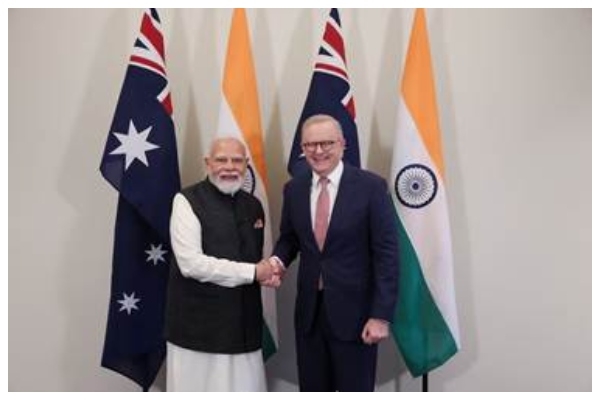
The Council of Scientific and Industrial Research (CSIR) and IP Australia signed an agreement allowing Australia to access India's Traditional Knowledge Digital Library (TKDL) during the 3rd India Australia Annual Summit held in Melbourne. The agreement was signed in the presence of Prime Minister Narendra Modi and Australian Prime Minister Anthony Albanese.
The TKDL agreement was among the 18 key outcomes of the bilateral summit, which covered areas such as defence and security, energy, education, skill development, science and technology, filmmaking, traditional knowledge, and the repatriation of cultural property.
What Is The Agreement About?
Under the agreement, IP Australia will gain access to India's TKDL database to help patent examiners identify existing traditional knowledge while reviewing patent applications under Australian patent laws.
The move is aimed at preventing the grant of patents for knowledge that is already part of India's documented traditional heritage, ensuring more informed and efficient patent examination.
Both India and Australia have rich indigenous knowledge systems and traditional practices that have evolved over centuries. The agreement reflects the shared commitment of the two countries to protect traditional knowledge and strengthen intellectual property systems through documented prior art.
ALSO READ: Who Is Opposing Saraswati Vandana?
Agreement To Be Jointly Implemented
The implementation of the agreement will be overseen by Andrew Wilkinson, Commissioner of Patents at IP Australia, Dr. N. Kalaiselvi, Director General of CSIR and Secretary, DSIR, and Dr. Viswajanani J. Sattigeri, Scientist-H and
Head of the CSIR-TKDL Unit.
About The Traditional Knowledge Digital Library
The Traditional Knowledge Digital Library (TKDL) was established in 2001 by the Government of India as a joint initiative of the Council of Scientific and Industrial Research (CSIR) and the Ministry of AYUSH. It is the world's first database created to protect traditional knowledge from being wrongly patented.
The database contains information on more than 5.2 lakh formulations and practices from Ayurveda, Unani, Siddha, Sowa Rigpa and Yoga. The content has been translated into English, German, French, Japanese and Spanish, enabling patent examiners across the world to verify prior art during patent examinations.
With the signing of the agreement, 18 patent offices worldwide now have access to the TKDL under Non-Disclosure Agreements (NDAs).