Who Is Opposing Saraswati Vandana?
NewsBharati 10-Jul-2026 13:15:55 PM
Total Views |


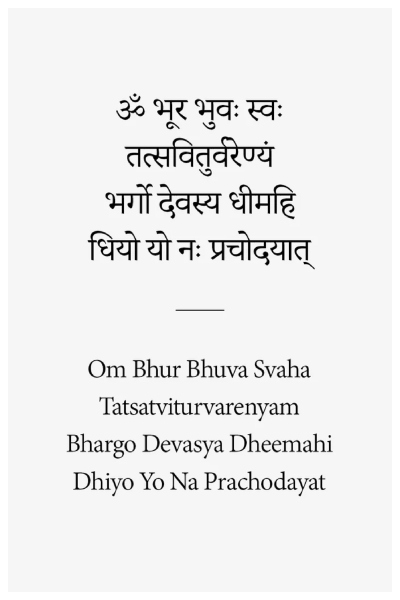
The recent proceedings before the Chhattisgarh High Court have once again demonstrated that India is not merely debating school prayers. It is debating something far more fundamental. The place of its own civilization in public life. A petition filed by former Chhattisgarh Waqf Board chairman Abdul Salam Rizvi, former Minority Commission chairman Mahendra Chhabda and social activist Shafique Ahmed challenged the State government's June 2026 circular introducing Saraswati Vandana, the Gayatri Mantra and Guru Vandana as part of morning assemblies in government schools.
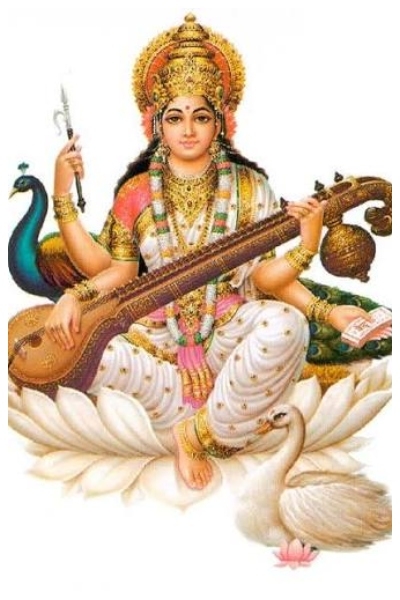 Hearing the matter, Justice Amitendra Kishore Prasad observed that no student could be compelled to participate in any religious prayer and recorded the State's submission that the circular had not yet been implemented. The petition was dismissed mainly for technical reasons but the ideology on which the petition was filed continues to haunt the nation since independence. Why does every discussion involving Indian schools eventually end up in court? Why are yoga, Surya Namaskar, Vande Mataram, Sanskrit, Saraswati Vandana and now school prayers repeatedly transformed into constitutional controversies? Why do such disputes almost invariably revolve around symbols rooted in India's majority civilisation? The answers lie much deeper than the courtroom.
Instead of confidently presenting Indian civilisation as the cultural foundation of the nation, successive intellectual and political establishments often treated it as a source of embarrassment. The assumption gradually emerged that visible expressions of India's ancient traditions in public institutions were incompatible with secularism. Over time, neutrality evolved into suspicion. Every indigenous symbol became a potential constitutional dispute.
This explains why the controversy is never confined to prayers. The same pattern has surfaced over Vande Mataram, Surya Namaskar, yoga, Sanskrit, the Bhagavad Gita, temple traditions and numerous other cultural practices. Considered individually, these may appear unrelated. Viewed together, they reveal a consistent intellectual trend that every symbol associated with India's civilisational heritage must first establish its constitutional legitimacy before it can occupy public space. No other civilisation imposes such a burden upon itself.
This confusion arises because India has often borrowed the European understanding of secularism without recognising the historical conditions that produced it. Europe experienced centuries of conflict between organised churches and political authority. Separation between Church and State emerged as a response to ecclesiastical domination. India's civilisational experience was entirely different.
The Indian concept of Dharma has never been identical to the institutional authority of a church. It represents a broader ethical and moral order governing individual conduct and social responsibility. Indian civilisation evolved through plural philosophical traditions rather than a single ecclesiastical institution. Applying European templates without accounting for this distinction inevitably produces intellectual contradictions.
The Chhattisgarh case should therefore not be remembered simply as litigation over school assemblies. It should compel India to ask a deeper question: Is our education system expected merely to produce employable individuals, or is it also expected to nurture citizens conscious of the civilisation that gave birth to the Republic? That question cannot be answered by courts alone.
The High Court has discharged its constitutional responsibility by affirming that participation in religious prayer cannot be compulsory. The larger responsibility, however, belongs to society. India must decide whether its ancient civilisational traditions deserve a dignified place in public education or whether every symbol of its heritage will continue to be viewed with inherited suspicion born of colonial thinking.
A civilisation does not disappear because it is defeated by an external enemy. More often, it fades when its own people begin to regard their inheritance as something requiring constant justification. Nations that lose confidence in their cultural foundations eventually lose confidence in themselves.
The debate over school prayers is therefore not about a few minutes in the morning assembly. It is about whether India possesses the intellectual confidence to educate its children as heirs to one of the world's oldest living civilisations while remaining fully committed to the constitutional promise of liberty, equality and freedom of conscience. That confidence not apology must define the nation's future.
The petitioners contended that the Chhattisgarh government's order violated Articles 14 (Right to Equality), 21 (Right to Life and Personal Liberty), 25 Freedom of Religion), 28 (1) No Religious Instructions in State Institutions, 29 (Protection if Cultural and Educational Rights and 30 (Rights of Minorities to Establish and Administer Educational Institutions. All these constitutional provisions are matter of heated debate for a long time and they have been used by Abrahamic religions to maintain their identity.They argued that compulsory recitation of Hindu prayers in state-funded schools infringed equality, personal liberty, freedom of religion, the prohibition on religious instruction in government schools, and the cultural and educational rights of minorities.
Every nation educates its children not merely to earn a livelihood but to inherit a civilisation. Education is the means through which a society transmits its collective memory, cultural values and moral imagination to the next generation. Without that continuity, a nation survives geographically but gradually weakens culturally.
Britain retains Christian traditions in many public ceremonies despite being a secular democracy. The United States invokes God in public life without questioning its constitutional commitment to religious liberty. Japan consciously nurtures respect for its cultural heritage. France fiercely protects symbols of its republican tradition. No nation apologises for introducing its children to the civilisation that shaped it. Only India appears hesitant.
The roots of this hesitation go back to colonial rule and Muslim invasion. Muslim invaders forced their religion on India by way of conversion to spread Islam. Thomas Babington Macaulay did not merely redesign India's education system. He attempted to redesign the Indian mind. The objective was to produce a class of Indians who would be detached from their own civilisational inheritance while remaining intellectually dependent upon Western frameworks. Political freedom came in 1947. Intellectual decolonisation, however, remained incomplete. Independent India inherited much of this colonial outlook.
This explains why the controversy is never confined to prayers. The same pattern has surfaced over Vande Mataram, Surya Namaskar, yoga, Sanskrit, the Bhagavad Gita, temple traditions and numerous other cultural practices. Considered individually, these may appear unrelated. Viewed together, they reveal a consistent intellectual trend that every symbol associated with India's civilisational heritage must first establish its constitutional legitimacy before it can occupy public space. No other civilisation imposes such a burden upon itself.
This confusion arises because India has often borrowed the European understanding of secularism without recognising the historical conditions that produced it. Europe experienced centuries of conflict between organised churches and political authority. Separation between Church and State emerged as a response to ecclesiastical domination. India's civilisational experience was entirely different.
The Indian concept of Dharma has never been identical to the institutional authority of a church. It represents a broader ethical and moral order governing individual conduct and social responsibility. Indian civilisation evolved through plural philosophical traditions rather than a single ecclesiastical institution. Applying European templates without accounting for this distinction inevitably produces intellectual contradictions.
The Constitution itself reflects a balanced vision. It guarantees freedom of conscience while preserving India's civilisational identity through countless symbols and institutions. The Republic adopted Satyameva Jayate from the Upanishads as its national motto. Courts function beneath the Ashoka Chakra. Parliament opens with traditions rooted in Indian history. None of these diminish constitutional equality. They enrich it. The real constitutional question, therefore, is not whether India may acknowledge its civilisation. The real question is whether such acknowledgement crosses the line into coercion. That distinction must never be blurred.
Schools exist not merely to produce engineers, doctors and administrators but to shape responsible citizens. Character formation requires moral reference points, historical memory and cultural confidence. A nation that hesitates to introduce its children to its own civilisational ethos gradually loses the ability to preserve that ethos altogether. Unfortunately, sections of India's intellectual discourse continue to interpret every civilisational expression through the narrow lens of religious majoritarianism. This approach impoverishes both constitutional debate and national self-understanding. Civilisations are not sustained by constitutional clauses alone. They endure because each generation recognises itself as part of an ongoing historical journey.
ALSO READ: When Congress Takes India's Integrity Lightly
A civilisation does not disappear because it is defeated by an external enemy. More often, it fades when its own people begin to regard their inheritance as something requiring constant justification. Nations that lose confidence in their cultural foundations eventually lose confidence in themselves.
The debate over school prayers is therefore not about a few minutes in the morning assembly. It is about whether India possesses the intellectual confidence to educate its children as heirs to one of the world's oldest living civilisations while remaining fully committed to the constitutional promise of liberty, equality and freedom of conscience. That confidence not apology must define the nation's future.

Editor's Desk
Editor's Desk