Bhindranwale, Akbar Road, and the making of a crisis
Bhindranwale too was systematically building his team. In case his authority was refused by someone, Killer Squad was formed to deal with it.
NewsBharati 15-Jul-2026 13:21:32 PM
Total Views |


In 1982, Indira ji, the then PM, was on a state visit to the US. Our intelligence department had a sense of the threat to her life there. There was an attempt, which was foiled successfully; the trip was uneventful from this perspective.
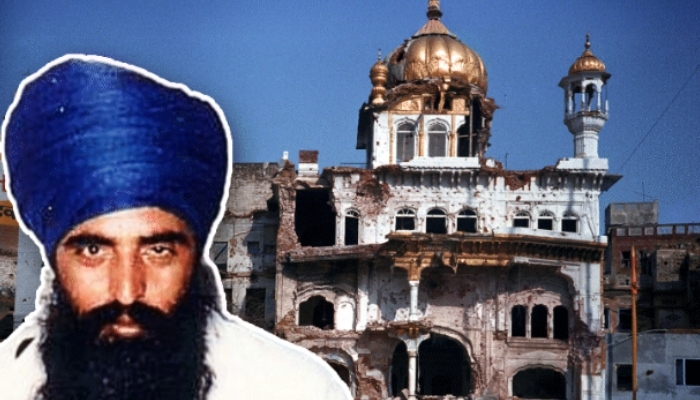
Bhindranwale too was systematically building his team. In case his authority was refused by someone, Killer Squad was formed to deal with it. The squad had 4 deserters, an escaped convict, and other members. Bhindranwale had his own way to resolve disputes with quick justice, even by using the Killing Squad. The then chief minister of the state was also attacked, but he was fortunately saved. Bombs were thrown, a branch of a national bank was looted, and target killings were carried out. Bhindranwale behaved the way as if he had total immunity from the Law. Killing of Avtar Singh Atwal, DIG of police, Jalandhar range (25 April 1983,10 am) was one such example. He visited the Golden Temple as a normal devotee. Police could not do anything when he was shot. His body could not be removed for 2 hours from the spot.
DIG Atwal was able to plant one source near Bhindranwale's circle. He had the information that on 15 March 1983, the killer squad was assigned a task. His source, too, was identified later and killed. Obviously, all this was to create fear in the minds of people, but it was not the right moment to take action against the killers, opines the author.
1 Akabar Road had placed its trusted men in Bhindranwale's inner circle to control Bhindranwale's activities. The author suspects one of them could be Harminder Singh Sandhu, who spoke fluent English and used to work as an interpreter when English-speaking visitors came to meet Bhindranwale. He was the only person who surrendered during Operation Blue Star alive. Of course, there could be more people like him.
All such things were managed by the 1 Akbar Road group, obviously.
The environment was increasingly becoming poisonous; it was turning against Hindus to a great extent. The president of the state congress and an MP for whom Bhindranwale campaigned maintained contact with him. Many in Amritsar were aware of the connection.
Though fingers were pointed at the police for insufficient intelligence, the Governor did not endorse it. On the contrary, the police provided detailed information for the operation about the arms. The interference of the central government was also increasing; finally, the governor resigned on 3 July 1984.
Some people were fiercely against Bhindranwale in Punjab and strongly condemned the murders of Hindus.
On 15 December 1883, Bhindranwale shifted to Akal Takht. He used to hold his darbar there; his sermons were mostly anti-Hindu. He was criticised then too. He demanded to implement Anandpur Sahib Resolution. On Republic Day in 1984, the flag of Khalistan could be seen on a building near the Golden Temple. Akalis too started putting forth their original demands. When Akali Dal leaders were arrested in February 1984, it gave a call for a general strike. Provocative speeches were made, but if the governor made arrests, he was questioned.
The situation was such that around 14 sikhs were killed in the violence during the strike called by the Hindu Suraksha Samiti in Punjab. So Akalis walked out of the discussion. The Hindu leader ( who had links with Haryana CM ) was provoking his people to attack the Sikhs. In Haryana, attacks on Sikhs started,anti-Sikh riot broke out. The Haryana CM too played his role by warning Sikhs not to test the patience of Hindus. Sikhs were killed in Haryana. When the Hindu leader was arrested for his speeches, the Haryana CM and the Union Home Minister rang up to seek the release of the Hindu leader.
The governor refused, but it shows that the author notes that even Hindu communalists were supported by the highest Congress circles. On the contrary, the governor observed that even in Delhi and UP, Sikhs were attacked. The leaders and, to an extent, even the press, too, helped in cultivating resentment against the Sikhs.
Armed men of Bhindranwale were openly moving in the Golden Temple, positions were being taken, and arms and ammunition were being moved in. Men were trained for the struggle. Defence was prepared around the Akal Takth. This was known to the Punjab government; unfortunately, the entire machinery, in a way, was under the control of extremists. Bhindranwale, in any case, wanted to have full control. Akalis wanted to have some concessions to be able to withdraw the morcha, but the details were disclosed to the press to damage their credibility. (They had a long telephonic conversation with the PM)
In Punjab, Bhindranwale was, in a way, going ahead unrestricted, and the Akalis were left with no face-saving point. National elections were still 2 years away. Thus, the author writes that the tension was to be created, but it was not to cross a limit prematurely. The intervention was planned before the end of 1984. A 3 member team of senior-level bureaucrats was formed to manage the situation in Punjab. Advisers to the governor of Punjab were also appointed.
Bhindranwale too was systematically building his team. In case his authority was refused by someone, Killer Squad was formed to deal with it. The squad had 4 deserters, an escaped convict, and other members. Bhindranwale had his own way to resolve disputes with quick justice, even by using the Killing Squad. The then chief minister of the state was also attacked, but he was fortunately saved. Bombs were thrown, a branch of a national bank was looted, and target killings were carried out. Bhindranwale behaved the way as if he had total immunity from the Law. Killing of Avtar Singh Atwal, DIG of police, Jalandhar range (25 April 1983,10 am) was one such example. He visited the Golden Temple as a normal devotee. Police could not do anything when he was shot. His body could not be removed for 2 hours from the spot.
DIG Atwal was able to plant one source near Bhindranwale's circle. He had the information that on 15 March 1983, the killer squad was assigned a task. His source, too, was identified later and killed. Obviously, all this was to create fear in the minds of people, but it was not the right moment to take action against the killers, opines the author.
There was overwhelming fear or dread in the minds of Hindus who wanted it to end. Akalis too had initiated a Rasta Roko to create pressure on the central government, but Bhindranwale was also allowed to proceed fast in that direction. (planning by Akbar Road)
1 Akabar Road had placed its trusted men in Bhindranwale's inner circle to control Bhindranwale's activities. The author suspects one of them could be Harminder Singh Sandhu, who spoke fluent English and used to work as an interpreter when English-speaking visitors came to meet Bhindranwale. He was the only person who surrendered during Operation Blue Star alive. Of course, there could be more people like him.
All such things were managed by the 1 Akbar Road group, obviously.
The environment was increasingly becoming poisonous; it was turning against Hindus to a great extent. The president of the state congress and an MP for whom Bhindranwale campaigned maintained contact with him. Many in Amritsar were aware of the connection.
Bhindranwale's killer squad was also active; he wanted to repay in his own way. Police, government officials, Hindus, as well as sikhs were on his list. The incidents of hijacking buses, separating Hindus, and shooting were one such incident. In September 1983, the chief minister was changed, and bureaucrats were transferred to ensure the law and order situation in the state. This did not stop terrorist activities; on the other hand, the discord between the police force and CRPF was growing, notes the author.
ALSO READ: How a 'strong-toned preacher' became a political pawn: Bhindranwale's early years
Though fingers were pointed at the police for insufficient intelligence, the Governor did not endorse it. On the contrary, the police provided detailed information for the operation about the arms. The interference of the central government was also increasing; finally, the governor resigned on 3 July 1984.
Some people were fiercely against Bhindranwale in Punjab and strongly condemned the murders of Hindus.
On 15 December 1883, Bhindranwale shifted to Akal Takht. He used to hold his darbar there; his sermons were mostly anti-Hindu. He was criticised then too. He demanded to implement Anandpur Sahib Resolution. On Republic Day in 1984, the flag of Khalistan could be seen on a building near the Golden Temple. Akalis too started putting forth their original demands. When Akali Dal leaders were arrested in February 1984, it gave a call for a general strike. Provocative speeches were made, but if the governor made arrests, he was questioned.
As a consequence, Sikhs were attacked by Hindu mobs in Haryana. Akalis were again invited for the discussion on 14 February 1984. By this time, the divide between Hindus and Sikhs had deepened considerably. The leaders from both the communities had links with the high-level congress leaders, observed Mark Tully and Satish Jacob.
ALSO READ: Operation Blue Star: Negotiations were nothing more than a pretence
The situation was such that around 14 sikhs were killed in the violence during the strike called by the Hindu Suraksha Samiti in Punjab. So Akalis walked out of the discussion. The Hindu leader ( who had links with Haryana CM ) was provoking his people to attack the Sikhs. In Haryana, attacks on Sikhs started,anti-Sikh riot broke out. The Haryana CM too played his role by warning Sikhs not to test the patience of Hindus. Sikhs were killed in Haryana. When the Hindu leader was arrested for his speeches, the Haryana CM and the Union Home Minister rang up to seek the release of the Hindu leader.
The governor refused, but it shows that the author notes that even Hindu communalists were supported by the highest Congress circles. On the contrary, the governor observed that even in Delhi and UP, Sikhs were attacked. The leaders and, to an extent, even the press, too, helped in cultivating resentment against the Sikhs.
In Punjab, some Hindu leaders were killed in broad daylight. Even an air force officer was shot dead. The former DSP, along with his wife and daughter were shot. In the 2 months of April and May 1984, around 80 people were killed by the extremists.
Armed men of Bhindranwale were openly moving in the Golden Temple, positions were being taken, and arms and ammunition were being moved in. Men were trained for the struggle. Defence was prepared around the Akal Takth. This was known to the Punjab government; unfortunately, the entire machinery, in a way, was under the control of extremists. Bhindranwale, in any case, wanted to have full control. Akalis wanted to have some concessions to be able to withdraw the morcha, but the details were disclosed to the press to damage their credibility. (They had a long telephonic conversation with the PM)
The last round of talks was held on 26 May. This was the situation just before the Operation, probably it was just the right time for the action.
(This is the fifth part of a series of 8 articles based on the book The Khalistan Conspiracy, written by author GB Sidhu. To read the previous part, click here, here, here, and here)
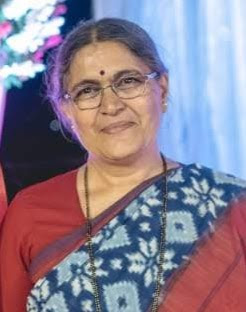
Prof. Vidya Deshpande
Professor Vidya Deshpande has had a journey of more than four decades in the field of education. Her main expertise is in the subject of Philosophy, and she has worked as a teacher of philosophy and logic with Nowrosjee Wadia college for 36 years. She has been associated with the Janakalyan Blood bank for last for 38 years and has also carried out the responsibility as a management committee member of Karve Stree Shikshan Sanstha for 10 years. Her special fields of interest are Philosophy of social sciences, school education, development of skills for self reliance, and top up skills to make students profession ready,