Pradhan's resignation is not end of battle
NewsBharati 27-Jul-2026 12:43:00 PM
Total Views |


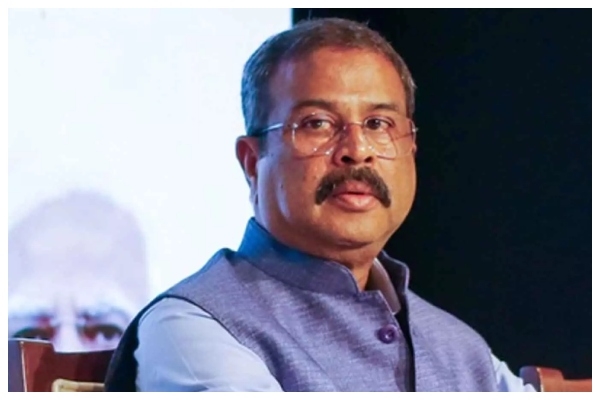
The resignation of Union Education Minister Dharmendra Pradhan marks a significant political development. The BJP is not a party known for taking such decisions impulsively. Over the past decade, it has repeatedly demonstrated an unusual capacity to absorb political setbacks, recalibrate its strategy and eventually regain the initiative. Whether Pradhan's resignation is an act of political accountability, damage control or a calculated strategic move is for the BJP leadership to explain. It undoubtedly has its own political calculations. But one thing is certain: the government must not mistake the end of one controversy for the end of a larger campaign.
The events surrounding the Jantar Mantar agitation have already demonstrated a familiar pattern. A single issue becomes the trigger, but the objective gradually expands beyond the original grievance. The movement acquires political overtones, new groups join the platform, old ideological allies return to the streets, and the narrative shifts from one policy failure to questioning the legitimacy of the elected government itself. The issue changes; the agitation remains.
This is not an unfamiliar model. Across the past several years, India has witnessed a succession of prolonged agitations in which the original issue gradually became secondary while the political objective became increasingly visible. The organisers have repeatedly sought to create an atmosphere where the streets overshadow constitutional institutions and where continuous mobilisation becomes an end in itself. A democracy certainly permits protest, but democracy cannot function if every political disagreement is converted into a permanent agitation.
More disturbing is the open rhetoric employed by several individuals associated with these campaigns. On numerous occasions, political figures and activists have publicly predicted that the Modi government would not complete its term or would be brought down within a year. In a democracy, governments change only through elections or constitutional processes. When political discourse increasingly revolves around bringing down an elected government through relentless extra-parliamentary pressure, legitimate questions naturally arise about the larger objectives behind such campaigns.
Equally troubling are persistent allegations regarding the role of networks operating beyond India's borders. It has long been alleged that certain activist ecosystems receive intellectual, logistical or financial support from organisations and interests outside the country. Such allegations require careful investigation based on evidence, not speculation. If any individual or organisation is found to be acting at the behest of foreign interests or in a manner prejudicial to India's sovereignty, the law must take its course without fear or favour. National security cannot become a casualty of political hesitation.
Respect for democracy does not require the State to remain passive before those who allegedly work against the nation's interests. On the contrary, every democratic government has both the authority and the responsibility to protect constitutional order, public institutions and national integrity. Peaceful protest is a constitutional right; organised attempts to destabilise democratic institutions or advance foreign agendas are not. Confusing the two serves neither democracy nor liberty.
The government must therefore move on two parallel tracks. First, it must address genuine public grievances with transparency and efficiency. Where administrative failures occur, accountability should be swift. That strengthens democracy rather than weakens it. Second, agencies must investigate, with due process and credible evidence, any activities that may involve unlawful foreign influence, illegal funding or conspiracies against the country's constitutional framework. Such investigations should be professional, transparent and insulated from partisan considerations. If wrongdoing exists, it must be exposed before the people.

The resignation may have addressed an immediate political demand, but it has not altered the mindset or objectives of those who orchestrated the agitation. If anything, they will now interpret it as proof that sustained street pressure can force the government's hand. That is precisely why the BJP and the Union government must remain politically and administratively alert.
The events surrounding the Jantar Mantar agitation have already demonstrated a familiar pattern. A single issue becomes the trigger, but the objective gradually expands beyond the original grievance. The movement acquires political overtones, new groups join the platform, old ideological allies return to the streets, and the narrative shifts from one policy failure to questioning the legitimacy of the elected government itself. The issue changes; the agitation remains.
There is little reason to believe this cycle will stop with Dharmendra Pradhan's resignation. Those who mobilised the protests are unlikely to disband simply because one demand has been conceded. Another issue will soon be found. Another slogan will be coined. Another campaign will begin. The strategy is to keep the political temperature permanently high and governance under constant pressure.
ALSO READ: Maharashtra TET paper leak: Alleged mastermind arrested in Bihar
More disturbing is the open rhetoric employed by several individuals associated with these campaigns. On numerous occasions, political figures and activists have publicly predicted that the Modi government would not complete its term or would be brought down within a year. In a democracy, governments change only through elections or constitutional processes. When political discourse increasingly revolves around bringing down an elected government through relentless extra-parliamentary pressure, legitimate questions naturally arise about the larger objectives behind such campaigns.
Equally troubling are persistent allegations regarding the role of networks operating beyond India's borders. It has long been alleged that certain activist ecosystems receive intellectual, logistical or financial support from organisations and interests outside the country. Such allegations require careful investigation based on evidence, not speculation. If any individual or organisation is found to be acting at the behest of foreign interests or in a manner prejudicial to India's sovereignty, the law must take its course without fear or favour. National security cannot become a casualty of political hesitation.
Respect for democracy does not require the State to remain passive before those who allegedly work against the nation's interests. On the contrary, every democratic government has both the authority and the responsibility to protect constitutional order, public institutions and national integrity. Peaceful protest is a constitutional right; organised attempts to destabilise democratic institutions or advance foreign agendas are not. Confusing the two serves neither democracy nor liberty.
For the BJP, the lesson is equally important. Winning electoral mandates does not eliminate the challenge posed by organised political campaigns outside the electoral arena. A party that has repeatedly demonstrated resilience should not lower its guard after one tactical decision. Political opponents will regroup, redefine their narrative and search for the next flashpoint. Preparedness not complacency must therefore guide both the party organisation and the government.
Dharmendra Pradhan's resignation may temporarily lower the political temperature, but silence should not be mistaken for peace. Those committed to perpetual confrontation are unlikely to retire from the streets. They will wait, reorganise and return with another cause. Democracy has every reason to accommodate dissent, but it has no obligation to tolerate attempts to undermine constitutional governance or India's national interests. The government must remain vigilant, investigate any unlawful activities rigorously, and ensure that those found guilty under the law are held accountable. In a democracy, political battles must ultimately be decided by the ballot not by permanent agitation or by any unlawful attempt to weaken the constitutional order.

Editor's Desk
Editor's Desk