July 4th: Taliban Style Extremism in Kerala
NewsBharati 04-Jul-2026 14:31:25 PM
Total Views |


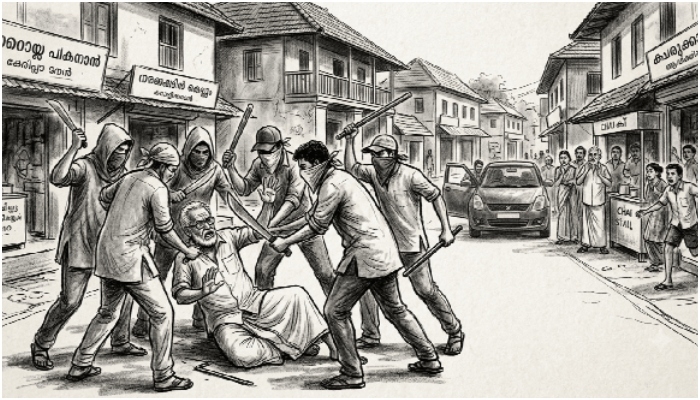
On 4th July 2010, Professor T.J. Joseph, a Malayalam professor at Newman College, Thodupuzha (Idukki district, Kerala), had his right palm chopped in a brutal daylight attack near his home in Muvattupuzha, Ernakulam district. The attackers, identified as members of the Popular Front of India (PFI, now a banned organization), attacked in retaliation for a question in a college internal exam paper of B.Com. class that they claimed insulted Prophet Muhammad.
The case highlighted issues of religious fanaticism, freedom of expression, and the misuse of blasphemy allegations by Islamists in India. Multiple trials by local police and the National Investigation Agency (NIA) led to convictions, including life sentences for some accused. The prime accused, who physically chopped off the hand, P.P. Savad, was arrested only in January 2024 after 13 years on the run.
Kerala is often eulogized for its literacy record, and the Political Left symbolizes it as a utopia where religious progressiveness is exemplary. This issue proves that when it comes to extreme religious fanaticism, Christian-Muslim unity peddled by the Political Left has little substance on the ground in India.
Background: The Controversial Exam Question
In March 2010, Professor Joseph prepared an internal exam question paper on the Malayalam subject for the second-semester B.Com. Students at Newman College (a Christian minority institution affiliated with Mahatma Gandhi University). Question 11 was a punctuation exercise adapted from a book on screenplay writing by filmmaker P.T. Kunju Muhammed.
Joseph maintained it was an unintentional academic exercise taken from a university-approved source and not intended as blasphemy against the Prophet Muhammad. No students initially objected. However, after media reports, notably in the newspaper Madhyamam, protests erupted. It is to be noted that the newspaper was founded by Ideal Publications Trust, run by the Jamaat-e-Islami Hind faction of Kerala. Protests against Joseph were led by PFI’s student wing (Campus Front), along with other Muslim organizations accusing Joseph of insulting Islam.
Police registered a case under IPC Section 295A (deliberate acts intended to outrage religious feelings). Joseph went into hiding briefly, then surrendered and was released on bail. The college suspended him and issued an apology. He was later acquitted of all charges in 2013.
The Attack: 4th July 2010
On a rainy Sunday morning, after attending Mass at church with his mother and sister, Joseph was driving home in Muvattupuzha when a Maruti Omni van blocked his car near his house (barely 100 meters away). A group of 7–8 PFI activists smashed the windscreen, dragged Joseph out and attacked him with axes, knives, and machetes. The prime assailant, P.P. Savad, severed Joseph’s right palm at the wrist and flung it aside. Joseph was also stabbed in the left thigh and suffered other severe wounds. His sister and mother were attacked when they tried to intervene. The attackers detonated crude bombs and fled.
Joseph pleaded for his life during the assault (“Don’t kill me… please don’t kill me”). Neighbors rushed him and the severed hand (packed in ice) to Nirmala Hospital and later to Specialists Hospital in Kochi.
Medical Response and Survival
Six doctors performed a 16-hour surgery using 16 bottles of blood to reattach the hand and repair the wrist, forearm, and other injuries. Joseph spent 35 days in hospital (out of which 11 days in critical care) and underwent further operations in 2010–2011. He lost sensation in parts of his right hand and learned to write and eat with his left hand. He survived but lives with permanent disability and ongoing medical needs.
Investigation and Legal Proceedings
In July 2023, a supplementary charge-sheet was filed against 11, of whom 6 were convicted while 5 were acquitted. Three received life imprisonment. In January 2024, Prime accused P. P. Savad (the man who physically chopped off the hand) was arrested by the NIA in Mattannur, Kannur district, after 13+ years as a fugitive. He had been living as a carpenter.
In May 2026, charges were framed against Savad at the special court in Kochi under the offences booked by the National Investigation Agency (NIA).
Impact on Professor Joseph and His Family
Joseph was terminated from Newman College in September 2010 (reinstated only days before his retirement in 2014, entitling him to arrears). The family faced severe financial hardship. His wife, Salomi (aged 48), struggled with depression and trauma. She died by hanging herself in March 2014. Joseph has said her death “still haunts” him more than the physical attack itself. He has spoken of premonitions of danger and prior threats to his home.
Relevance of this case today
If we compare this case with the beheading of Kanhaiyalal, the tailor in Udaipur, it can be said that religious fanaticism on the pretext of Blasphemy is as relevant today as it was in Prof. Joseph's case.
The level of planning, preparations, and involvement of organizations like PFI proves the presence of an extremist ecosystem that has been nurtured in Kerala, right under the nose of the state government.
Christians of Kerala are as vulnerable to organized Islamic extremism as Hindus, and the Christian-Muslim Unity is as lasting as a snowflake.
Joseph survived after extensive surgery to reattach his hand, but the incident caused a permanent disability, job loss and profound family trauma, including his wife’s suicide in 2014.
The case highlighted issues of religious fanaticism, freedom of expression, and the misuse of blasphemy allegations by Islamists in India. Multiple trials by local police and the National Investigation Agency (NIA) led to convictions, including life sentences for some accused. The prime accused, who physically chopped off the hand, P.P. Savad, was arrested only in January 2024 after 13 years on the run.
Kerala is often eulogized for its literacy record, and the Political Left symbolizes it as a utopia where religious progressiveness is exemplary. This issue proves that when it comes to extreme religious fanaticism, Christian-Muslim unity peddled by the Political Left has little substance on the ground in India.
Background: The Controversial Exam Question
In March 2010, Professor Joseph prepared an internal exam question paper on the Malayalam subject for the second-semester B.Com. Students at Newman College (a Christian minority institution affiliated with Mahatma Gandhi University). Question 11 was a punctuation exercise adapted from a book on screenplay writing by filmmaker P.T. Kunju Muhammed.
The passage featured a dialogue between God and a schizophrenic/mad character (a village idiot figure). The dialogue contained vulgar language typical of the original literary context.
Joseph maintained it was an unintentional academic exercise taken from a university-approved source and not intended as blasphemy against the Prophet Muhammad. No students initially objected. However, after media reports, notably in the newspaper Madhyamam, protests erupted. It is to be noted that the newspaper was founded by Ideal Publications Trust, run by the Jamaat-e-Islami Hind faction of Kerala. Protests against Joseph were led by PFI’s student wing (Campus Front), along with other Muslim organizations accusing Joseph of insulting Islam.
Police registered a case under IPC Section 295A (deliberate acts intended to outrage religious feelings). Joseph went into hiding briefly, then surrendered and was released on bail. The college suspended him and issued an apology. He was later acquitted of all charges in 2013.
The Attack: 4th July 2010
On a rainy Sunday morning, after attending Mass at church with his mother and sister, Joseph was driving home in Muvattupuzha when a Maruti Omni van blocked his car near his house (barely 100 meters away). A group of 7–8 PFI activists smashed the windscreen, dragged Joseph out and attacked him with axes, knives, and machetes. The prime assailant, P.P. Savad, severed Joseph’s right palm at the wrist and flung it aside. Joseph was also stabbed in the left thigh and suffered other severe wounds. His sister and mother were attacked when they tried to intervene. The attackers detonated crude bombs and fled.
Joseph pleaded for his life during the assault (“Don’t kill me… please don’t kill me”). Neighbors rushed him and the severed hand (packed in ice) to Nirmala Hospital and later to Specialists Hospital in Kochi.
Medical Response and Survival
Six doctors performed a 16-hour surgery using 16 bottles of blood to reattach the hand and repair the wrist, forearm, and other injuries. Joseph spent 35 days in hospital (out of which 11 days in critical care) and underwent further operations in 2010–2011. He lost sensation in parts of his right hand and learned to write and eat with his left hand. He survived but lives with permanent disability and ongoing medical needs.
Investigation and Legal Proceedings
Local police initially investigated, and raids on PFI/SDPI offices recovered weapons, explosives, and radical material. The NIA later took over due to the organized nature of the attack and PFI links. Multiple charge sheets were filed against dozens of accused (over 30–37 at various stages). During the 2015 verdict (the first major phase), 13 PFI activists were convicted; 10 were sentenced to 8 years of rigorous imprisonment and 3 to 2 years of imprisonment. 18 accused were acquitted.
In July 2023, a supplementary charge-sheet was filed against 11, of whom 6 were convicted while 5 were acquitted. Three received life imprisonment. In January 2024, Prime accused P. P. Savad (the man who physically chopped off the hand) was arrested by the NIA in Mattannur, Kannur district, after 13+ years as a fugitive. He had been living as a carpenter.
In May 2026, charges were framed against Savad at the special court in Kochi under the offences booked by the National Investigation Agency (NIA).
Impact on Professor Joseph and His Family
Joseph was terminated from Newman College in September 2010 (reinstated only days before his retirement in 2014, entitling him to arrears). The family faced severe financial hardship. His wife, Salomi (aged 48), struggled with depression and trauma. She died by hanging herself in March 2014. Joseph has said her death “still haunts” him more than the physical attack itself. He has spoken of premonitions of danger and prior threats to his home.
Professor Joseph welcomed the 2022 ban on PFI. He wrote a book

Relevance of this case today
If we compare this case with the beheading of Kanhaiyalal, the tailor in Udaipur, it can be said that religious fanaticism on the pretext of Blasphemy is as relevant today as it was in Prof. Joseph's case.
The level of planning, preparations, and involvement of organizations like PFI proves the presence of an extremist ecosystem that has been nurtured in Kerala, right under the nose of the state government.
Christians of Kerala are as vulnerable to organized Islamic extremism as Hindus, and the Christian-Muslim Unity is as lasting as a snowflake.

Prithvi Gehlot
Prithvi Gehlot