Allahabad HC refuses to quash FIR in triple talaq-halala case; says personal law cannot shield rape, POCSO offences
Total Views |


In a significant ruling, the Allahabad High Court has refused to quash an FIR against multiple accused booked for allegedly subjecting a Muslim woman to repeated sexual exploitation under the guise of triple talaq and nikah halala, holding that personal law cannot be invoked as a defence when allegations disclose serious criminal offences such as rape and offences under the POCSO Act.
The Court observed that while personal laws may govern marriage and family matters, they cannot override criminal law or provide immunity where allegations disclose offences against a woman's dignity, bodily integrity and personal liberty.
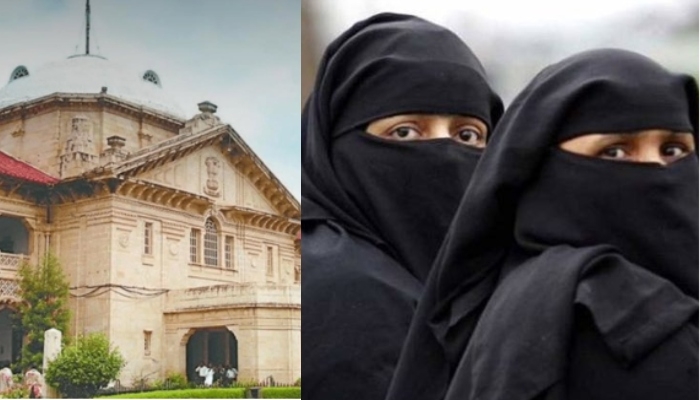
"When it comes to criminal law, unless the law itself makes an exception, which it rarely does, there is absolutely no place for pleading personal laws governing marriage... if, interlaced with a matrimonial relationship, a crime were committed," the Bench observed.
According to the prosecution, the accused later persuaded the complainant to return by promising to reunite the family. She alleged that she was again forced to undergo nikah halala, during which two co-accused allegedly raped her under the pretext of religious practice. The woman further claimed that the subsequent marriage ceremony with her former husband was fraudulent and that she was deceived into believing she was legally married while continuing to be sexually exploited.
"This matter requires a thorough investigation. It is certainly not a case where the prosecution can be quashed at the threshold," the Court held. In one of its strongest observations, the High Court remarked that the facts emerging from the case depict a social reality that is fundamentally inconsistent with the constitutional guarantees of equality, dignity and personal liberty.
"The circumstances of this case... militate against the constitutional aspirations and guarantees" embodied in Articles 14 and 21 of the Constitution, the Bench observed, adding that the allegations were "shocking to the conscience."
While clarifying that it was not examining the constitutional validity of any religious practice, since that issue did not arise in the proceedings, the Court emphasised that no religious or personal law practice can insulate acts that amount to cognisable criminal offences under Indian law. The Bench ultimately dismissed the plea, observing that the allegations disclosed the involvement of multiple accused who allegedly played different roles in an organised course of conduct that, taken together, prima facie constituted offences under the criminal law.
The ruling reinforces the legal position that religious customs or personal law cannot be used as a shield against prosecution for serious crimes, particularly where allegations involve sexual offences against women and children. It also reiterates that constitutional protections of dignity, equality and bodily autonomy remain paramount when courts examine allegations of criminal conduct, irrespective of the personal law under which the parties claim to act.
The Court observed that while personal laws may govern marriage and family matters, they cannot override criminal law or provide immunity where allegations disclose offences against a woman's dignity, bodily integrity and personal liberty.
A Division Bench comprising Justice J.J. Munir and Justice Tarun Saxena made the observations while dismissing a petition seeking quashing of an FIR registered under various provisions of the Bharatiya Nyaya Sanhita (BNS), the Muslim Women (Protection of Rights on Marriage) Act, 2019, and the Protection of Children from Sexual Offences (POCSO) Act, 2012.
"When it comes to criminal law, unless the law itself makes an exception, which it rarely does, there is absolutely no place for pleading personal laws governing marriage... if, interlaced with a matrimonial relationship, a crime were committed," the Bench observed.
According to the FIR, the complainant alleged that she was married to Azhar Nawaz in 2015, when she was only 15 years old. She claimed that after subjecting her to domestic violence, her husband pronounced triple talaq in 2016. The woman alleged that a few months later, her husband sought to remarry her but insisted that she first undergo nikah halala with another man. She was allegedly compelled to do so before being remarried to her former husband.
ALSO READ: Who is Pakistani assassin Mumtaz Qadri? The key question in the Jalna school 'Sar Tan Se Juda' video dispute that media reportedly downplays
The FIR further states that after the birth of a daughter, the accused once again subjected her to cruelty and pronounced triple talaq in 2021 before marrying another woman during the complainant's iddat period.
इलाहाबाद हाईकोर्ट ने हलाला के नाम पर नाबालिग के कथित यौन शोषण और गैंगरेप मामले में FIR रद्द करने से इनकार कर दिया।
— News Tv India (@TheNewsTVIndia) July 5, 2026
कोर्ट ने कहा कि किसी भी प्रथा की आड़ में महिलाओं के यौन शोषण की अनुमति नहीं दी जा सकती।#AllahabadHighCourt | #HalalaCase | pic.twitter.com/bU5208jPbJ
According to the prosecution, the accused later persuaded the complainant to return by promising to reunite the family. She alleged that she was again forced to undergo nikah halala, during which two co-accused allegedly raped her under the pretext of religious practice. The woman further claimed that the subsequent marriage ceremony with her former husband was fraudulent and that she was deceived into believing she was legally married while continuing to be sexually exploited.
Examining the allegations, the High Court noted that the complainant was a minor at the time of her first marriage and the first halala, making the allegations prima facie disclose offences of statutory rape and violations under the POCSO Act. The Bench further held that the allegations relating to the second halala ceremony, if proved, prima facie constitute gang rape, warranting a full-fledged criminal investigation.
"This matter requires a thorough investigation. It is certainly not a case where the prosecution can be quashed at the threshold," the Court held. In one of its strongest observations, the High Court remarked that the facts emerging from the case depict a social reality that is fundamentally inconsistent with the constitutional guarantees of equality, dignity and personal liberty.
"The circumstances of this case... militate against the constitutional aspirations and guarantees" embodied in Articles 14 and 21 of the Constitution, the Bench observed, adding that the allegations were "shocking to the conscience."
While clarifying that it was not examining the constitutional validity of any religious practice, since that issue did not arise in the proceedings, the Court emphasised that no religious or personal law practice can insulate acts that amount to cognisable criminal offences under Indian law. The Bench ultimately dismissed the plea, observing that the allegations disclosed the involvement of multiple accused who allegedly played different roles in an organised course of conduct that, taken together, prima facie constituted offences under the criminal law.
The ruling reinforces the legal position that religious customs or personal law cannot be used as a shield against prosecution for serious crimes, particularly where allegations involve sexual offences against women and children. It also reiterates that constitutional protections of dignity, equality and bodily autonomy remain paramount when courts examine allegations of criminal conduct, irrespective of the personal law under which the parties claim to act.