Mamata Banerjee camp hits panic button as rebels stake claim to ‘Real TMC’: All about the controversy
The Mamata Banerjee-led faction of the Trinamool Congress has approached the Election Commission, dismissing the rebel camp’s claim of being the “real AITC”. TMC MP Kalyan Banerjee said all party committees remain valid until 2027 and accused the rebels of violating the party constitution and misleading the poll panel.
08-Jul-2026 15:36:49 PM
Total Views |


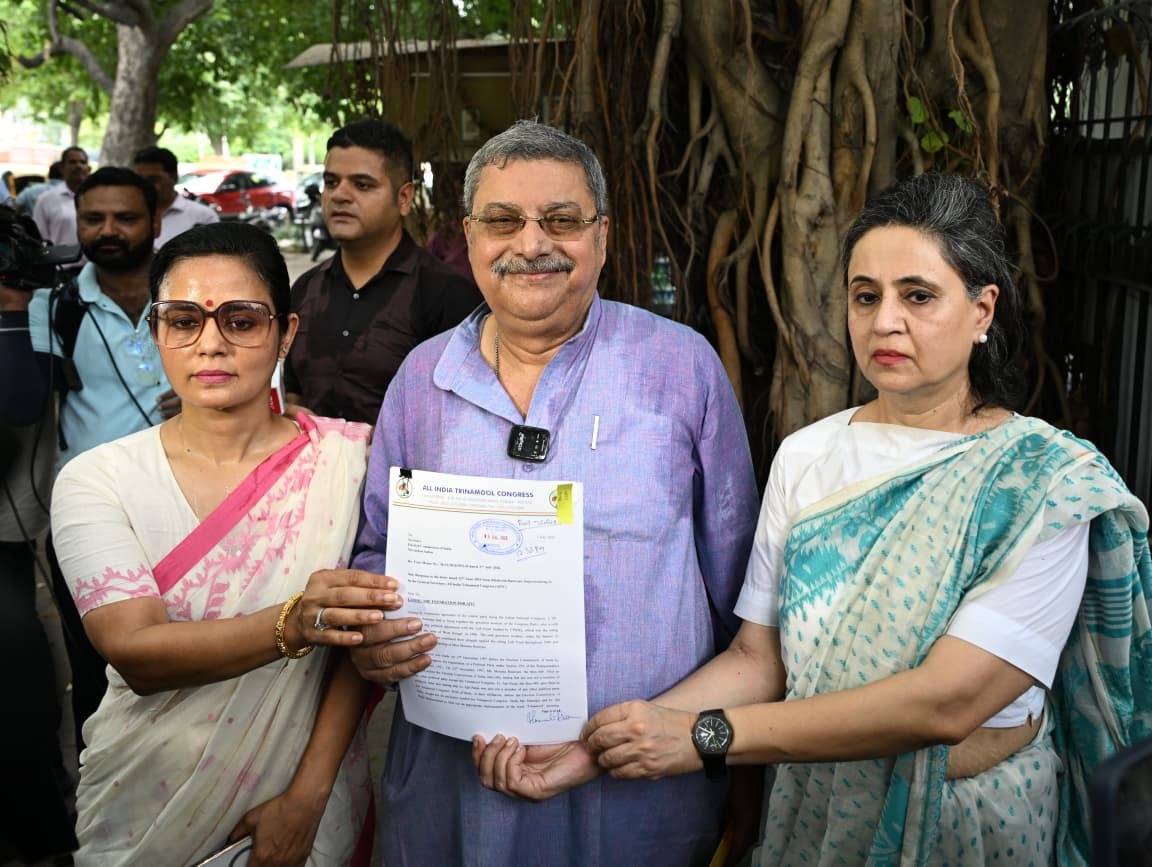
Source- The Hindu
The internal battle within the Trinamool Congress (TMC) intensified on Monday (July 6) as the Mamata Banerjee-led faction formally rejected the rebel camp’s claim of being the “real” All India Trinamool Congress (AITC) before the Election Commission (EC).
A delegation comprising TMC MPs Kalyan Banerjee, Mahua Moitra, and Sagarika Ghose met Election Commission officials and submitted a detailed response challenging the claims made by the faction led by rebel leader Ritabrata Banerjee.
Addressing the media after the meeting, Kalyan Banerjee said the rebel camp’s contention that the party’s National Working Committee and organisational structure ceased to exist in 2025 was “completely false” and had no constitutional or legal basis.
“Ritabrata Banerjee is alleged secretary of alleged TMC.
— News Arena India (@NewsArenaIndia) July 6, 2026
We have filed detailed reply to EC.”
- TMC MP Kalyan Banerjee on party symbol row pic.twitter.com/NGKgSgV1DO
“The party constitution clearly states that all organisational committees remain valid until 2027. The claims made by the rebel faction are factually incorrect and legally unsustainable,” Banerjee said.
Mamata camp questions rebels legitimacy
The TMC leadership questioned how the rebel leaders could challenge the legitimacy of the party organisation while simultaneously contesting the 2026 West Bengal Assembly elections on the party’s symbol.
Banerjee argued that if the rebels genuinely believed the party structure had expired in 2025, they should explain how they contested elections using the TMC's official election symbol and nomination papers authorised by Mamata Banerjee.
“If their argument is accepted, then their own elections become invalid. In that case, they should resign immediately,” he said.
ALSO READ : Bangladesh Islamists protest on streets, demand reinstatement of Mamata Banerjee as CM of West Bengal
‘Special session was unconstitutional’
The Mamata faction also attacked a special convention organised by the rebels on June 22, alleging that it was held in violation of the party constitution.
According to the submission made before the EC, the TMC's organisational process begins at the block level before moving through district, state and national committees. The rebel faction allegedly bypassed this entire process.
The party further claimed that no proper public notice was issued for the meeting and that ex-officio members, including MPs and MLAs, were not informed as required under party rules.
Calling the exercise “fraudulent”, Banerjee accused the rebels of attempting to create parallel structures and unlawfully take control of party offices.
TMC cites party history before EC
In its response, the Mamata camp highlighted the party’s organisational history, stating that the party was founded in 1997 and later renamed the All India Trinamool Congress in 2000.
The party told the Election Commission that all constitutional amendments and organisational changes had been regularly communicated to the poll body over the years and had never faced objections.
It also pointed out that a revised version of the party constitution was submitted to the Election Commission earlier this year and was accepted without any objections.
On this basis, the party argued that the rebels’ claim that all committees expired in 2025 was without merit.
Leader of Opposition argument
The TMC also referred to Assembly practices regarding recognition of the Leader of Opposition.
According to the party, such recognition is granted based on recommendations made by the original political party and not solely by a legislative party group.
The Mamata camp further argued that several rebel MLAs had themselves approached the Assembly Speaker earlier seeking recognition as members of the AITC legislative party, which effectively acknowledged the authority of the original organisation.
The party accused the rebel faction of falsely presenting themselves before the Election Commission as authorised office-bearers of the AITC.
It contended that the documents submitted by the rebels were not officially authorised and should therefore be rejected by the Commission.
The Election Commission is currently examining submissions from both factions amid an escalating battle over organisational control, authorised signatories and ownership of the party structure.
Battle for the party intensifies
The dispute entered a new phase last week when the Ritabrata Banerjee-led camp claimed before the Election Commission that it represented the “real AITC” and sought recognition accordingly.
The Mamata Banerjee faction has now strongly contested that claim, asserting that the party’s constitution, organisational framework and leadership remain fully intact and legally valid until 2027.
With both camps staking claim to the party’s legacy and organisational authority, the Election Commission’s decision is likely to play a crucial role in determining the future course of the battle within the Trinamool Congress.

Shashank Dwivedi
Shashank Dwivedi holds a PhD in Political Communication and brings rich experience in research and journalism. He has been associated with ETV Bharat and Organiser Weekly. His areas of interest include politics, welfare, education, law, culture and society.