Lawrence Bishnoi, Goldy Brar "directed" killing of Khalistani extremist Nijjar, says US authorities arresting 24 from crime syndicate
Canada labeled the Bishnoi group a terrorist organization in 2025, reflecting mounting concern over its alleged ties to politically driven violence.
Total Views |


A major international crackdown has led to the arrest of 24 people in the United States, Canada, and Europe as part of a sweeping effort against organized crime networks linked to India, including the notorious Lawrence Bishnoi gang, with authorities alleging involvement in killings, drug smuggling, extortion, and violence across borders.
The joint enforcement effort, called Operation Hard Ball, was announced by federal prosecutors in the Central District of California. Officials said the action was the result of a multi-year investigation by US, Canadian, and European agencies into three criminal organizations accused of a broad spectrum of violent and organized offenses spanning North America and other regions.
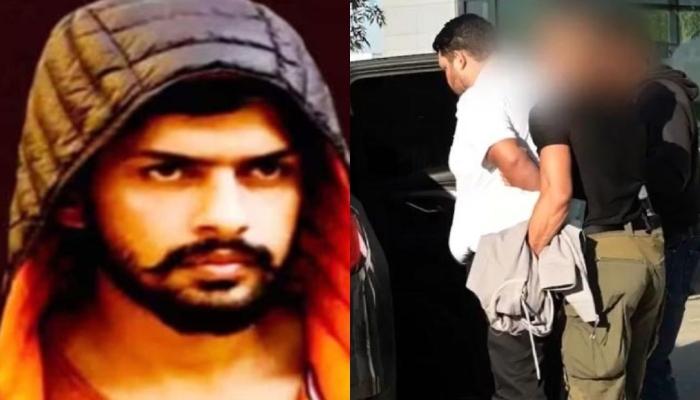
The operation also netted roughly a metric ton of cocaine, a kilogram of heroin, about $40,000 in cash, and twelve firearms, with search warrants carried out at numerous sites, including 23 properties around Sacramento and 11 in the Los Angeles area.
Authorities characterized the case as a serious setback for organized crime groups accused of using fear, violence, and drug trafficking to establish influence over Indian diaspora communities globally. First Assistant U.S. Attorney Bill Essayli stressed that transnational gangs spreading fear and violence would be met with the full weight of the justice system, noting that agencies from the U.S., Canada, Europe, and Asia collaborated to take down these cross-continental networks.
The FBI said the targeted groups were accused of terrorizing communities through assassinations, extortion, kidnappings, drug trafficking, and weapons crimes. One of the most severe sets of allegations involves the Bishnoi criminal enterprise, run by 33-year-old Lawrence Bishnoi, who is currently incarcerated in India. Prosecutors allege he directed a global criminal operation from behind bars using smuggled phones and encrypted communication tools.
Investigators say the group used social media, encrypted apps, and public claims of responsibility for attacks to instill fear among business owners, religious figures, and politicians, particularly within Indian diaspora populations. Prosecutors also allege the group ran large-scale extortion schemes against victims in California, including in Los Angeles and Thousand Oaks, demanding millions of dollars under threat of violence.
A second indictment targets the Bhagwanpuria syndicate, allegedly established by imprisoned Indian gangster Jaggu Bhagwanpuria, once an ally of Bishnoi before the two became rivals. Prosecutors say this network grew into a global operation with over 1,000 members and associates active in India, the U.S., Canada, Europe, Australia, New Zealand, and the U.K.
The group is accused of contract killings, drug trafficking, kidnapping, illegal weapons sales, and extortion, as well as corrupting law enforcement officials in India and filing false criminal complaints to intimidate rivals and extort money. In one instance, a defendant allegedly threatened to shoot the children of an Ohio family while he was in immigration detention unless his demands were met.
Officials from multiple agencies called the operation a model of international cooperation against organized crime. LAPD Chief Jim McDonnell said it demonstrated a joint commitment among local, federal, and international agencies to break up violent criminal networks and protect public safety.
RCMP Commissioner Mike Duheme said the investigation dismantled groups that used murder, intimidation, and fear to control victims in both Canada and the U.S., and vowed continued pursuit of organized crime wherever it operates. The investigation drew on the FBI, LAPD, the RCMP, U.S. Customs and Border Protection, the DEA, Homeland Security Investigations, Spain's Guardia Civil, and other agencies.
Prosecutors emphasized that the charges remain allegations, and all defendants are presumed innocent until proven guilty. Those convicted could face mandatory minimum federal sentences ranging from 10 years to life, with several charges carrying potential life terms.
The joint enforcement effort, called Operation Hard Ball, was announced by federal prosecutors in the Central District of California. Officials said the action was the result of a multi-year investigation by US, Canadian, and European agencies into three criminal organizations accused of a broad spectrum of violent and organized offenses spanning North America and other regions.
Three separate indictments have been unsealed, charging 37 people altogether. Of those, 13 were arrested in the U.S. (11 in California, one in Indiana, and one in Georgia), three in Canada, and one in Spain; seven others were already behind bars before this round of arrests. Ten fugitives are still being sought, thought to be hiding in the U.S., India, and Europe.
The operation also netted roughly a metric ton of cocaine, a kilogram of heroin, about $40,000 in cash, and twelve firearms, with search warrants carried out at numerous sites, including 23 properties around Sacramento and 11 in the Los Angeles area.
Authorities characterized the case as a serious setback for organized crime groups accused of using fear, violence, and drug trafficking to establish influence over Indian diaspora communities globally. First Assistant U.S. Attorney Bill Essayli stressed that transnational gangs spreading fear and violence would be met with the full weight of the justice system, noting that agencies from the U.S., Canada, Europe, and Asia collaborated to take down these cross-continental networks.
The FBI said the targeted groups were accused of terrorizing communities through assassinations, extortion, kidnappings, drug trafficking, and weapons crimes. One of the most severe sets of allegations involves the Bishnoi criminal enterprise, run by 33-year-old Lawrence Bishnoi, who is currently incarcerated in India. Prosecutors allege he directed a global criminal operation from behind bars using smuggled phones and encrypted communication tools.
As part of Operation "Hard Ball," the FBI and our law enforcement partners throughout California, other U.S. cities and in Canada, India and Europe collaborated to execute dozens of search and arrest warrants targeting 37 members of violent transnational organizations who are… pic.twitter.com/WXIOk6vALU
— FBI Los Angeles (@FBILosAngeles) July 7, 2026
According to the indictment, Bishnoi cultivated a public persona as a nationalist and religious figure while covertly running a large criminal operation tied to political killings, murder, kidnapping, extortion, drug trafficking, and human smuggling. Among the accusations is his alleged role in orchestrating the June 18, 2023, killing of Khalistani separatist Hardeep Singh Nijjar, referred to in court filings only by his initials, who was shot outside a Sikh temple in Surrey, British Columbia.
ALSO READ: Vatican excommunicates ultra-conservative SSPX in major schism; fresh spotlight on Rome's firm control over Global Church
Prosecutors say Bishnoi and his North American associate, Satinderjeet Singh (known as "Goldy Brar"), directed the killing. Canada labeled the Bishnoi group a terrorist organization in 2025, reflecting mounting concern over its alleged ties to politically driven violence.
Lawrence Bishnoi, Goldy Brar "directed" the killing of Khalistani extremist Nijjar, says US authorities pic.twitter.com/gbjs2rnVNt
— Sidhant Sibal (@sidhant) July 8, 2026
Investigators say the group used social media, encrypted apps, and public claims of responsibility for attacks to instill fear among business owners, religious figures, and politicians, particularly within Indian diaspora populations. Prosecutors also allege the group ran large-scale extortion schemes against victims in California, including in Los Angeles and Thousand Oaks, demanding millions of dollars under threat of violence.
The group is also accused of funding its operations through international cocaine trafficking and by stealing narcotics shipments from competing criminal organizations, with investigators tying it to more than 520 kilograms of stolen cocaine in the Los Angeles area between 2024 and 2025.
A second indictment targets the Bhagwanpuria syndicate, allegedly established by imprisoned Indian gangster Jaggu Bhagwanpuria, once an ally of Bishnoi before the two became rivals. Prosecutors say this network grew into a global operation with over 1,000 members and associates active in India, the U.S., Canada, Europe, Australia, New Zealand, and the U.K.
The group is accused of contract killings, drug trafficking, kidnapping, illegal weapons sales, and extortion, as well as corrupting law enforcement officials in India and filing false criminal complaints to intimidate rivals and extort money. In one instance, a defendant allegedly threatened to shoot the children of an Ohio family while he was in immigration detention unless his demands were met.
The third indictment concerns an alleged drug trafficking ring led by Ravinder Singh Dhanda, operating out of Vancouver. Prosecutors say the group moved hundreds of kilograms of cocaine and methamphetamine each week from Southern California into Canada via long-haul trucks, sometimes hiding the drugs inside farm equipment crossing the border. Investigators tied the network to more than 430 kilograms of cocaine moved between 2023 and 2024.
Officials from multiple agencies called the operation a model of international cooperation against organized crime. LAPD Chief Jim McDonnell said it demonstrated a joint commitment among local, federal, and international agencies to break up violent criminal networks and protect public safety.
RCMP Commissioner Mike Duheme said the investigation dismantled groups that used murder, intimidation, and fear to control victims in both Canada and the U.S., and vowed continued pursuit of organized crime wherever it operates. The investigation drew on the FBI, LAPD, the RCMP, U.S. Customs and Border Protection, the DEA, Homeland Security Investigations, Spain's Guardia Civil, and other agencies.
Prosecutors emphasized that the charges remain allegations, and all defendants are presumed innocent until proven guilty. Those convicted could face mandatory minimum federal sentences ranging from 10 years to life, with several charges carrying potential life terms.