Rahul snubbed by his mother’s homeland
Total Views |


There is something revealing about Rahul Gandhi's latest political performance involving Italian Prime Minister Giorgia Meloni. At the Congress national convention on August 13, Gandhi mocked Prime Minister Narendra Modi's foreign policy as little more than “hugging politicians.” He then hugged Congress leader Sandeep Dikshit on stage. Dikshit responded with a joke: “You weren't hugging me thinking I was Meloni?” The audience laughed. Gandhi laughed too. The episode might have been dismissed as political theatre had it remained within the confines of domestic political satire. But it did not.
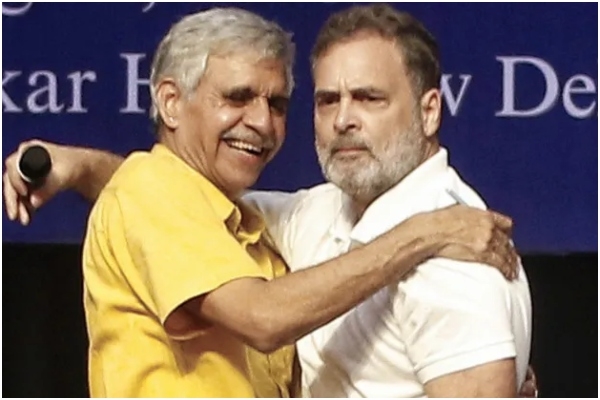
The issue is not whether Narendra Modi can be criticised. Instead, he reduced diplomacy to a joke about physical gestures and allowed a foreign head of government to become part of domestic political theatre.
That is not sophisticated political criticism. It is politics reduced to performance.His record of indecent or deliberately provocative rhetoric is difficult to dismiss as isolated slips. From the “Rape in India” phrase to the controversial “flying kiss” episode and remarks targeting women politicians, Gandhi has repeatedly allowed political provocation to cross the boundary of parliamentary and public decorum. The recurring pattern is striking - shock first, substance later a style that may generate headlines, but raises serious questions about judgement, restraint and political maturity.
There is also a psychological dimension. Gandhi's intervention reveals a recurring tendency to personalise political argument. Rather than contesting what Modi has achieved diplomatically, he mocks how Modi behaves. Rather than challenging the substance of India's relationship with Italy, the exchange becomes about hugging Meloni. This is particularly striking because India and Italy have recently upgraded their relationship to a Special Strategic Partnership, including a defence-industrial roadmap and an ambition to increase bilateral trade. In such circumstances, the political class is entitled to debate policy, but it should also understand that words about a foreign leader do not remain confined to a political rally.
This is not an isolated problem in Gandhi's political communication. His record contains several episodes in which provocation has overwhelmed substance. In 2019, while attacking Modi over the Rafale controversy, Gandhi said that Modi had run away and asked then Defence Minister Nirmala Sitharaman to “defend” him. The National Commission for Women took suo motu cognisance, describing the remarks as “misogynistic, offensive” and disrespectful towards women. Gandhi subsequently denied that he intended a sexist meaning. In 2017, he attacked the RSS by asking whether anyone had seen women in its shakhas “wearing shorts.” Smriti Irani called the remark indecent and derogatory.
The pattern is therefore more important than any single controversy. Gandhi often appears to prefer the memorable jab over the substantive argument, the gesture over the explanation and the provocation over the policy detail. That may work inside a political rally. But a Leader of the Opposition is not merely a rally performer. He occupies a constitutional and political position in which language carries institutional weight.
The Meloni episode is particularly embarrassing because it crossed boundaries. Giorgia Meloni is not a political opponent of Rahul Gandhi. She is the elected Prime Minister of a friendly country with which India maintains growing strategic relations. Dragging her name into a joke designed to ridicule India's Prime Minister demonstrates either poorest judgement or a willingness to sacrifice diplomatic sensitivity for a moment of political theatre. Neither is reassuring.
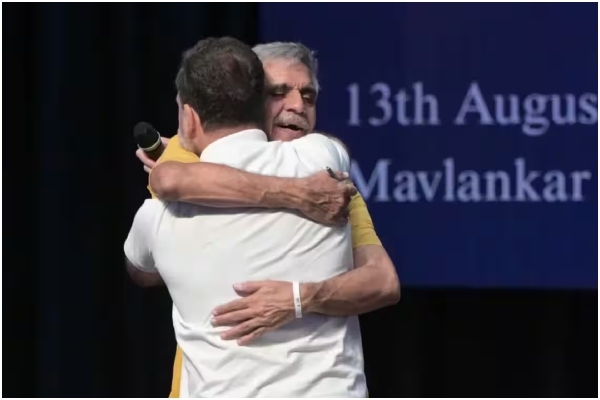
The hug led to the Meloni joke. The joke produced international embarrassment. And suddenly, instead of discussing India's foreign policy, the political conversation became about whether an Italian Prime Minister had been dragged into an inappropriate domestic political joke. The provocation swallowed the argument. That is the real failure. But political maturity requires knowing where to stop.
A national leader should understand that not every joke is worth making, not every gesture is politically intelligent and not every moment of laughter is a political victory.
The Italian Embassy's intervention should therefore be treated not as an attempt to silence Indian political criticism, but as a warning about a basic principle of diplomacy: foreign leaders should not casually become props in domestic political theatre. For Rahul Gandhi, the episode exposes a larger weakness. After years in national politics, he still seems remarkably attracted to provocation as a substitute for gravitas. His political communication frequently seeks the instant reaction rather than the lasting argument. That may entertain a rally. It does not demonstrate statesmanship. And when a foreign embassy feels compelled to remind an Indian political leader about respect for its Prime Minister, the joke has ceased to be funny.
The most ironic and perhaps the most embarrassing aspect of the episode is that Rahul Gandhi found himself being rebuked by the very country to which his maternal family belongs. His mother, Sonia Gandhi, was born and brought up in Italy, and therefore understands its culture, sensitivities and sense of national dignity far better than most Indians. Yet Rahul Gandhi's political theatrics dragged an Italian Prime Minister into a domestic political joke. One would hope that this episode prompts a few lessons in restraint, decorum and diplomatic sensitivity. If political opponents cannot teach Rahul Gandhi these lessons, perhaps his own mother, who knows the country he inadvertently offended so well, can teach her son a thing or two about respecting its Prime Minister.
The Embassy of Italy in New Delhi reacted, expressing deep concern and strong disapproval and emphasising the importance of mutual respect and dignity in relations involving foreign leaders. That reaction should make Rahul Gandhi pause and think.
The issue is not whether Narendra Modi can be criticised. Instead, he reduced diplomacy to a joke about physical gestures and allowed a foreign head of government to become part of domestic political theatre.
That is not sophisticated political criticism. It is politics reduced to performance.His record of indecent or deliberately provocative rhetoric is difficult to dismiss as isolated slips. From the “Rape in India” phrase to the controversial “flying kiss” episode and remarks targeting women politicians, Gandhi has repeatedly allowed political provocation to cross the boundary of parliamentary and public decorum. The recurring pattern is striking - shock first, substance later a style that may generate headlines, but raises serious questions about judgement, restraint and political maturity.
There is also a psychological dimension. Gandhi's intervention reveals a recurring tendency to personalise political argument. Rather than contesting what Modi has achieved diplomatically, he mocks how Modi behaves. Rather than challenging the substance of India's relationship with Italy, the exchange becomes about hugging Meloni. This is particularly striking because India and Italy have recently upgraded their relationship to a Special Strategic Partnership, including a defence-industrial roadmap and an ambition to increase bilateral trade. In such circumstances, the political class is entitled to debate policy, but it should also understand that words about a foreign leader do not remain confined to a political rally.
This is not an isolated problem in Gandhi's political communication. His record contains several episodes in which provocation has overwhelmed substance. In 2019, while attacking Modi over the Rafale controversy, Gandhi said that Modi had run away and asked then Defence Minister Nirmala Sitharaman to “defend” him. The National Commission for Women took suo motu cognisance, describing the remarks as “misogynistic, offensive” and disrespectful towards women. Gandhi subsequently denied that he intended a sexist meaning. In 2017, he attacked the RSS by asking whether anyone had seen women in its shakhas “wearing shorts.” Smriti Irani called the remark indecent and derogatory.
ALSO READ: Kashmir: From fear to Tricolour
In 2023, his alleged flying-kiss gesture towards the Treasury benches during the no-confidence debate triggered a complaint by more than 20 BJP women MPs, who called it inappropriate and sought action. Congress disputed the interpretation and said the gesture was directed generally at the Treasury benches. The 2019 “Rape in India” controversy requires greater caution. Gandhi was criticising crimes against women and was not, as some political claims alleged, calling for women to be raped. Fact-checking established that interpretation to be false. His choice of the phrase, however, was deliberately provocative political wordplay around “Make in India,” and demonstrates the same attraction to rhetorical shock.
The Meloni episode is particularly embarrassing because it crossed boundaries. Giorgia Meloni is not a political opponent of Rahul Gandhi. She is the elected Prime Minister of a friendly country with which India maintains growing strategic relations. Dragging her name into a joke designed to ridicule India's Prime Minister demonstrates either poorest judgement or a willingness to sacrifice diplomatic sensitivity for a moment of political theatre. Neither is reassuring.
There is another irony. Gandhi's political criticism frequently invokes dignity, constitutional morality, institutional propriety and respect for democratic values. Yet his own rhetoric repeatedly tests the limits of political decorum. This is where the psychological dimension becomes relevant.
The repeated use of provocative and indecent language and behaviour indicate an increasing reliance on attention-generating political communication and desperation. Provocation guarantees visibility. A policy argument can be ignored; a controversial joke cannot. The politician receives immediate reinforcement through media coverage and partisan applause. But reinforcement can become a trap.
Once provocation generates attention, there is an incentive to repeat it. Political communication gradually becomes more theatrical, more personal and more dependent upon the opponent's reaction. That is exactly what the Meloni episode demonstrates. Gandhi wanted to attack Modi. He chose the “hug.”
A national leader should understand that not every joke is worth making, not every gesture is politically intelligent and not every moment of laughter is a political victory.
ALSO READ: “Mr Tharoor, why this hurry?
The most ironic and perhaps the most embarrassing aspect of the episode is that Rahul Gandhi found himself being rebuked by the very country to which his maternal family belongs. His mother, Sonia Gandhi, was born and brought up in Italy, and therefore understands its culture, sensitivities and sense of national dignity far better than most Indians. Yet Rahul Gandhi's political theatrics dragged an Italian Prime Minister into a domestic political joke. One would hope that this episode prompts a few lessons in restraint, decorum and diplomatic sensitivity. If political opponents cannot teach Rahul Gandhi these lessons, perhaps his own mother, who knows the country he inadvertently offended so well, can teach her son a thing or two about respecting its Prime Minister.