BJP rejig: Energy meets experience, beyond dynasty
NewsBharati 18-Aug-2026 12:54:42 PM
Total Views |


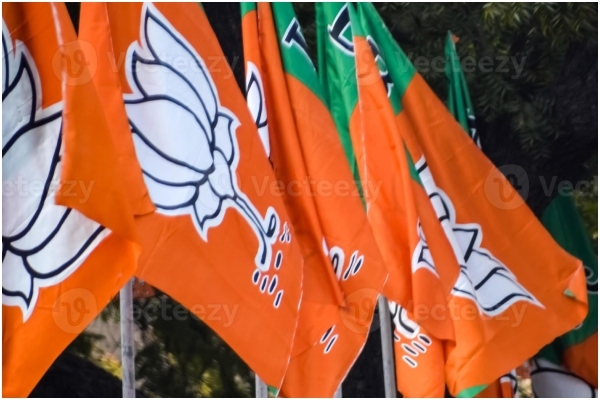
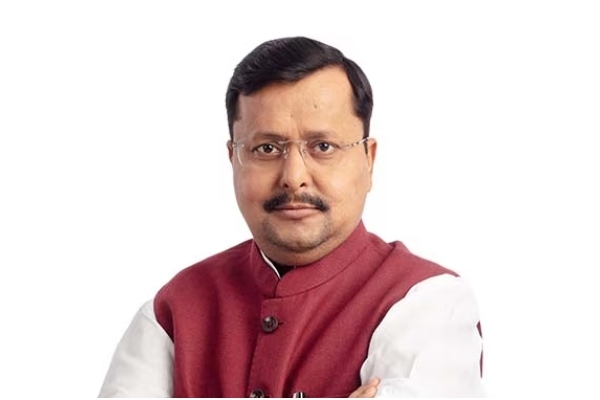
The Bharatiya Janata Party’s organisational rejig is much more than a routine reshuffle of office-bearers. It is a statement about how a political organisation prepares itself for the future. The new team under party president Nitin Nabin brings together experience, youthful energy, women leaders and grassroots connect. Prime Minister Narendra Modi himself described the team as a combination of “organisational experience, energy and grassroots connect”.
 One of the most remarkable features of BJP politics is the manner in which generational change takes place. It is rarely accompanied by the kind of public drama, rebellion, family confrontation or organisational fracture that has become familiar elsewhere in Indian politics. Generational change in Indian political parties is often difficult because many parties are built around individuals and families. When the question of succession arises, it consequently becomes a question of inheritance. Who gets the chair? Which son? Which daughter? Which family member? Who controls the organisation? Who gets the political legacy? That is the fundamental weakness of dynastic politics. A party that treats political leadership as hereditary property inevitably finds generational transition difficult. Leadership change becomes a struggle for possession rather than an exercise in institutional renewal. Political families can split parties, create rival factions and turn organisational questions into personal battles.
That difference explains why a leadership rejig can take place without becoming a political spectacle.
There is no “family meeting” deciding the succession. There is no competing claimant announcing a new party. There is no public war over inheritance. There is no requirement to preserve a surname at the top.
 This is a more mature approach to political succession than the simplistic idea that every old leader must disappear and every young leader must immediately take over. The BJP’s greatest strength is not merely its electoral machinery. It is the organisational ecosystem behind that machinery. Its cadres, booth-level workers, training programmes, committees, communication networks and ideological orientation provide continuity beyond individual elections. The party has institutional mechanisms dealing with policy research, good governance, training, political feedback, media, documentation and organisational programmes. That is a major difference from parties where the organisation often becomes active only when elections approach. The BJP’s politics is therefore not entirely election-to-election politics. Its organisational functioning is continuous. This is why the latest rejig should not be viewed merely through the prism of the 2029 Lok Sabha election.
It requires committees that actually work. It requires workers willing to spend years building the organisation without expecting immediate rewards. It requires discipline, ideological commitment and devotion to a larger national purpose. The BJP possesses an advantage here because politics, for a substantial section of its cadre, is not merely a profession. It is an organisational commitment. That distinction matters.
The deeper story is institutional continuity. A party that can replace, promote, retire, accommodate and reposition leaders without breaking itself demonstrates organisational confidence. A party that can combine veterans with younger leaders demonstrates that it is thinking beyond individual political careers. The BJP’s latest exercise therefore represents something more significant than a reshuffle. It is an experiment in political renewal without political rupture.
In a country where generational succession has too often meant family succession, and where organisational disputes frequently become personal wars, the BJP is demonstrating another model. The leadership can change without the organisation collapsing, youth can rise without experience being humiliated, women can enter the centre of decision-making without being treated as token representatives and political continuity can survive individual transitions. That is the BJP’s real organisational speciality.
The 2029 election will come and go. The larger test is whether India can sustain the momentum required for 2047. For that, a party needs more than popular leaders. It needs an army of committed workers, functioning committees, ideological clarity, organisational discipline and the ability to renew itself generation after generation. The latest BJP rejig suggests that the party is preparing not merely for the next electoral battle, but for the much larger battle of shaping India’s political and national direction for decades to come.
That combination matters because political parties are ultimately tested not merely by their electoral arithmetic but by their capacity to renew themselves without losing institutional memory. The BJP appears to understand this distinction. It is attempting to inject new energy without discarding experience. That is precisely how a large national organisation should manage generational transition.
The new national team includes 13 national vice-presidents, eight general secretaries and 16 national secretaries, with prominent experienced leaders such as Smriti Irani and Piyush Goyal receiving important responsibilities. The team also has significant representation of women and regional leaders. Ten women have been included in the new national team. This is not simply about giving posts to new faces. It is about creating a leadership pipeline.
The BJP’s organisational model is fundamentally different. Its political identity is not formally tied to one family. It has a cadre-based structure, organisational departments and a network extending from the national level to states, districts and the grassroots. Independent assessments have also noted that the BJP possesses comparatively strong internal structures and an extensive organisational network, while many other Indian parties remain centred around charismatic leaders or political dynasties.
There is no “family meeting” deciding the succession. There is no competing claimant announcing a new party. There is no public war over inheritance. There is no requirement to preserve a surname at the top.
The inclusion of women and younger leaders is equally significant. A political party representing a changing India cannot remain frozen in an older leadership generation. India is young, aspirational, technologically connected and increasingly confident about its place in the world. The political organisation has to reflect that of India. The BJP has increasingly attempted to create space for women, youth, professionals, technocrats and leaders emerging from different social and regional backgrounds. The latest team continues that approach. The message is clear. Experience is valuable, but experience cannot become an excuse for stagnation. At the same time, youth cannot become an excuse for discarding institutional knowledge. Hence the formula of energy plus experience.
The real question is much larger. India is approaching a period in which its internal transformation will increasingly intersect with geopolitical competition. There will be attempts direct and indirect to influence India’s political discourse, strategic choices, social cohesion and national priorities. Interference in internal matters cannot be dismissed as an occasional diplomatic irritant. A rising India will inevitably attract competing interests. At the same time, the national objective cannot stop at winning the next election. The ambition of a developed India by 2047 demands continuity of policy, institutional capacity, political stability, social cohesion and an organisation capable of explaining long-term national goals to ordinary citizens. That requires enormous organisational effort.
ALSO READ: Modi's Message: Nation Needs Builders, Not Disruptors
Opposition parties may interpret the BJP rejig primarily as preparation for the next electoral battle. They would be making a mistake. Elections are important, but they are not the entire story.
In a country where generational succession has too often meant family succession, and where organisational disputes frequently become personal wars, the BJP is demonstrating another model. The leadership can change without the organisation collapsing, youth can rise without experience being humiliated, women can enter the centre of decision-making without being treated as token representatives and political continuity can survive individual transitions. That is the BJP’s real organisational speciality.
The 2029 election will come and go. The larger test is whether India can sustain the momentum required for 2047. For that, a party needs more than popular leaders. It needs an army of committed workers, functioning committees, ideological clarity, organisational discipline and the ability to renew itself generation after generation. The latest BJP rejig suggests that the party is preparing not merely for the next electoral battle, but for the much larger battle of shaping India’s political and national direction for decades to come.

Editor's Desk
Editor's Desk