Over 80 FIRs, 200 arrests against Shahzad Bhatti Network; Here's how Pakistan's spy agency rented terror in India
Pakistan ISI-backed Shahzad Bhatti Network terror plot foiled in massive 14-state Indian crackdown
Total Views |


On 12 August 2026, two days before India's Independence Day, security agencies spread out across fourteen states in a single coordinated sweep to dismantle a large terror network. By the time it was over, 253 people had been detained, more than 80 first information reports (FIR) stood registered, and over 200 arrests had been logged against a Pakistan-based outfit that most Indians had never heard of, the Shahzad Bhatti Network, or SBN.
From the arrests came grenades, improvised bombs, pistols, live cartridges and, tellingly, spy cameras that operatives had been paid to plant near police stations, defence sites and places of worship. Announcing the crackdown, Union Home Minister Amit Shah said the network had been backed and funded by Pakistan's Inter-Services Intelligence (ISI) and that India's forces had "ripped apart" its plans for attacks timed to the national holiday.
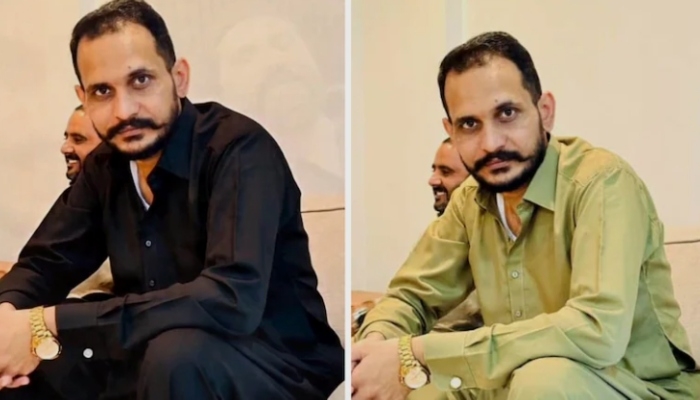
Shehzaad Bhatti (Image- NDTV)
Who and what is the Shahzad Bhatti Network?
Strip away the branded name and the SBN fits a pattern that is by now depressingly familiar. According to the Ministry of Home Affairs, it is a Pakistan-based syndicate that the ISI uses to run grenade attacks, Improvised Explosive Device (IED) blasts, petrol-bomb strikes and targeted killings inside India. It does not fight in the open. Instead, it pays local men, small-time criminals, cash-strapped youths, the desperate and the greedy to do the dirty work. Scout a target, film a police compound, stash a weapons consignment, pull a trigger. The handlers sit safely across the border. The recruits, and the risk, are Indian.
Modi govt destroyed the ISI-backed terror group Shahzad Bhatti Network ahead of Independence Day and thwarted its plans for subversive attacks by arresting more than 200 operatives.
— Amit Shah (@AmitShah) August 17, 2026
Indian security forces ripped apart the network by launching coordinated operations across…
The single most damning detail from the recoveries is small and easy to miss. Several grenades seized during the operation carried the stamp of the Pakistan Ordnance Factory (POF), the Pakistani state's own weapons manufacturer. A grenade doesn't wander across an international border on its own. That marking is a fingerprint, and it points straight back to Rawalpindi.
How the ISI turns a "network" into a weapon
To understand the SBN, it helps to understand the machine behind it. The Pakistani scholar Ayesha Siddiqa, who earned her doctorate in war studies at King's College London and wrote the landmark book Military Inc., has spent decades documenting how deeply Pakistan's army is fused with its economy and its militant proxies. Her work describes an establishment in which armed groups are not rogue actors the state struggles to control, but tools the state assigns political and strategic roles. The ISI's logic is cold and deliberate. Keep India bleeding through countless small wounds, while keeping Pakistan's own hands clean enough to deny everything.
This is not a fringe view held only in New Delhi. Husain Haqqani, once Pakistan's own ambassador to the United States and now at the Hudson Institute in Washington, has written bluntly about how Pakistan's establishment has long protected UN-designated groups like Lashkar-e-Taiba and Jaish-e-Mohammed rather than dismantle them. The Cato Institute, an American think tank not known for pro-India sympathies, has described Pakistan's "double game", publicly cooperating against terror while quietly sustaining militant networks, as conventional wisdom in Washington, one that correctly ties militant sponsorship to the country's military and intelligence services.
The Shahzad Bhatti Network (SBN), then, is not an aberration. It is one more disposable brand in a business model.
Deeply entrenched and internationally flagged
The reason these networks keep reappearing is that Pakistan has never truly shut off the money and the weapons. In July 2025, the Financial Action Task Force (FATF), the global watchdog on terror financing, for the first time devoted a section of its report to state-sponsored terrorism, naming Lashkar-e-Taiba and Jaish-e-Mohammed as beneficiaries of state support. It stopped short of naming Pakistan outright, but the meaning was unmistakable. Pakistan has already spent years on the FATF "grey list", twice, in fact and only wriggled off after promising crackdowns. Haqqani himself has warned that Islamabad could land back on that list the moment the world notices its jihadi groups stirring again.
The grenade markings tell the same story on the ground that the FATF tells on paper. This is not the first POF-stamped ordnance to surface in India. Through 2025 and 2026, Punjab Police repeatedly seized Pakistan Ordnance Factory grenades from ISI-linked modules. In May 2026, Delhi Police recovered four POF-made grenades and 25 matching cartridges from a module tying the ISI to underworld networks. The SBN sweep is the latest chapter in a long, documented series.
What the SBN is accused of doing in India
Drawing from the Ministry of Home Affairs, the network's activities inside India include:
- Grenade attacks on chosen targets across multiple states
- IED (improvised explosive device) blasts using smuggled explosives
- Petrol-bomb strikes as low-cost intimidation
- Targeted killings of specific individuals
- Espionage and reconnaissance, paying locals to scout and film police stations, defence installations and religious sites
- Planting CCTV cameras near sensitive locations to feed intelligence back to handlers
- Smuggling and stashing weapons, the grenades, pistols, cartridges and IEDs recovered in the sweep
The arrests were booked under India's toughest laws, including the anti-terror UAPA, the new Bharatiya Nyaya Sanhita, the Arms Act, the NDPS Act and the Explosive Substances Act.
The bottom line
India's response was fast, coordinated and pre-emptive; the network was broken before it could strike, not mourned after. That is the shift Delhi wants the world to register, a zero-tolerance posture that treats cross-border terror as a national-security emergency rather than a diplomatic irritant. But the deeper lesson is the one the Pakistan Ordinance Factory (POF) stamp keeps hammering home. As long as a state-owned factory's grenades keep turning up in Indian fields, the "network" being dismantled is only ever the outermost layer. The machine that builds them sits across the border and, as scholars from Islamabad to Washington keep pointing out, it has never been switched off.