Christian Missionaries at it again -- begin ‘disaster evangelism’ in Nepal
Total Views |


Nepal is still counting its dead and searching for the missing. But even as rescuers comb through the devastation left by Wednesday’s catastrophic flash floods, another kind of activity is already visible: the use of disaster as an opportunity for evangelism.
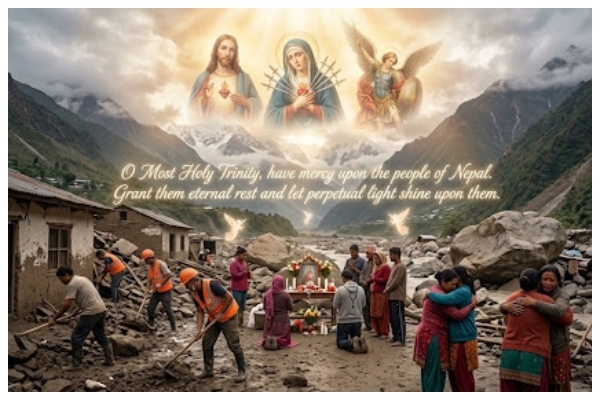
Nepal soul harvesting. Source: Social Media
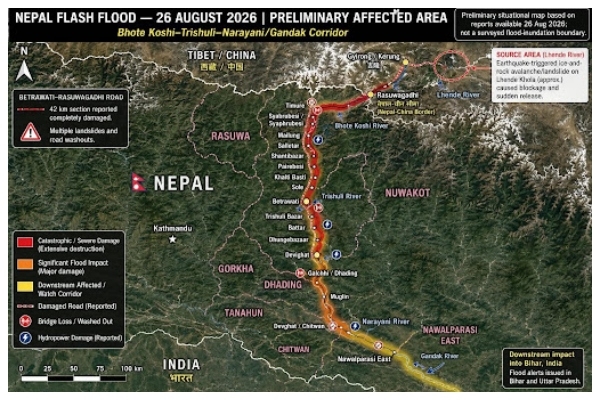
The scale of the tragedy is immense. By Thursday morning, Nepalese authorities said 165 bodies had been recovered and 826 people remained missing. Among those unaccounted for are 579 tourists, including 466 foreign nationals, as well as 85 security personnel. The torrent of water, mud, rock and debris that swept down from the Tibet side devastated settlements and infrastructure along the Bhote Koshi and Trishuli river corridors.
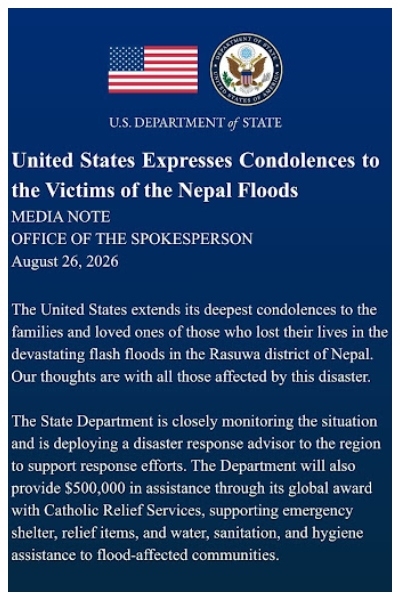
At such a moment, prayer and humanitarian assistance from any faith community deserve respect. Christians praying for victims is not, by itself, evidence of anything sinister. Nor is Catholic Relief Services providing emergency assistance. The US Embassy in Nepal has announced $500,000 in assistance through its global award with Catholic Relief Services for emergency shelter, relief supplies, water, sanitation and hygiene. That is humanitarian aid and should be recognised as such.
The uncomfortable question begins elsewhere: what happens when the suffering of people becomes an opening for religious expansion?
ALSO READ; Nepal’s deluge: When nature meets human arrogance
Other posts have gone further, invoking Jesus, angels and biblical passages while presenting the disaster as an occasion to proclaim Christianity in Nepal. Again, prayer is a matter of faith. But when the language shifts from compassion for victims to the religious significance of the disaster, the distinction between humanitarian concern and evangelistic opportunity becomes impossible to ignore.
Source: Major Sammer Toor
A report in Crux provides another revealing example of how the disaster is being framed. It highlights 25 Catholic families who were safe, and a priest who had gone across the river to celebrate Mass and became stranded after bridges and roads were washed away. The same report notes that many victims were Hindu pilgrims travelling towards Mount Kailash.
That is precisely where sensitivity is required.
One survivor quoted in the same account says that people risked their lives, lost everything and simply wanted to survive, while adding that they were grateful for the help and prayers of Christians. The gratitude of desperate victims should not be transformed into religious validation. A person thanking those who helped them survive is not consenting to becoming an object of evangelisation.
And Nepal has reasons to be particularly alert to this pattern.
That history makes today's rhetoric more troubling. When a disaster repeatedly gets described within missionary circles as an “opportunity”, the question is no longer whether individual Christians are praying sincerely. The question is whether human vulnerability is being viewed as a strategic opening for conversion. The distinction matters enormously.
Nepal is overwhelmingly Hindu, with Buddhism deeply embedded in its cultural and spiritual landscape. A flood does not erase that identity. A person who has lost a home, a relative or a livelihood is at their most vulnerable. Offering food, shelter, medical care and rescue is an act of humanity. Offering those things while seeking to convert the desperate raises an entirely different ethical question.
ALSO READ: Assam's Himanta Biswa Sarma calls for greater recognition of the Northeast's stories of courage and transformation
That is why the Nepali warning directed at European Commission President Ursula von der Leyen – asking Europe not to send Christian missionaries for “soul harvesting”, invoking the experience of the 2015 earthquake – resonates beyond social media. It reflects a fear that disaster relief can become a vehicle for religious intervention.
The lesson should be simple. Aid must reach the victim before the message reaches the soul. India was first among the countries to send material. New Delhi dispatched 10 tonnes of humanitarian assistance and essential medicines aboard an Indian Air Force C-130J aircraft on Wednesday (the day the disaster struck). Supplies include emergency items such as temporary shelters, blankets, hygiene kits, solar lamps, and medicines.
Nepal needs equipment, rescuers, medicines, food, clean water, temporary shelters and help finding the missing. It does not need its catastrophe converted into a contest between gods, nor its dead and vulnerable turned into statistics in somebody else's missionary success story.