Jan Dhan: When the Last Layer Entered the Economy
Total Views |


There are economic reforms that change institutions, and there are reforms that change the relationship between the citizen and the State. Pradhan Mantri Jan Dhan Yojana belongs to the second category.
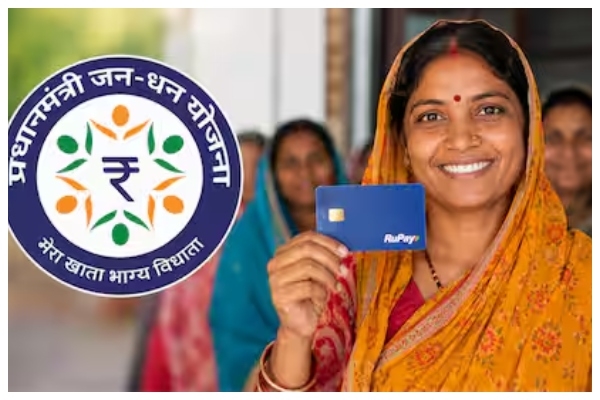
Launched in August 2014, Jan Dhan was presented as a programme of financial inclusion. Ten years later, that description appears almost inadequate. It was not merely about opening bank accounts. It was about bringing millions of Indians who had remained outside the formal financial system into the mainstream of the economy.
The scale tells part of the story. As of August 19, 2026, more than 59.09 crore Jan Dhan accounts had been opened, with deposits of about ₹3.17 lakh crore. More than 41 crore RuPay debit cards have been issued. Women account for more than half of the beneficiaries, while rural and semi-urban India constitutes the overwhelming bulk of the programme's reach.
But the real significance of Jan Dhan lies beyond these numbers.
Bank nationalisation in 1969 was undertaken with an ambitious objective: to make banking serve developmental priorities, mobilise deposits and extend credit to sections of society that had historically remained underserved. The banking network expanded enormously. The number of branches increased from just over 8,000 in 1969 to more than 99,000 decades later. Yet the Reserve Bank of India itself acknowledged that a large section of the population remained outside the banking system. At one point, only around 40 per cent of the population had bank accounts.
This is not an argument against nationalisation. It is an argument about the limits of an institutional approach to inclusion.
A bank branch in a village does not necessarily mean that the poorest villager is a bank customer.
ALSO READ: "The Ancient Wisdom Behind Dr. Bhagwat’s US Speech”
That was the gap Jan Dhan attempted to bridge. The fundamental change was conceptual. Instead of waiting for the excluded citizen to find his way into the banking system, the system was asked to reach the citizen.
A basic account could be opened without a minimum-balance requirement. RuPay cards provided access to payments. Insurance and pension schemes could be connected to the account. Government benefits could be transferred directly. An overdraft facility was made available to eligible account holders. Bank Mitras and technology helped take banking beyond the traditional branch.
That distinction deserves greater attention.
For a poor household, formal banking is not merely about saving money. It means having a recognised financial identity. It means being able to receive a government payment without depending upon an intermediary. It means having access to formal savings instead of keeping cash at home. It creates an entry point to insurance, pensions, credit and digital payments.
This is where Jan Dhan became part of a much larger architecture.
The Jan Dhan account, Aadhaar and mobile connectivity created the foundation for what came to be known as the JAM framework. Government transfers could increasingly travel directly from the State to the intended beneficiary. The distance between the government office and the household was shortened.
Financial inclusion, therefore, became administrative inclusion as well.
ALSO READ: India’s Higher Education Network Expands Sharply Over the Decade, AISHE Data Shows
But there is an even deeper economic consequence.
An economy cannot genuinely claim to be inclusive when a substantial section of its citizens merely watches economic activity from the sidelines. The poor are not outside the economy; they are participants whose participation has historically been inadequately formalised.
Jan Dhan began changing that.
This is the meaning of bringing the last layer into the economy.
It is not charity. It is participation.
The numbers on women and rural beneficiaries are particularly significant. As of August 2026, women accounted for nearly 33 crore of the 59.09 crore Jan Dhan beneficiaries, while rural and semi-urban centres accounted for nearly 46 crore accounts.
That tells us something about the character of the programme. It reached precisely those segments for whom formal banking had traditionally been most difficult.
ALSO READ: Wanted: One Mundhe Per Home
There is also an important psychological dimension.
A bank account creates a relationship. The citizen begins to see herself not merely as a recipient of government assistance but as a participant in a formal financial system. Saving becomes easier. Payments become more transparent. Insurance becomes accessible. Pension products become possible. Credit can eventually become part of the financial journey.
That is the appropriate way to judge the programme.
Jan Dhan should not be judged merely by how many accounts were opened. The more important question is what those accounts enabled.
India spent decades building institutions, branches and schemes. Jan Dhan added something crucial: universal access at the individual level, supported by technology and direct delivery.
Nationalisation sought to make banks serve the nation. Jan Dhan sought to ensure that the citizen could actually enter the banking system.
ALSO READ: PM Modi Meets Kyrgyz President Sadyr Zhaparov, Reaffirms Strategic Partnership
Neither should be treated as an isolated policy. India's financial inclusion journey is cumulative. But Jan Dhan provided the decisive mission-mode push that converted financial inclusion from an aspiration into a mass programme.
There is still work to be done. An account is only the beginning. Financial literacy, regular transactions, responsible credit, insurance penetration, pension coverage and protection against financial fraud must deepen. Inclusion must become meaningful usage.
Yet that does not diminish what has already been achieved.
It is the disappearance of the assumption that the poorest Indian is naturally outside the formal economy.
For decades, India's economic system often spoke about the poor, planned for the poor and provided subsidies to the poor. Jan Dhan did something more fundamental: it gave the poor a direct financial address.
That is why Jan Dhan deserves to be remembered not merely as another welfare scheme, but as an important institutional reform in India's journey towards inclusive growth.