Congress, Communists continue to oppose FCRA amendment, calling it 'draconian bill'; are they trying to protect proselytisation networks?
In June 2026, both the parties separately wrote to Prime Minister Narendra Modi and Union Home Minister Amit Shah, calling for the rollback of the amendment bill.


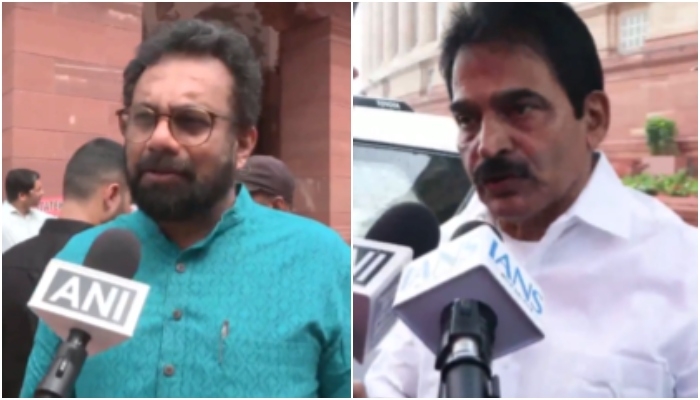
#WATCH | Delhi: On the FCRA Bill, Congress MP KC Venugopal says, "The Leader of the Opposition has strongly expressed his concerns, and the party and opposition's stand is also very clear. They cannot bring the FCRA Bill in its old format...We will oppose it very strongly. We are… pic.twitter.com/zLWDfFTmEg
— ANI (@ANI) August 5, 2026
Taking cognizance of US Rep Riley Moore's statement, who said that the FCRA amendment bill was an 'attack on Christians', Brittas said, "We do not want US lawmakers to suggest anything, and we do not appreciate any intervention from the US. This government seeks intervention from the US because Modi ji is a friend of Trump, and it often looks toward their perspective on issues that this nation should decide on its own. However, we have been opposed to the FCRA because it is being used against minorities, civil society organizations, NGOs, and many voluntary associations that are doing great service for poor and marginalized sections of society.
#WATCH | Delhi | On the statement of US Congressman Riley Moore on India's proposed Foreign Contribution (Regulation) Amendment Bill 2026, CPI-M MP Dr John Brittas says, "We do not want US lawmakers to suggest anything, and we do not appreciate any intervention from the US. This… pic.twitter.com/m41H7DPm1R
— ANI (@ANI) August 5, 2026
Christians have been in India since St. Thomas the Apostle traveled to the Malabar Coast just decades after the resurrection of our Lord Jesus Christ.
— Rep. Riley M. Moore (@RepRileyMoore) August 4, 2026
But despite this long Christian history, India’s Parliament is considering amending Foreign Contribution Regulation Amendment…
Interestingly, this is not the first time the Congress and the CPIM have voiced opposition to the FCRA amendment bill. Earlier in June 2026, both the parties separately wrote to Prime Minister Narendra Modi and Union Home Minister Amit Shah, calling for the rollback of the amendment bill. Both the opposition parties contended that the amendments would gravely hamper the functioning of NGOs, minority institutions, and voluntary organisations nationwide.
Wrote to PM Modi demanding the immediate withdrawal of the latest amendments to the FCRA Rules. These amendments severely cripple the autonomy and hamper the regular functioning of civil society organisations, especially those run by minority institutions.
— K C Venugopal (@kcvenugopalmp) June 25, 2026
Once more, after the… pic.twitter.com/n2X8qzlOZN
Venugopal also had taken issue with provisions that require organisations to obtain additional approvals and pay separate fees before extending operations to other states. He further condemned the imposition of steep financial penalties, up to 30% of foreign funds received, or a minimum of Rs 1 lakh, for violations such as functioning outside approved regions. The Congress leader additionally flagged new disclosure mandates requiring NGOs to share details of their social media handles, websites, and publications, characterising them as elements of a "mass surveillance" apparatus.
In a separate similar communication, CPI(M) Rajya Sabha MP John Brittas had written to Home Minister Amit Shah, raising what he described as "serious constitutional concerns" and urging immediate withdrawal of the amendments. While acknowledging that regulating foreign contributions is a legitimate state function, Brittas cautioned that such regulation must not be 'weaponised' to stifle charitable, educational, and faith-based organisations. He argued that the amendments had fundamentally altered the intent of the law, shifting focus from regulating foreign funds to regulating voluntary organisations themselves, citing provisions that restrict activity categories, limit geographical reach, broaden reporting obligations, and expand the definition of "key functionaries."
Parent Foreign Contribution (Regulation) Act, 2010, not altered; just the rules tightened
It is important to note that the recent amendment proposed by the Indian government in no way alters the main FCRA itself, the Foreign Contribution (Regulation) Act, 2010. However, the Rules, which are the subordinate, delegated laws formed under the parent Act, are what have been changed.

This section lists 16 permitted activities that religious organisations can carry out using foreign contributions, which include, construction and maintenance of places of worship, preservation of sacred scriptures, supporting institutions studying religious philosophy, pilgrim amenities, dharamshalas and langars, religious education and meditation retreats, devotional music and theatre, documentation of indigenous faith practices, protection of sacred relics and heritage sites, archiving of religious rituals, inter-faith dialogue, religious publications and research, religious libraries and museums, faith-based counselling and de-addiction centres, training in traditional sacred crafts, and burial or cremation ground maintenance. However, any of these activities undertaken with the intention of performing proselytisation has been specifically excluded.
CPIM, Congress protecting proselytisation networks?
A crucial distinction that must be understood is that the recent government notification does not amend the parent legislation, the Foreign Contribution (Regulation) Act, 2010, in any manner whatsoever. What has been revised are the Rules, which are subordinate or delegated legislation framed under the authority of the parent Act. These Rules serve as the operational framework that governs how the provisions of the Act are implemented on the ground.
In essence, the criticism that the government is dismantling the FCRA framework is misplaced. The amendments are targeted, subordinate, and procedural in nature, aimed at bringing greater accountability and transparency to how foreign contributions are received and utilised, especially in the context of religious conversion activities. Those opposing these rules would do well to engage with the actual text of the amendment rather than misrepresent its scope and intent.
By demanding a rollback of the FCRA Amendment Rules, Congress and CPI(M) are, knowingly or otherwise, providing a political shield to foreign-funded proselytisation networks operating across India. These rules specifically tighten oversight on religious conversion activities financed from abroad. The Opposition's resistance, therefore, raises serious questions about whose interests they are truly representing.

Licenses cancelled over misutilising foreign contributions in the past
The Foreign Contribution (Regulation) Act (FCRA) has been viewed as the most debated regulatory instrument governing India's NGO sector, but in fact, it is not. It is often characterized as a restrictive tool. However, a critical assessment must acknowledge its fundamental purpose, ensuring that foreign funds entering India's civil society ecosystem are received and utilised with full transparency.
The FCRA has emerged as one of the government's principal tools for monitoring the flow and utilisation of foreign funds by NGOs and religious organisations operating in India. Over the past decade, investigations conducted under the FCRA framework have led to the suspension or cancellation of the licences of several organisations accused of violating funding norms, misutilising foreign contributions, or engaging in activities that authorities alleged were linked to unlawful religious conversion practices. The Act requires organisations receiving foreign funds to disclose their sources of funding, maintain separate accounts, and submit periodic financial reports, thereby increasing transparency and regulatory oversight.
Union Home Minister Amit Shah has consistently called for stricter FCRA regulations time and again, arguing that while genuine social service organisations have nothing to fear, some NGOs have allegedly misused foreign funds for activities detrimental to national interests, including religious conversions and other unlawful activities. In 2022, Shah stated that the government had strengthened the FCRA and cancelled the licences of certain organisations because some NGOs were allegedly involved in religious conversions, anti-national activities, and misuse of foreign contributions. According to the government, stronger compliance requirements are intended to enhance accountability, ensure transparency in foreign funding, and safeguard national interests while allowing legitimate charitable and developmental work to continue.

Siddhi Somani
Siddhi Somani is known for her satirical and factual hand in Economic, Social and Political writing. Having completed her post graduation in Journalism, she is currently engaged in completing her Masters in Politics. The author meanwhile is also exploring her hand in analytics and statistics.