“Defeating Hybrid & Narrative Warfare: Countering Regime-Change Campaigns Against Bharat’s Democracy”
Regime change in India would begin with a story, a narrative of despair and betrayal, that makes citizens distrust their country and admire those trying to break its current order.


Mind capture before border invasion
_202608061235441848_H@@IGHT_400_W@@IDTH_700.jpg "narrative warfare")
In many countries, foreign intelligence-linked foundations, NGOs, media outlets, and activist networks have operated as narrative multipliers, consistently pushing frames that delegitimise the elected government while presenting foreign-backed change as moral and inevitable. This form of information warfare aims at cognitive capture: once citizens internalise a story of national failure, they unconsciously cooperate in weakening their own state.
The language of subversion is often coded. Analysts of information warfare note that “wars of narratives” are conducted through subtle themes—“democracy under threat”, “human rights crisis”, “youth betrayed”—rather than open calls for overthrow, allowing disruptive content to circulate widely without triggering obvious countermeasures. The enemy’s first victory is when citizens repeat these narratives as their own, believing they arrived at them independently.
Studying Bharat’s faultlines
Any adversary planning regime change in India will begin by studying Bharat—its history, social fabric, and vulnerabilities—rather than its military order of battle. Think-tanks, research institutes, and covert agencies map faultlines: communal tensions, caste divisions, regional disparities, economic grievances, educational stress points, and perceived injustices in law and governance.
Hybrid warfare doctrines emphasise targeting “specific vulnerabilities across the full spectrum of societal functions”—economy, politics, culture, information, and technology—to achieve synergetic effects without open war. For India, this would mean detailed analysis of:
Story as the primary weapon
Regime change in India would begin with a story—a narrative of despair and betrayal—that makes citizens distrust their country and admire those trying to break its current order. Colour revolutions in Eastern Europe and West Asia followed exactly this pattern: local grievances were woven into a grand narrative of liberation, with the existing government cast as the singular obstacle to justice and prosperity.
Such stories typically include recurring themes:
Step 1–2: Economic pain and scapegoating
The first operational step in this script is weakening the economy or, at minimum, amplifying economic stress so that it becomes politically unmanageable. Hybrid warfare literature highlights economic subterfuge—sanctions, supply chain disruptions, currency manipulation, targeted investment withdrawals, and cyberattacks on financial systems- as tools to hurt livelihoods without declaring war.
Once economic pain is felt, the second step is to ensure that every hardship is blamed not on global conditions or specific policy choices, but on the entire governing system and its leadership. Narrative warriors then frame-
Inflation, unemployment, and price shocks as deliberate failures or corrupt mismanagement.
External crises, pandemics, wars, commodity cycles—as proof of domestic incompetence, not global volatility.
The goal is to convert discomfort into rage. In several colour revolutions, economic dissatisfaction was relentlessly personalised to the sitting head of state, making regime change appear as a simple solution to complex structural issues.
Step 3–4: Wounds and faces of anger
The next phase is identifying a wound—an emotionally charged grievance capable of mobilising masses—and then finding faces to represent that anger. In various regimes targeted for change, these wounds have been:-
- Jobs and youth unemployment.
- Examination scandals and student stress.
- Farm distress, land acquisition disputes, or environmental conflicts.
Studies on “deep state” operations and regime change emphasise the use of civil society fronts, human rights groups, and youth movements as the socially acceptable spearhead of political destabilisation. Great actors—skilled in rhetoric and protest theatrics—make complex issues emotionally compelling, encouraging people who otherwise avoid politics to participate in agitation.
Step 5–6: Weaponised social media and protest fusion
With anger personified, social media becomes the primary weapon. Hybrid warfare writings underline algorithmic manipulation, bot networks, and coordinated disinformation as central tools to influence public opinion and magnify perceived crises.
Information operations deploy:
- AI-generated videos, edited clips, and deepfakes to frame the leadership as cruel, dishonest, or anti-people.
- Bot armies to push hashtags, create artificial trends, and make fringe sentiments appear mainstream.
Colour revolution case studies show how protest coalescence is engineered through common symbols, slogans, and central squares, with NGOs and foreign advisors coordinating messaging. For India, this would mean synchronising campus unrest, rural protests, urban middle-class anger, and regional disputes into one national confrontation framed as a moral uprising.
Step 7–8: The spark and internationalisation
Every regime change script waits for a spark: a clash with police, a controversial arrest, or an emotive death that can be framed as martyrdom. When such an incident occurs, the entire narrative machine is activated to present it as the defining moment of “resistance versus oppression”
Soft power networks, foreign media outlets, and global NGOs then internationalise the outrage. Domestic failures are amplified, context is stripped away, and India is put in the dock of international opinion:-
Editorials and reports describe India as sliding into authoritarianism or fascism.
Hearings in foreign legislatures and international bodies criticise India’s democracy and human rights record.
Social media campaigns frame domestic law-and-order responses as atrocities, invoking sanctions or diplomatic pressure.
The colour revolution pattern is clear: external validation of protests gives them moral authority, while international condemnation delegitimises the government and restricts its room for manoeuvre.
Step 9–10: Institutional delegitimisation and leadership demonisation
As protests grow, the script moves to discredit every institution that stands between agitation and power. Courts are portrayed as captured or biased, the Election Commission as compromised, parliament as rubber stamp, and independent agencies as tools of vendetta.
This deep delegitimisation serves several purposes:
- It convinces citizens that reform through institutional channels is impossible.
- It justifies bypassing constitutional processes in favour of “direct action”.
Analyses of regime change operations note that targeting the politico-business nexus is central to breaking the resource base of the ruling dispensation and dividing the elite. Psychologically, demonisation encourages personal hatred rather than policy critique, making compromise harder and confrontation more likely.
Step 11–12: Ring of fire and morale collapse
In parallel with internal agitation, adversaries attempt to build a “ring of fire” around the target state. For India, this could take the form of:-
- Border pressure through skirmishes and salami-slicing tactics.
- Unstable neighbours, covert support to insurgent or extremist groups, and refugee flows.
- Cyberattacks on infrastructure, financial systems, media houses, and government databases.
- Diplomatic campaigns to isolate India in regional or global forums.njips.
National morale is systematically attacked. Hybrid warfare doctrines explicitly describe psychological operations targeting hope, patriotism, and trust, because a demoralised population is easier to manipulate and less willing to endure hardship for long-term national gains. Once despair sets in, people unconsciously assist in their own disempowerment.
Polarisation and elite fragmentation
The script then intensifies polarisation: religion against religion, caste against caste, young against elders, states against the Centre, and Indian against Indian. Misinformation campaigns highlight real and alleged injustices selectively, ensuring that each community sees itself as victim and others as oppressor.
Hybrid warfare research stresses that polarisation is not a side effect but a deliberate method: fragmenting society prevents unified national responses and allows external players to arbitrate conflicts. Social media echo chambers reinforce identity-based grievances, and any voice calling for balance or nuance is dismissed as “sold out” to one side.
As streets stay turbulent, the elites are quietly split. Ministers may distance themselves, bureaucrats hesitate to take firm decisions, and senior officials start preparing for “after”—imagining life under a new regime. In colour revolutions, a crucial tipping point often occurs when part of the ruling coalition defects, sensing which way the wind is blowing.
Targeting the last wall: state organs
Finally, the last wall is attacked: the organs that embody the state’s capacity to defend itself—police, military, and intelligence. Persistent narratives paint them as enemies of the people rather than protectors of order.
Tactics include:
- Highlighting isolated misconduct as evidence that entire forces are brutal or communal.
- Running campaigns to undermine respect for uniforms and ranks.
- Pushing stories that the security apparatus is divided, politicised, or ready to rebel.
In countries where colour revolutions succeeded, parts of the security forces eventually stood aside or refused to intervene decisively, allowing protest movements to occupy institutions and force leadership change. For India, ensuring the apolitical, constitutional loyalty of the armed forces and intelligence agencies is a critical safeguard against such scripts.
Replacement: malleable coalitions and temporary arrangements
Once the incumbent regime is sufficiently delegitimised and destabilised, a replacement is presented—usually a coalition of disparate groups united mainly by their opposition to the previous leadership. The new arrangement is often projected as “temporary”, “transitional”, or “national unity government”, but in practice it tends to be malleable and susceptible to continued external influence.
Analysts of deep state operations note that both in the West and in targeted countries, unelected networks—across intelligence, diplomacy, big tech, and global finance—retain real leverage, shaping the policy space within which elected leaders operate. The immediate post-regime-change phase often sees rapid policy shifts in areas of strategic interest to foreign powers, including defence alignments, economic concessions, and ideological repositioning.
In other words, regime change is not an end but a means: the objective is to install a dispensation more responsive to external preferences and less committed to independent civilisational goals. For an emerging superpower like Bharat, whose strategic autonomy threatens entrenched global hierarchies, this makes it a prime target for such scripts.
Countering Hybrid ,Narrative Warfare & Regime-Change Campaigns
India can counter narrative warfare, hybrid war, agitational terrorism, and regime-change operations only through a deliberate, whole-of-nation strategy that integrates doctrine, law, technology, and public awareness. The focus must be on protecting citizens’ minds, securing critical systems, strengthening institutions, and projecting a confident national narrative at home and abroad.
1. National doctrine for narrative and hybrid warfare
India needs a formal national doctrine on information, narrative, and hybrid warfare that clearly defines threats, roles, and response mechanisms. Such a doctrine should:-
Recognise cognitive autonomy—freedom of thought and informed choice—as a national security objective, not only a civil liberty.
Integrate diplomatic, economic, informational, cultural, social, and politico-military tools into a unified “smart power” framework.
Lay down principles to prevent misuse of information power against India’s own citizens while enabling robust defence against foreign influence.
This doctrine must be backed by institutional structures: an apex national information-security council, dedicated narrative warfare units in the armed forces and MEA, and clear inter-agency coordination protocols.
2. Legal and policy measures
Robust legal frameworks are essential to counter agitational terrorism and covert regime-change efforts while preserving democratic freedoms. India should:-
Consolidate counter-terror and hybrid threat laws under a comprehensive doctrine like PRAHAAR, ensuring clarity on prevention, response, radicalisation attenuation, and recovery.
Update cyber, data-protection, and platform-governance laws to address deepfakes, AI-generated propaganda, bot networks, foreign-funded disinformation, and cross-border agitation campaigns.
Strengthen regulations on foreign funding to NGOs, media platforms, and political advocacy groups, with transparent disclosure and strict penalties for covert regime-change activity.
Simultaneously, constitutional safeguards and judicial oversight must ensure that information power is not turned inward for partisan control, maintaining public trust while battling external subversion.
3. Securing cyberspace and critical infrastructure
Hybrid warfare frequently targets cyber systems, financial networks, and digital infrastructure as gateways to disruption and public panic. India’s countermeasures should include:
4. Media literacy and cognitive defence
Since narrative warfare targets minds, India must treat media literacy, digital hygiene, and cognitive resilience as strategic assets. Key steps:
Integrate media literacy and critical thinking modules into school, college, and military education, training citizens to recognise propaganda, deepfakes, and manipulative outrage cycles.
Run nationwide campaigns—through Doordarshan, community radio, and digital platforms—explaining how disinformation, agitational terrorism, and narrative warfare work, using simple, relatable examples.
Encourage responsible journalism and fact-checking ecosystems, supporting independent verification while exposing foreign-scripted narratives and paid agitation.
Protecting cognitive autonomy means ensuring that citizens can access diverse, factual information and are equipped to resist coercive or deceptive messaging, whether domestic or foreign.
5. Strategic communication and national narrative
To win narrative warfare, India must not merely react to hostile stories but proactively shape the information battlespace with its own coherent civilisational narrative. This entails:
6. Intelligence integration and agitational terrorism
Agitational terrorism blurs the line between protest and violence, using mobs, social media, and selective incidents to break state authority without open war. Countering it requires integrated intelligence and calibrated response
7. International partnerships and norms
Because hybrid warfare and regime-change scripts often leverage transnational platforms, India must shape international norms and alliances to constrain hostile practices. Measures include:
8. Institutional strength and democratic resilience
Finally, the most effective defence against regime-change operations is a resilient democracy with strong, trusted institutions. India should:
Conclusion-Lessons for India till 2028 and beyond
History shows that similar scripts, combining economic pressure, narrative warfare, NGO networks, protest orchestration, and elite co-option, have crossed many countries, with only the language, flag, and victim changing. For India, whose demographic scale, economic rise, and civilisational assertion are reshaping global power equations, vigilance against regime-change designs is essential.
Key lessons every student and citizen should internalise are:
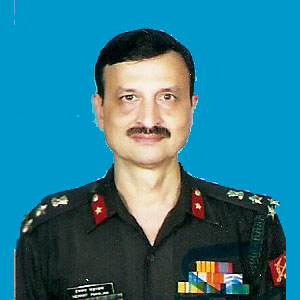
BRIG Hemant Mahajan
Passionate writer on National Security related issues, Brig Hemant Mahajan YSM (Retd) is M Sc, M Phil in Defence Studies. He joined IMA Dehradun in July 1973 and passed out as a Commissioned Officer on 15 June 1975. He was commissioned into 7 MARATHA LIGHT INFANTRY. He has served extensively in Counter Insurgency Operations in Insurgency and Terrorist prone areas of Jammu & Kashmir, Punjab and North East and has taken part in all important operations undertaken by the Army since 1975.
Brig Hemant Mahajan served in Jammu & Kashmir, in the deserts of Rajasthan, in Super High Altitude areas of Kargil and Leh, forward areas of Arunachal Pradesh. He was deployed in Punjab in ‘Operation Avert’. He was also involved in maintaining peace post ‘Operation Bluestar’ days in Punjab in the worst affected district of Gurdaspur, Taran Taran and Amritsar.He served in the areas of Darjeeling, Kurseong, Siliguri and Sikkim. He commanded his battalion 7 MARATHA LIGHT INFANTRY in Operation Rakshak in the most difficult areas of Poonch and Rajouri during the times of highest militancy. His unit was responsible for stopping terrorists from Pakistan into Jammu and Kashmir. His unit was awarded Unit Citation, 18 gallantry awards including YSM (gallantry) for the officer.