Do you know on this day in 1905, Swadeshi Movement protested against British partition of Bengal? History of National Handloom Day you can't miss
The handloom sector holds a unique place in India"s economy and social fabric. It is widely described as the country"s largest cottage industry and the second-largest employment provider in rural India after agriculture.
NewsBharati 07-Aug-2026 12:25:48 PM
Total Views |


Every year on 7th August, India observes National Handloom Day, a tribute to one of the country's oldest and most culturally significant industries. The day is not just a ceremonial occasion; it is a reminder of the deep historical, economic, and social roots of handloom weaving in India, and of the long struggle this sector has faced to remain relevant in a rapidly industrializing and globalizing economy.
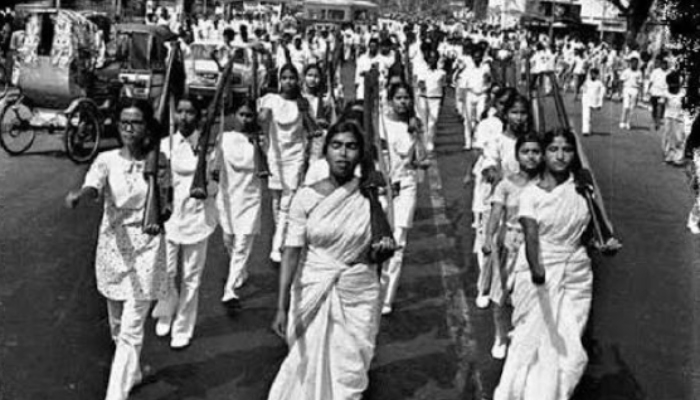
_202608071239305448_H@@IGHT_400_W@@IDTH_700.jpg "National Handloom Day")
Why the handloom sector matters to India
The handloom sector holds a unique place in India's economy and social fabric. It is widely described as the country's largest cottage industry and the second-largest employment provider in rural India after agriculture. According to the Fourth All India Handloom Census (2019–20), the sector comprises over 31 lakh handloom households and around 35.22 lakh weavers and allied workers, with roughly 2.8 million looms in operation nationwide. A striking feature of the workforce is its gender composition; more than 70% of handloom workers are women, making the sector a vital source of income and economic independence for rural women. Nearly 89% of weaver households are located in rural areas, meaning the sector directly sustains rural livelihoods that might otherwise have few non-agricultural income options.
The back seat: Globalization and its impact
_202608071241109364_H@@IGHT_400_W@@IDTH_700.jpg "National Handloom Day")
This period saw many traditional weaving clusters decline, weavers migrate to cities for alternative work, and entire generations of artisan families abandon looms that had sustained their households for generations. Wages for handloom workers remained low, often in the range of a few hundred rupees a day, despite the skill and time invested in each piece. The sector, once central to India's identity and freedom struggle, found itself pushed to the margins of an economy increasingly driven by scale, speed, and low-cost mass manufacturing.
Rebuilding consumer awareness and pride around handloom products
Since 2014, the government has undertaken a renewed push to revive and formalize support for the handloom sector. The declaration of National Handloom Day itself in 2015 was part of this effort, aimed at rebuilding consumer awareness and pride around handloom products. Alongside this, the government launched the "India Handloom" brand to certify quality, authentic, and eco-friendly handloom products for premium markets, and the Handloom Mark scheme to help distinguish genuine handloom goods from power-loom imitations.
While these measures have expanded institutional support and outreach, official data shows lakhs of weavers benefiting from various schemes; challenges remain, including limited reach of welfare schemes relative to the size of the workforce, low formal credit penetration, and modest wage growth in many clusters.
National Handloom Day is ultimately a call to remember that behind every handwoven saree or fabric lies generations of skill, history, and identity. The sector's journey, from its role in India's freedom struggle, through decades of neglect after liberalization, to renewed policy attention in recent years, reflects the larger tension between tradition and industrialization. Sustaining it requires not just government schemes, but consistent consumer support for handmade, indigenous craftsmanship in an era dominated by fast, mass-produced fashion.
On this day in 1905, the Swadeshi Movement was formally launched at Calcutta Town Hall, as a protest against the British partition of Bengal. The movement called upon Indians to boycott foreign-made goods and revive indigenous industries, with handloom weavers playing a central role in producing homespun textiles as a symbol of self-reliance and resistance against colonial economic exploitation.
More than a century later, in July 2015, the Government of India, under Prime Minister Narendra Modi, formally declared 7th August as National Handloom Day. The first celebration was held on 7th August 2015 in Chennai, where the Prime Minister also launched the "India Handloom" brand, aimed at helping weavers tap into premium domestic and global markets. Since then, the Ministry of Textiles has organized annual events, exhibitions, and awareness drives across the country to honour weavers and highlight the sector's importance.
ALSO READ: Paithani Sarees: Maharashtra’s Timeless Heritage in Today’s Viral Debate
India's handloom tradition predates colonial rule by centuries. Indian handwoven textiles were prized and exported as far back as the 5th century BCE, and by the medieval and Mughal periods, Indian muslin, silk, and cotton fabrics were sought after across the world. Handloom is not a single, uniform craft, it is an umbrella term covering an extraordinary range of regional textile traditions, including the Banarasi silk sarees of Varanasi, Pochampally Ikat of Telangana, Kanchipuram silk of Tamil Nadu, Chanderi and Maheshwari fabrics of Madhya Pradesh, Jamdani of West Bengal, Paithani of Maharashtra, Baluchari sarees, khadi cloth, and countless other weaves, each carrying distinct motifs, techniques, and stories tied to their region.
Why the handloom sector matters to India
The handloom sector holds a unique place in India's economy and social fabric. It is widely described as the country's largest cottage industry and the second-largest employment provider in rural India after agriculture. According to the Fourth All India Handloom Census (2019–20), the sector comprises over 31 lakh handloom households and around 35.22 lakh weavers and allied workers, with roughly 2.8 million looms in operation nationwide. A striking feature of the workforce is its gender composition; more than 70% of handloom workers are women, making the sector a vital source of income and economic independence for rural women. Nearly 89% of weaver households are located in rural areas, meaning the sector directly sustains rural livelihoods that might otherwise have few non-agricultural income options.
Beyond employment, handloom production requires no electricity, has a minimal carbon footprint compared to power looms and mechanized textile mills, and preserves traditional artisanal skills passed down through generations. It also contributes to India's export earnings and soft-power image abroad, with Indian textiles, including handloom products, reaching over 100 countries.
The back seat: Globalization and its impact
Despite this legacy, the handloom sector has historically struggled for recognition and survival within its own country. The most significant blow came after India's economic liberalization in 1991. As the economy opened up to global trade, cheaper machine-made and power-loom textiles, along with imported synthetic fabrics, flooded the domestic market. Handloom products, being labour-intensive and comparatively costlier, found it difficult to compete on price. Mechanized mills could produce in bulk at a fraction of the time and cost, and consumer preference gradually shifted toward mass-produced, uniform textiles.
This period saw many traditional weaving clusters decline, weavers migrate to cities for alternative work, and entire generations of artisan families abandon looms that had sustained their households for generations. Wages for handloom workers remained low, often in the range of a few hundred rupees a day, despite the skill and time invested in each piece. The sector, once central to India's identity and freedom struggle, found itself pushed to the margins of an economy increasingly driven by scale, speed, and low-cost mass manufacturing.
Rebuilding consumer awareness and pride around handloom products
Since 2014, the government has undertaken a renewed push to revive and formalize support for the handloom sector. The declaration of National Handloom Day itself in 2015 was part of this effort, aimed at rebuilding consumer awareness and pride around handloom products. Alongside this, the government launched the "India Handloom" brand to certify quality, authentic, and eco-friendly handloom products for premium markets, and the Handloom Mark scheme to help distinguish genuine handloom goods from power-loom imitations.
The National Handloom Development Programme (NHDP) has been the umbrella scheme supporting the sector, assisting in cluster development, technology and design upgradation, marketing support, and welfare measures for weavers. Related components include the Comprehensive Handloom Cluster Development Scheme for large weaving hubs, the Raw Material Supply Scheme to ensure affordable yarn access, the Handloom Weavers' Comprehensive Welfare Scheme offering health and life insurance, and concessional credit through Weaver MUDRA loans. The government has also pushed for greater digital and e-commerce access for weavers, onboarding them onto platforms like the Government e-Marketplace and dedicated portals such as Indiahandmade, alongside organizing marketing events to connect weavers directly with buyers.
While these measures have expanded institutional support and outreach, official data shows lakhs of weavers benefiting from various schemes; challenges remain, including limited reach of welfare schemes relative to the size of the workforce, low formal credit penetration, and modest wage growth in many clusters.
National Handloom Day is ultimately a call to remember that behind every handwoven saree or fabric lies generations of skill, history, and identity. The sector's journey, from its role in India's freedom struggle, through decades of neglect after liberalization, to renewed policy attention in recent years, reflects the larger tension between tradition and industrialization. Sustaining it requires not just government schemes, but consistent consumer support for handmade, indigenous craftsmanship in an era dominated by fast, mass-produced fashion.

Siddhi Somani
Siddhi Somani is known for her satirical and factual hand in Economic, Social and Political writing. Having completed her post graduation in Journalism, she is currently engaged in completing her Masters in Politics. The author meanwhile is also exploring her hand in analytics and statistics.