Amit Thackeray: A Boy, who Never Grew Up
Total Views |


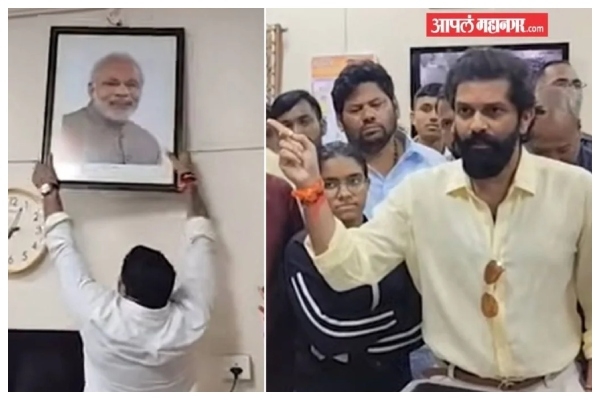
There is something deeply revealing about Amit Thackeray's behaviour in Pune. Not because he removed a photograph of Prime Minister Narendra Modi, but because of the extraordinary sense of entitlement behind the act. Amit Thackeray walked into a government educational institution, saw Narendra Modi's photograph displayed alongside Chhatrapati Shivaji Maharaj's, objected to it and had the photograph removed by his supporters. And then, after a criminal case was registered, he declared that he was “proud” of what he had done.
 Who exactly is Amit Thackeray? Before Amit Thackeray begins behaving like Maharashtra has appointed him its cultural censor, perhaps he should answer a simple question - What is his political locus standi?
He is the son of Raj Thackeray. He is the grand-nephew of Bal Thackeray. He carries one of Maharashtra's recognisable political surnames. But beyond the surname, what is his political achievement? He contested his first Assembly election in 2024. He finished third. The numbers are not flattering. Mahesh Sawant received 50,213 votes, Sada Sarvankar 48,897 and Amit Thackeray 33,062. This happened in the so-called backyard of MNS. Amit was rejected by Marathi Manoos as he secured a poor third position. Amit and his coterie must understand that defeat did not offer him any authority. Amit has not been elected to the Maharashtra Assembly. He does not hold a constitutional office. He does not run the government. He does not administer the college. He does not determine government protocol. But he walks into a government institution and orders the removal of the Prime Minister's photograph.
This is not political maturity. It is political adolescence. The photograph was bigger than Amit. The wall contained photographs of Dr B. R. Ambedkar and President Droupadi Murmu as well. The issue, therefore, was not some private portrait gallery created for Narendra Modi. It was a government institution displaying public figures. If Amit believed that the placement was inappropriate, there was a perfectly adult way of handling it. He could have questioned the administration. He could have written to the authorities. He could have made a political argument. He could have demanded a change through due process. Instead, the photograph was physically removed. That is the difference between politics and tantrum politics. The photograph was subsequently put back. That makes the whole episode even more embarrassing. Amit removed it. The institution restored it. The state continued and Amit was left with a FIR and a headline.
That is unfortunate. Because Maharashtra has seen political heirs before. It knows the difference between inheritance and achievement.
The larger embarrassment is not confined to Amit. For nearly two decades, Raj Thackeray has had an extraordinary opportunity to build a political alternative in Maharashtra. The MNS was launched with tremendous political expectations. In 2009, it won 13 Assembly seats and appeared capable of becoming a serious force. What happened thereafter? The organisation steadily declined. By the 2024 Assembly election, the MNS drew a blank. Amit himself finished a poor third. After nearly twenty years, this is the uncomfortable question Raj Thackeray has to face: Where is the MNS? Where is the cadre? Where is the statewide political organisation? Where is the electoral base? Where is the succession plan that produces leaders rather than headlines? A party cannot survive forever on the charisma of its founder and the historical memory of another Thackeray. And it certainly cannot survive on periodic controversies.
Until then, removing somebody else's photograph is hardly an impressive achievement.
It looks less like the arrival of a new political leader and more like the impatience of a young politician desperate to be noticed. That may explain the photograph. It may also explain the MNS. And perhaps that is the most telling part of the entire episode.
Proud? That single word perhaps explains more about Amit Thackeray's politics than any speech he has delivered. This was not an act of political courage. It was an act of political immaturity. It displayed a remarkable lack of proportion, judgment and complete lack of understanding of primary politics. A photograph offended him. So he removed it. What next? Will every politician who dislikes a particular leader start deciding which photographs government institutions are permitted to display? Amit Thackeray seems to have confused personal political dislike with public authority. That is the real problem.
He is the son of Raj Thackeray. He is the grand-nephew of Bal Thackeray. He carries one of Maharashtra's recognisable political surnames. But beyond the surname, what is his political achievement? He contested his first Assembly election in 2024. He finished third. The numbers are not flattering. Mahesh Sawant received 50,213 votes, Sada Sarvankar 48,897 and Amit Thackeray 33,062. This happened in the so-called backyard of MNS. Amit was rejected by Marathi Manoos as he secured a poor third position. Amit and his coterie must understand that defeat did not offer him any authority. Amit has not been elected to the Maharashtra Assembly. He does not hold a constitutional office. He does not run the government. He does not administer the college. He does not determine government protocol. But he walks into a government institution and orders the removal of the Prime Minister's photograph.
This is not political maturity. It is political adolescence. The photograph was bigger than Amit. The wall contained photographs of Dr B. R. Ambedkar and President Droupadi Murmu as well. The issue, therefore, was not some private portrait gallery created for Narendra Modi. It was a government institution displaying public figures. If Amit believed that the placement was inappropriate, there was a perfectly adult way of handling it. He could have questioned the administration. He could have written to the authorities. He could have made a political argument. He could have demanded a change through due process. Instead, the photograph was physically removed. That is the difference between politics and tantrum politics. The photograph was subsequently put back. That makes the whole episode even more embarrassing. Amit removed it. The institution restored it. The state continued and Amit was left with a FIR and a headline.
ALSO READ: Manusmriti for Rahul, Quran for Silence?
If this was meant to demonstrate power, it demonstrated something else. How little power he actually possesses. A photograph cannot be a substitute for a political career. Perhaps Amit needs reminding that politics is not a game of social-media clips. You do not become a leader because cameras record you taking down a photograph. You become a leader because people trust you. You win elections. You build an organisation. You persuade voters. You solve problems. You demonstrate judgment. You show restraint when restraint is required. Amit has not demonstrated any of these qualities on any meaningful scale. Considering his past history and performance of the Thackeray family, it is unlikely to happen. His assembly defeat should have taught him humility. Instead, the Pune episode suggests that he has chosen theatre.
The larger embarrassment is not confined to Amit. For nearly two decades, Raj Thackeray has had an extraordinary opportunity to build a political alternative in Maharashtra. The MNS was launched with tremendous political expectations. In 2009, it won 13 Assembly seats and appeared capable of becoming a serious force. What happened thereafter? The organisation steadily declined. By the 2024 Assembly election, the MNS drew a blank. Amit himself finished a poor third. After nearly twenty years, this is the uncomfortable question Raj Thackeray has to face: Where is the MNS? Where is the cadre? Where is the statewide political organisation? Where is the electoral base? Where is the succession plan that produces leaders rather than headlines? A party cannot survive forever on the charisma of its founder and the historical memory of another Thackeray. And it certainly cannot survive on periodic controversies.
The Pune incident also fits a worrying pattern. Just days earlier, Amit was reported to have made a controversial statement threatening action against auto-rickshaw drivers over Hindi usage. Then came the Modi photograph. Language controversy. Photograph controversy. Confrontation. Headlines. Visibility. Is this the new MNS strategy? When electoral politics does not generate sufficient attention, generate controversy instead? If so, it is a desperate strategy. A party that once dreamed of becoming Maharashtra's third political force now appears increasingly interested in becoming Maharashtra's permanent source of political noise. And that is not the same thing as relevance.
There is one question Raj Thackeray should answer. Was he aware that Amit was going to remove Modi's photograph? Did he approve of it? Did Amit act independently? If Raj disagreed, why has there been no clear public distancing? If he approved, then Maharashtra deserves to know whether this represents the MNS's considered political position. Raj is an experienced politician. He understands political symbolism. He also understands that a son carrying out a politically provocative act inevitably raises questions about the father. Silence will not make those questions disappear.
There is a larger problem here. The Thackeray surname once represented political struggle, organisational discipline and an ability to command a mass movement. Today, one increasingly sees the next generation trying to command attention before demonstrating that it can command people. That is a dangerous inversion. Amit does not need to remove Narendra Modi's photograph to establish himself.
ALSO READ: USS Abraham Lincoln Crisis, Demoralization of American Sailors, and Lessons for India
He needs to establish himself. There is a world of difference. If he wants to be taken seriously, he should stop behaving as though political inheritance automatically confers political authority. It does not. If he wants respect, he should earn it. If he wants influence, he should build it. If he wants Maharashtra to listen, he should first give Maharashtra a reason to listen. And if he wants to prove that he is more than his surname, there is a wonderfully simple way of doing it - Win an election.
It looks less like the arrival of a new political leader and more like the impatience of a young politician desperate to be noticed. That may explain the photograph. It may also explain the MNS. And perhaps that is the most telling part of the entire episode.