GDP@7.8%: Modi’s Answer to the Politics of Pessimism
Total Views |


The Indian economy has delivered a number that is difficult to shut down, spin away or bury under political rhetoric - 7.8 per cent GDP growth in the first quarter of 2026-27. The number matters. But the politics behind the number matters even more.
For decades, India was described as an emerging power with enormous potential. Potential became India's favourite economic word. The problem was that potential could remain potential forever. The Modi government changed the political vocabulary. It began speaking about delivery roads, railways, ports, airports, electricity, bank accounts, digital payments, manufacturing, infrastructure and formalisation.
Whether one likes Modi politically or dislikes him, it is difficult to deny that the government's politics has been unusually obsessed with execution. And execution eventually produces numbers. Manufacturing grew 9.2 per cent. Services grew 10 per cent. Investment expanded strongly. Consumption remained resilient. These figures matter because they indicate that India's growth story is no longer dependent on a single government spending programme. A wider economic ecosystem is working. That is perhaps Modi's most important political achievement.
The opposition has a serious problem with this story. Its political narrative requires an India that is perpetually failing. The Congress and its allies have repeatedly tried to turn economic difficulties into a referendum on Modi. They have spoken of unemployment, inequality, inflation and institutional failure. Those issues deserve scrutiny - no government should escape accountability. But criticism becomes politically hollow when it refuses to acknowledge improvement.
A responsible opposition should ask - What remains to be done? A desperate opposition keeps asking -Can we somehow convince people that nothing has changed? The latest GDP figure makes the second strategy increasingly difficult. India's economic transformation cannot be understood through one quarterly number. But neither can it be dismissed through one.
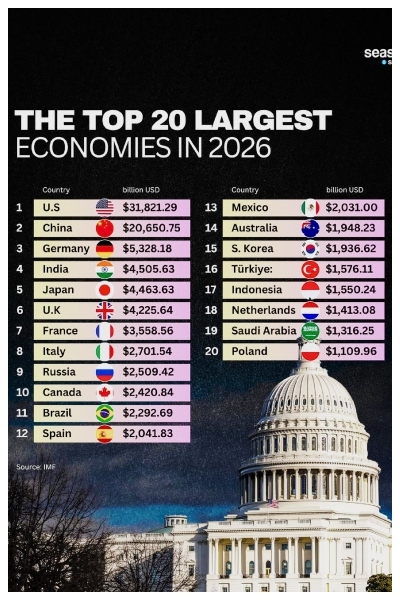 For Modi, this is more than an economic contest. It is a geopolitical opportunity. A rapidly growing India changes the balance of Asia. A stagnant India would have remained a demographic giant struggling to convert numbers into national power. A fast-growing India becomes something else: a consequential global power.
But slogans become politically meaningful when they are followed by delivery. A highway is not a slogan.
A railway line is not a slogan. A digital payment made by a small trader is not a slogan. A manufacturing plant is not a slogan. And 7.8 per cent growth is certainly not a slogan.
The question is whether the country is moving backwards or forwards. The answer is increasingly visible.
Forwards.
And that is why the 7.8 percent number has political significance. It is not a certificate that everything is perfect. It is something more useful. It is evidence that the country is moving. Modi should not be judged merely by GDP. Governance must ultimately be measured by jobs, wages, living standards, education, healthcare, agriculture and opportunity. But neither should Modi's economic record be judged by political slogans. Judge it by outcomes.
India has moved from being spoken about as a country of future promise to being treated as one of the world's principal growth engines. China is slowing. The West is struggling for momentum. India is growing at 7.8 per cent. The opposition can continue to sell pessimism. Modi has something far more difficult to manufacture in politics -a number. And this number is saying something very clearly. India is not waiting for its future anymore. It is beginning to build.
For years, Narendra Modi’s political opponents have attempted to construct an India of permanent economic disappointment. Every slowdown was presented as evidence of a failed government. Every structural reform was declared a disaster. Every infrastructure project was dismissed as propaganda. Every economic achievement was accompanied by a question mark. Now the economy has supplied its own answer. 7.8 per cent.
And it comes at a time when much of the world is struggling for momentum. China grew around 4.3 per cent in the second quarter. The United States expanded at a much slower pace. Major European economies continue to wrestle with anaemic growth. India, meanwhile, is moving at almost twice China's pace and several times faster than many advanced economies. This is not merely an economic statistic. It is a political statement. It tells us something about the India that has emerged during the Modi years.
ALSO READ: USS Abraham Lincoln Crisis, Demoralization of American Sailors, and Lessons for India
The opposition has a serious problem with this story. Its political narrative requires an India that is perpetually failing. The Congress and its allies have repeatedly tried to turn economic difficulties into a referendum on Modi. They have spoken of unemployment, inequality, inflation and institutional failure. Those issues deserve scrutiny - no government should escape accountability. But criticism becomes politically hollow when it refuses to acknowledge improvement.
A responsible opposition should ask - What remains to be done? A desperate opposition keeps asking -Can we somehow convince people that nothing has changed? The latest GDP figure makes the second strategy increasingly difficult. India's economic transformation cannot be understood through one quarterly number. But neither can it be dismissed through one.
The comparison with China is particularly significant. China remains vastly richer in per-capita terms and possesses enormous industrial capacity. India has no reason for complacency. But the growth differential matters. China is dealing with an ageing population, property-sector problems, weak domestic demand and a changing global manufacturing environment. India has a young population, a growing consumer market, expanding digital infrastructure and an increasingly ambitious manufacturing strategy.
There is a psychological dimension to economic growth that economists sometimes underestimate. Nations need confidence. For decades, Indians were accustomed to hearing that India was poor, slow, bureaucratic and incapable of competing with the world. Modi's politics has deliberately challenged that psychology.
From Make in India to Digital India, from infrastructure expansion to the aspiration of a developed India by 2047, the message has been consistent - India can do big things. Critics may mock the slogans.
A railway line is not a slogan. A digital payment made by a small trader is not a slogan. A manufacturing plant is not a slogan. And 7.8 per cent growth is certainly not a slogan.
ALSO READ: Gen Z: the youth of India: Peep into the future of India
The real test for Modi now is not whether India can produce one impressive GDP quarter. It is whether he can sustain high growth for another decade while creating enough productive employment, raising incomes, expanding manufacturing and ensuring that growth reaches the bottom of the economic pyramid. That is the unfinished agenda. But unfinished business is not the same thing as failure. That distinction has been deliberately blurred in India's political discourse. India has problems. Every serious country does.
Forwards.
And that is why the 7.8 percent number has political significance. It is not a certificate that everything is perfect. It is something more useful. It is evidence that the country is moving. Modi should not be judged merely by GDP. Governance must ultimately be measured by jobs, wages, living standards, education, healthcare, agriculture and opportunity. But neither should Modi's economic record be judged by political slogans. Judge it by outcomes.
India has moved from being spoken about as a country of future promise to being treated as one of the world's principal growth engines. China is slowing. The West is struggling for momentum. India is growing at 7.8 per cent. The opposition can continue to sell pessimism. Modi has something far more difficult to manufacture in politics -a number. And this number is saying something very clearly. India is not waiting for its future anymore. It is beginning to build.