Ford Foundation: Beneath the Philanthropic Facade
Total Views |


For decades, the Ford Foundation has been among the most influential foreign philanthropic institutions operating in India, funding projects spanning academia, civil society, media, governance and social advocacy. But its presence in India has rarely been free from controversy. Questions surrounding foreign funding, regulatory compliance, political activism and links with advocacy networks have repeatedly brought the organisation under official and public scrutiny. As India tightens oversight of foreign-funded entities, the Foundation’s long record in the country offers a revealing case study of the uneasy intersection of philanthropy, influence, politics and national sovereignty.
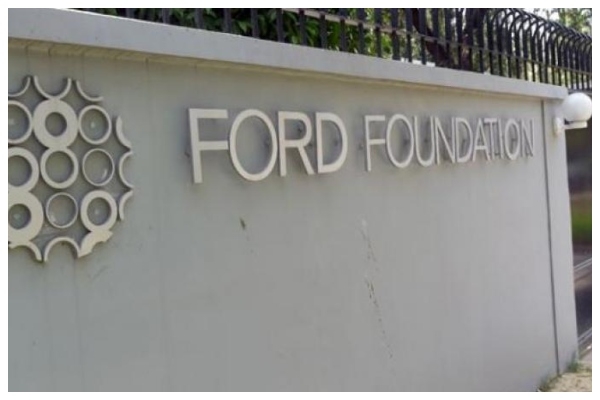
 The Ford Foundation vacated its longtime New Delhi office after the central government asked it to leave, with the property subsequently allotted to two India-led international initiatives. The Foundation had occupied 55, Lodhi Estate since the 1960s. After its lease expired, the Land and Development Office under the Union Ministry of Housing and Urban Affairs began eviction proceedings in March. Officials said no forceful eviction took place and that the Foundation vacated the premises voluntarily.
On September 7, 2026, the Directorate of Estates allotted the ground floor of the building to the International Big Cat Alliance and the first floor to the Global Biofuels Alliance. Both initiatives were launched by Prime Minister Narendra Modi in 2023. The IBCA is a coalition of countries and organisations focused on the conservation of big cats and currently operates from Shanti Niketan in Delhi. The Global Biofuels Alliance, unveiled during the 2023 G20 Summit in New Delhi, operates from Sanrakshan Bhawan in Bhikaji Cama Place.
For more than seven decades, the Ford Foundation has occupied an unusual position in India. The immediate dispute concerns a lease and the government's control over public property. The larger question, however, is why an American philanthropic foundation that has been active in India since the 1950s has repeatedly attracted scrutiny from Indian authorities.
The Lodhi Estate building itself has historical significance. Designed by American architect Joseph Stein, who also designed the India International Centre and India Habitat Centre, the premises have hosted the United Nations and several of its agencies.
The Foundation’s political controversies in India intensified in 2015. The Gujarat government accused it of funding activities linked to Sabrang Trust and Citizens for Justice and Peace, organisations associated with activist Teesta Setalvad, and alleged that some of those activities amounted to interference in India’s internal affairs.
Following these allegations, the Union Ministry of Home Affairs placed the Ford Foundation on a “prior approval” list, requiring government clearance before funds could be transferred to Indian organisations. The Foundation was removed from that list in March 2016.
The Ford Foundation has subsequently drawn criticism over its alleged links with organisations accused of interfering in India’s internal affairs, targeting the government and damaging the country’s global image. Among its grantees is the Association for Democratic Reforms (ADR), an election-reform NGO that has been described as having ideological and financial links with global networks, including George Soros’s Open Society Foundations (OSF).
Last year, ADR filed a petition in the Supreme Court alleging “mass disenfranchisement” of voters in Bihar, echoing claims made by Rahul Gandhi during his campaign rallies. The similarity between these arguments and those advanced by opposition parties and activist groups has led to allegations of a coordinated attempt to discredit India’s electoral process.
In 2025, ADR also challenged the Chief Election Commissioner and Other Election Commissioners Act, 2023, in the Supreme Court. Former AAP leader Prashant Bhushan, known for supporting Delhi riots accused Umar Khalid and Sharjeel Imam, also announced the development on social media while targeting the ruling government.
The Ford Foundation has also reportedly funded The Reporters’ Collective through the National Foundation for India. The outlet published a report alleging that the government used a “Homemade Poverty Index” to exaggerate poverty reduction. Critics pointed to what they described as conceptual and methodological flaws, arguing that the report failed to properly account for India’s National Multidimensional Poverty Index methodology.
Journalist Ravish Kumar received the “Independence Prize” from Reporters Without Borders (RSF), an organisation reportedly funded by the Ford Foundation. RSF has also supported Alt News co-founder Mohammed Zubair, who faced charges in Uttar Pradesh related to India’s sovereignty and unity. Its 2023 press freedom ranking placed Pakistan above India.
The Organised Crime and Corruption Reporting Project (OCCRP), funded partly by OSF and the Ford Foundation, was also accused in 2023 of targeting Indian companies in a manner similar to Hindenburg Research.
OCCRP subsequently published reports critical of the Adani Group, which were cited by international outlets including the Financial Times and The Guardian. It later targeted the Vedanta Group, alleging that the company had lobbied the government to relax environmental regulations during the COVID-19 pandemic.
The Ford Foundation has also been linked to Access Now, a Soros-affiliated NGO that came under scrutiny after several Indian MPs and public figures received Apple alerts warning of possible “state-sponsored” attempts to access their phones. The controversy intensified after recipients were advised to contact Access Now’s 24/7 support helpline.
 The sharpest confrontation between the Ford Foundation and the Indian government came in 2015 over funding linked to Teesta Setalvad.
In a written reply to Parliament that May, the Ministry of Home Affairs said security agencies had reported that some Ford Foundation funds had reached NGOs that were not registered under the Foreign Contribution Regulation Act (FCRA). The government consequently placed Ford-related funding under the “prior permission” category, requiring approval for future foreign contributions.
The government acknowledged Setalvad’s association with Citizens for Justice and Peace and Sabrang Trust, while clarifying that Sabrang Trust had received Ford Foundation funding.
A key issue involved Sabrang Communications and Publishing Pvt Ltd, a company associated with Setalvad. It was reported to have received a USD 290,000 Ford Foundation grant despite not having FCRA approval. The government later ordered a CBI investigation into the alleged receipt of unauthorised foreign funds.
The Gujarat government separately alleged that activities linked to Setalvad’s organisations amounted to interference in India’s internal affairs and risked contributing to communal disharmony.
India’s Tightening Rules on Foreign Funding
The Ford Foundation dispute also needs to be viewed against the broader shift in India’s regulation of foreign-funded NGOs. Since 2014, the government has significantly increased scrutiny of organisations receiving overseas contributions.
Recent changes concern rules framed under the Foreign Contribution (Regulation) Act, 2010, rather than replacing the Act itself. Under the amended rules, religious organisations registered under FCRA must seek approval before changing their stated area of operation or purpose.
The rules identify 16 categories of religious activity for which foreign contributions may be used. These include construction and maintenance of places of worship, preservation of scriptures, religious education, pilgrim facilities, dharamshalas and langars, meditation retreats, devotional arts, documentation of indigenous faith traditions, protection of sacred heritage, religious research, libraries and museums, counselling, traditional sacred crafts, and maintenance of burial or cremation grounds.
Activities undertaken for proselytisation are specifically excluded.
The Foundation has also faced criticism over its ideological culture.
In 2021, journalist Christopher Brunet, citing whistleblower emails published through his KarlStack newsletter, alleged that a private listserv used by current and former Ford Foundation Fellows was dominated by hard-left ideological views and intolerance towards dissent.
According to the whistleblower, members who challenged the dominant political consensus could face accusations of racism, public criticism, reputational attacks and, in some cases, doxxing. The allegations were presented as contradicting the Fellowship Program’s public emphasis on diversity and inclusion.
These claims remain allegations based on leaked or privately supplied material. Nevertheless, they have reinforced criticism that the Foundation’s institutional culture is politically one-sided.
More broadly, critics in India frequently point to the Ford Foundation’s links with organisations supported by George Soros and other international advocacy networks. Soros has openly criticised the Modi government and spoken about political change in India, making such associations particularly controversial.
For its critics, the issue is not philanthropy itself. The concern is whether foreign funding can shape political narratives, civil-society activism, litigation, journalism and international perceptions of India without sufficient accountability.
That is ultimately why the standard for any foreign-funded organisation operating in India should remain straightforward: complete transparency in funding, strict compliance with Indian law and no ambiguity about whose interests its activities ultimately serve.
A Long Presence, A New Dispute
On September 7, 2026, the Directorate of Estates allotted the ground floor of the building to the International Big Cat Alliance and the first floor to the Global Biofuels Alliance. Both initiatives were launched by Prime Minister Narendra Modi in 2023. The IBCA is a coalition of countries and organisations focused on the conservation of big cats and currently operates from Shanti Niketan in Delhi. The Global Biofuels Alliance, unveiled during the 2023 G20 Summit in New Delhi, operates from Sanrakshan Bhawan in Bhikaji Cama Place.
For more than seven decades, the Ford Foundation has occupied an unusual position in India. The immediate dispute concerns a lease and the government's control over public property. The larger question, however, is why an American philanthropic foundation that has been active in India since the 1950s has repeatedly attracted scrutiny from Indian authorities.
The Lodhi Estate building itself has historical significance. Designed by American architect Joseph Stein, who also designed the India International Centre and India Habitat Centre, the premises have hosted the United Nations and several of its agencies.
Allegations of an Anti-India Agenda
Following these allegations, the Union Ministry of Home Affairs placed the Ford Foundation on a “prior approval” list, requiring government clearance before funds could be transferred to Indian organisations. The Foundation was removed from that list in March 2016.
The Ford Foundation has subsequently drawn criticism over its alleged links with organisations accused of interfering in India’s internal affairs, targeting the government and damaging the country’s global image. Among its grantees is the Association for Democratic Reforms (ADR), an election-reform NGO that has been described as having ideological and financial links with global networks, including George Soros’s Open Society Foundations (OSF).
ALSO READ: Karnataka: Congress’s Anti-Hindutva Laboratory
In 2025, ADR also challenged the Chief Election Commissioner and Other Election Commissioners Act, 2023, in the Supreme Court. Former AAP leader Prashant Bhushan, known for supporting Delhi riots accused Umar Khalid and Sharjeel Imam, also announced the development on social media while targeting the ruling government.
The Ford Foundation has also reportedly funded The Reporters’ Collective through the National Foundation for India. The outlet published a report alleging that the government used a “Homemade Poverty Index” to exaggerate poverty reduction. Critics pointed to what they described as conceptual and methodological flaws, arguing that the report failed to properly account for India’s National Multidimensional Poverty Index methodology.
Journalist Ravish Kumar received the “Independence Prize” from Reporters Without Borders (RSF), an organisation reportedly funded by the Ford Foundation. RSF has also supported Alt News co-founder Mohammed Zubair, who faced charges in Uttar Pradesh related to India’s sovereignty and unity. Its 2023 press freedom ranking placed Pakistan above India.
The Organised Crime and Corruption Reporting Project (OCCRP), funded partly by OSF and the Ford Foundation, was also accused in 2023 of targeting Indian companies in a manner similar to Hindenburg Research.
OCCRP subsequently published reports critical of the Adani Group, which were cited by international outlets including the Financial Times and The Guardian. It later targeted the Vedanta Group, alleging that the company had lobbied the government to relax environmental regulations during the COVID-19 pandemic.
The Ford Foundation has also been linked to Access Now, a Soros-affiliated NGO that came under scrutiny after several Indian MPs and public figures received Apple alerts warning of possible “state-sponsored” attempts to access their phones. The controversy intensified after recipients were advised to contact Access Now’s 24/7 support helpline.
The Teesta Setalvad Controversy
In a written reply to Parliament that May, the Ministry of Home Affairs said security agencies had reported that some Ford Foundation funds had reached NGOs that were not registered under the Foreign Contribution Regulation Act (FCRA). The government consequently placed Ford-related funding under the “prior permission” category, requiring approval for future foreign contributions.
The government acknowledged Setalvad’s association with Citizens for Justice and Peace and Sabrang Trust, while clarifying that Sabrang Trust had received Ford Foundation funding.
A key issue involved Sabrang Communications and Publishing Pvt Ltd, a company associated with Setalvad. It was reported to have received a USD 290,000 Ford Foundation grant despite not having FCRA approval. The government later ordered a CBI investigation into the alleged receipt of unauthorised foreign funds.
The Gujarat government separately alleged that activities linked to Setalvad’s organisations amounted to interference in India’s internal affairs and risked contributing to communal disharmony.
India’s Tightening Rules on Foreign Funding
The Ford Foundation dispute also needs to be viewed against the broader shift in India’s regulation of foreign-funded NGOs. Since 2014, the government has significantly increased scrutiny of organisations receiving overseas contributions.
Recent changes concern rules framed under the Foreign Contribution (Regulation) Act, 2010, rather than replacing the Act itself. Under the amended rules, religious organisations registered under FCRA must seek approval before changing their stated area of operation or purpose.
ALSO READ: If Modi Had Not Happened
Activities undertaken for proselytisation are specifically excluded.
Ford and Its Association with the Left
In 2021, journalist Christopher Brunet, citing whistleblower emails published through his KarlStack newsletter, alleged that a private listserv used by current and former Ford Foundation Fellows was dominated by hard-left ideological views and intolerance towards dissent.
According to the whistleblower, members who challenged the dominant political consensus could face accusations of racism, public criticism, reputational attacks and, in some cases, doxxing. The allegations were presented as contradicting the Fellowship Program’s public emphasis on diversity and inclusion.
These claims remain allegations based on leaked or privately supplied material. Nevertheless, they have reinforced criticism that the Foundation’s institutional culture is politically one-sided.
More broadly, critics in India frequently point to the Ford Foundation’s links with organisations supported by George Soros and other international advocacy networks. Soros has openly criticised the Modi government and spoken about political change in India, making such associations particularly controversial.
For its critics, the issue is not philanthropy itself. The concern is whether foreign funding can shape political narratives, civil-society activism, litigation, journalism and international perceptions of India without sufficient accountability.
That is ultimately why the standard for any foreign-funded organisation operating in India should remain straightforward: complete transparency in funding, strict compliance with Indian law and no ambiguity about whose interests its activities ultimately serve.