18 Means 18
Total Views |


There are moments when a court judgment becomes larger than the case before it. The Kerala High Court's latest ruling that a Muslim man can be prosecuted under the Protection of Children from Sexual Offences (POCSO) Act for sexual intercourse with his minor wife is one such moment.
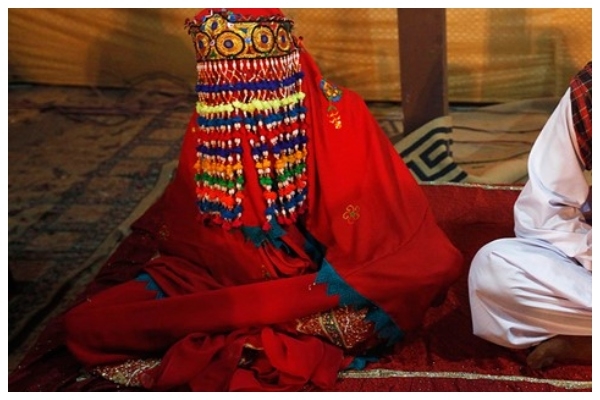 The Court was unequivocal. A marriage under personal law does not provide immunity from POCSO. If the girl is below 18, she is a child under POCSO. Whether she is described as a wife is irrelevant. The Court made it clear that even assuming that the marriage was solemnised according to Muslim religious rites and ceremonies, that would not absolve the man of criminal liability. This should not be treated as merely another POCSO judgment. It exposes a larger contradiction in India's legal system.
India has fixed 18 as the minimum legal age of marriage for a girl under child-protection framework. Why should Islam be an exception? A Hindu girl does not become marriageable at 15 or 16 because a religious custom says so. A Christian girl does not acquire a different age of consent because of her faith. A Sikh girl does not live under another definition of childhood. Then why should a Muslim girl be treated differently?
That is the uncomfortable question that the latest judgment brings back to the centre of the UCC debate. The issue is whether personal law should be permitted to preserve practices that conflict with contemporary laws designed to protect individual rights, particularly the rights of women and children.
The latest POCSO ruling reinforces the same principle from the criminal-law side. Personal law cannot become a shield against a law enacted to protect children. This is precisely where the argument for a Uniform Civil Code becomes difficult to dismiss.

Every religion has traditions that have evolved. Hindu society has undergone enormous legal and social reform. Practices once defended in the name of tradition were changed through legislation and social movements. The same principle cannot become unacceptable when the subject is Muslim personal law. A society cannot claim to be modern while simultaneously defending every inherited practice merely because it carries a religious label.
There is another important point. A religious ceremony does not acquire immunity from secular law merely because it is religious. If a child marriage is solemnised, the Prohibition of Child Marriage Act can apply. If sexual activity involving the child takes place, POCSO can additionally apply.
The distinction matters. The ceremony itself is not automatically a POCSO offence; POCSO addresses sexual offences against children. But a religious marriage ceremony cannot be used to legitimise sexual activity with a child. The Kerala High Court has now said precisely that. That is a welcome line to draw.
The Constitution promises equality before law. A child cannot be expected to understand constitutional theory. But the state can understand one simple principle: A 17-year-old is a child.Her religion cannot change her biological age. Her marriage certificate cannot change it. A nikah cannot change it. And the consent of her family cannot change it.
That is why the Kerala High Court judgment matters beyond Kerala and beyond the particular accused. It pushes India towards a larger question that political parties must address. If marriage, divorce, inheritance, guardianship and other family matters can continue to operate under separate religious frameworks, where exactly does the principle of equal citizenship begin and end?
The Kerala High Court has now twice sent a powerful message - when a secular law protects a child, personal law cannot be invoked to defeat that protection. The 2024 child-marriage judgment said so directly. The 2026 POCSO ruling has reinforced it in the context of sexual offences.
That is not an assault on religion. It is an assertion of the supremacy of the law. The question India must now confront is simple. If 18 is the age at which a girl is protected as a child, why should her religion determine whether that protection is meaningful?
A modern republic cannot have one definition of childhood for one community and another for another. A child is a child. The law must be one law. And the Kerala High Court has once again underlined why India needs to move towards a Uniform Civil Code.
The girl was 17 years and one month old when the marriage was solemnised according to Islamic rites. The man's argument was essentially that the marriage was valid under Muslim Personal Law.
India has fixed 18 as the minimum legal age of marriage for a girl under child-protection framework. Why should Islam be an exception? A Hindu girl does not become marriageable at 15 or 16 because a religious custom says so. A Christian girl does not acquire a different age of consent because of her faith. A Sikh girl does not live under another definition of childhood. Then why should a Muslim girl be treated differently?
ALSO READ: Disha Salian Death Case: Bombay HC Orders CBI Investigation
The Kerala High Court had already answered part of this question in 2024. It held that the Prohibition of Child Marriage Act, 2006 overrides Muslim Personal Law and applies to every Indian citizen irrespective of religion. The Court's formulation was fundamental - an Indian is a citizen first and a member of a religion thereafter.
India's personal-law framework has historically produced different rules for different communities in matters including marriage, divorce, inheritance, adoption and family relationships. Even though these differences may have historical and religious explanations, the question arises - How long can a modern republic maintain different civil standards for citizens on the basis of religion?
Every religion has traditions that have evolved. Hindu society has undergone enormous legal and social reform. Practices once defended in the name of tradition were changed through legislation and social movements. The same principle cannot become unacceptable when the subject is Muslim personal law. A society cannot claim to be modern while simultaneously defending every inherited practice merely because it carries a religious label.
There is another important point. A religious ceremony does not acquire immunity from secular law merely because it is religious. If a child marriage is solemnised, the Prohibition of Child Marriage Act can apply. If sexual activity involving the child takes place, POCSO can additionally apply.
ALSO READ: Amit Thackeray: A Boy, who Never Grew Up
The Constitution promises equality before law. A child cannot be expected to understand constitutional theory. But the state can understand one simple principle: A 17-year-old is a child.Her religion cannot change her biological age. Her marriage certificate cannot change it. A nikah cannot change it. And the consent of her family cannot change it.
That is why the Kerala High Court judgment matters beyond Kerala and beyond the particular accused. It pushes India towards a larger question that political parties must address. If marriage, divorce, inheritance, guardianship and other family matters can continue to operate under separate religious frameworks, where exactly does the principle of equal citizenship begin and end?
The Kerala High Court has now twice sent a powerful message - when a secular law protects a child, personal law cannot be invoked to defeat that protection. The 2024 child-marriage judgment said so directly. The 2026 POCSO ruling has reinforced it in the context of sexual offences.
That is not an assault on religion. It is an assertion of the supremacy of the law. The question India must now confront is simple. If 18 is the age at which a girl is protected as a child, why should her religion determine whether that protection is meaningful?
A modern republic cannot have one definition of childhood for one community and another for another. A child is a child. The law must be one law. And the Kerala High Court has once again underlined why India needs to move towards a Uniform Civil Code.