Rahul Gandhi, Ask Your Mother About Her Voter-List Entry
NewsBharati 22-Sep-2026 13:10:03 PM
Total Views |


The controversy surrounding Sonia Gandhi's alleged inclusion in the electoral roll before she became an Indian citizen, has acquired a new significance with Monday's Delhi court order. The court has not pronounced Sonia Gandhi guilty, nor has it established that the alleged irregularity took place. What it has done is equally important. It has set aside the earlier refusal to order an investigation and sent the matter back for fresh consideration, observing that the magistrate's order was a non-speaking order and had failed to properly examine the allegations. The matter will now be considered afresh on September 29.
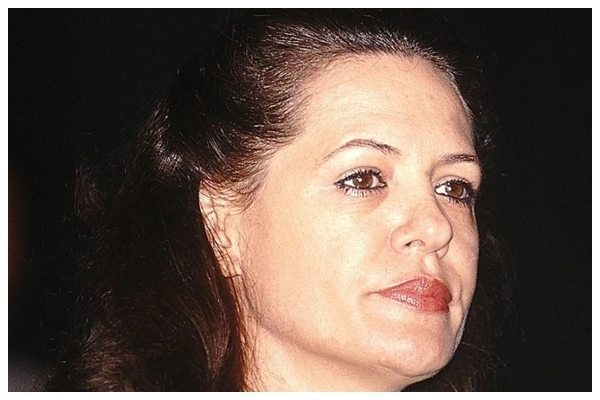
The central question is therefore straightforward. If the records ultimately establish that Sonia Gandhi's name appeared in the 1980 electoral roll, while she acquired Indian citizenship only on April 30, 1983, how did that happen? There is another important feature of the allegation. Her name was allegedly included in 1980, deleted in 1982 and entered again in 1983. The court has specifically noted that this sequence deserved proper examination rather than summary dismissal.
The party has made the Special Intensive Revision of electoral rolls a major political issue. Congress leaders have alleged that SIR is resulting in large-scale deletion of legitimate voters and have described the exercise in highly political terms. Jairam Ramesh, for instance, has characterised the alleged deletions as "Shah Instigated Removal" and questioned the methodology of the exercise.
Congress is perfectly entitled to challenge the methodology of SIR. If legitimate voters are being excluded, that deserves scrutiny. If notices are being issued without adequate explanation, transparency is necessary. What explanation will Congress submit on the issue of Sonia Gandhi
Electoral integrity has two sides. An eligible citizen must not be removed from the electoral roll. An ineligible person must not be put on it. There cannot be one standard for deletion and another standard for inclusion. That is the political-morality issue Congress cannot evade.
ALSO READ: Major boost to domestic gas production! ONGC finds gas near Odisha coast in Mahanadi
The same principle applies to Sonia Gandhi herself. Her reported response has been that the complaint is politically motivated and based on speculative assumptions, media reports and documents that have not established the alleged forgery. That defence is entirely open to her. Indeed, the ultimate truth of the allegation must be established through evidence, not political rhetoric.
But the appropriate answer to an allegation concerning an electoral roll is not simply to dismiss it as politically motivated. Produce the records. Establish the facts. Let the law decide. There is an additional historical dimension that cannot simply be ignored. The alleged 1980 entry belongs to the period when Indira Gandhi was Prime Minister. Reports concerning the electoral roll place Sonia Gandhi's name at 1 Safdarjung Road, the Prime Minister's official residence.
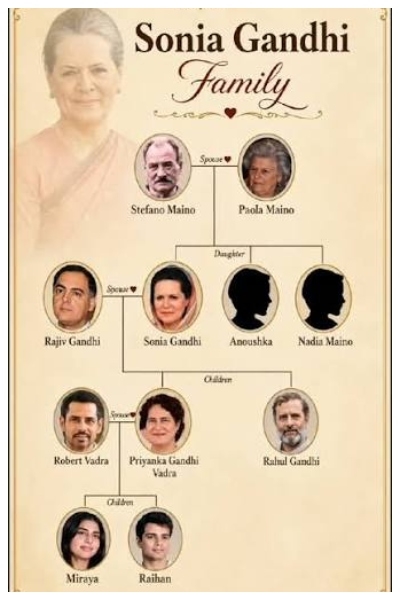
And this is where the Congress argument on SIR comes under a test of consistency. A political party cannot simultaneously argue that electoral rolls are sacred when names are deleted and irrelevant when questions arise about names being included. Electoral democracy requires both exclusion of the ineligible and protection of the eligible.
Rahul Gandhi has built much of his recent political campaign around the integrity of the vote and alleged "vote theft". That makes consistency even more important. The credibility of an argument about electoral integrity cannot depend upon whose name appears in the electoral roll. The same principle must apply to Sonia Gandhi.
ALSO READ: Reclaiming Roots: 512 individuals embrace traditional faith in Keralam
Congress can oppose SIR. Rahul Gandhi can question the Election Commission. Sonia Gandhi can contest the allegations. But none of them can reasonably claim that electoral-roll scrutiny is legitimate only when it concerns somebody else.
The sanctity of the vote begins with the sanctity of the electoral roll. And that sanctity cannot have a Congress standard, a BJP standard, a Gandhi-family standard or an ordinary-voter standard. There can be only one standard the law.

Editor's Desk
Editor's Desk