OIC’s Kashmir Obsession, Pakistan’s Diplomatic Isolation
NewsBharati 24-Sep-2026 13:16:02 PM
Total Views |


The Organisation of Islamic Cooperation (OIC) has once again demonstrated why its repeated interventions on Jammu and Kashmir deserve to be rejected in toto and not debated. At its Ministerial Contact Group meeting on the sidelines of the UN General Assembly in New York, the OIC again invoked the “inalienable right” of the Kashmiri people to self-determination, demanded reversal of measures taken by India since 2019 and called for keeping Kashmir on the international agenda.
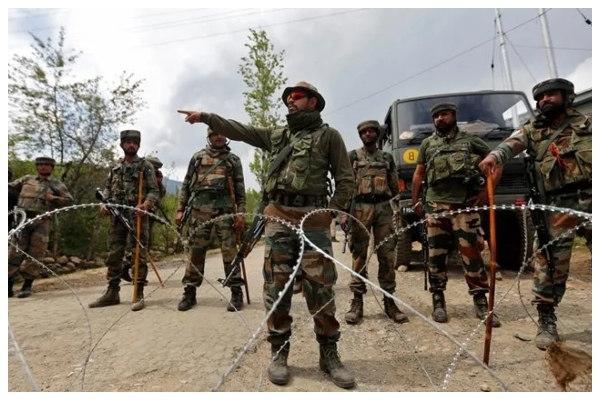
India's response was exactly what it should have been - the OIC has “no locus standi” to pronounce on matters strictly internal to India. The Ministry of External Affairs described the OIC's references as “unwarranted and factually incorrect” and reiterated that Jammu & Kashmir and Ladakh are integral and inalienable parts of India. It also asked the OIC to counsel Pakistan about terrorism emanating from territory under its control instead of providing Islamabad a platform for what New Delhi called politically motivated propaganda.
The OIC's narrative is frozen in a political vocabulary that ignores developments on the ground. The abrogation of Article 370 in August 2019 was a fundamental constitutional change. Its supporters argued that it would strengthen integration, improve governance, reduce separatist politics and create conditions for development. Six years later, the record is not one of the “humanitarian catastrophe” suggested by the OIC.
There has been a substantial decline in several forms of violent disruption. An assessment in 2025 noted that local militant recruitment had fallen from 129 in 2019 to one in 2025 up to that point; stone-pelting, hartals, abductions and weapon-snatching had also fallen sharply. The same assessment recorded a significant decline in terrorist violence, although the Pahalgam terror attack demonstrated that the threat had certainly not disappeared.
That qualification is important. India cannot claim that terrorism has vanished from Kashmir. Pahalgam proved otherwise. But neither can Pakistan or the OIC pretend that Kashmir remains politically and socially frozen in the pre-2019 era. Tourism provides another measurable indicator. According to government data, domestic tourist visits to Jammu & Kashmir rose from about 1.13 crore in 2021 to 1.85 crore in 2022, 2.07 crore in 2023 and 2.35 crore in 2024. Foreign tourist visits also increased substantially from 19,985 in 2022 to 65,452 in 2024.
Tourism is not a substitute for political rights or security. But these numbers contradict the simplistic picture of a society permanently paralysed by the post-2019 constitutional change.
ALSO READ: 'Heikru Hidongba' connects Manipur to the soul of 'Bharatvarsha'
The OIC should also look across the Line of Control before lecturing India about human rights, democracy and the wishes of Kashmiris.
The unrest did not simply disappear. Violence continued into July, including clashes between security forces and supporters of a banned protest group during the regional electoral process. Amnesty International separately reported a crackdown involving arrests, internet restrictions and the designation of the Joint Awami Action Committee as a proscribed organisation under anti-terror legislation. This creates an obvious question for the OIC: where is the same urgency for the people of Pakistan-administered Kashmir?
If “self-determination”, human rights and democratic participation are genuinely the principles that concern the OIC, they cannot become principles applied only when India is the target.
The deeper problem is that the OIC has allowed itself to become an extension of Pakistan's Kashmir diplomacy. Pakistan's Deputy Prime Minister and Foreign Minister Ishaq Dar used the latest OIC meeting to call for a unified OIC position on Kashmir at international forums.
But international diplomacy is not a substitute for facts on the ground.
For decades, Pakistan has attempted to internationalise Kashmir while simultaneously facing questions about terrorism emanating from territory under its control. India's latest response therefore went directly to the heart of the matter - instead of giving Pakistan a platform, the OIC should ask Islamabad to address terrorism.
That is not merely an Indian counter-charge. It goes to the credibility of Pakistan's argument. A country cannot indefinitely seek international intervention over territory administered by another country while refusing to confront the security consequences of its own policies.
The OIC's intervention also raises a larger question about the organisation itself. The OIC is not a supranational authority over its member states. It has neither constitutional jurisdiction over India nor any special entitlement to pronounce upon India's internal constitutional arrangements. Its collective political position does not create legal authority over a sovereign country. More importantly, repetition does not create legitimacy.
The OIC can issue communiqués. Pakistan can repeat its familiar language. Diplomats can invoke the same formulations at the United Nations year after year. None of this changes the reality that Jammu & Kashmir and Ladakh are administered by India and that India rejects external mediation or intervention.
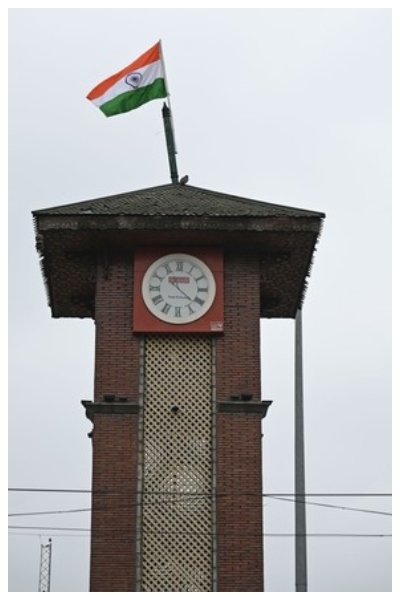
The post-2019 experience also makes Pakistan's old narrative increasingly difficult to sustain without qualification. Violence has declined substantially from earlier levels, political participation has returned, tourism expanded dramatically before the setback caused by the Pahalgam attack, and democratic institutions have functioned.
The contrast with the turmoil in Pakistan-administered Kashmir is equally significant. The OIC therefore faces a credibility test of its own making. If Kashmir is genuinely about the welfare, dignity and political voice of Kashmiris, it must look at both sides of the Line of Control. If it speaks only when India is the accused party and remains silent when Pakistan-administered Kashmir erupts in protests and bloodshed, its claim to humanitarian concern becomes difficult to separate from geopolitical alignment.
ALSO READ: NB ARCHIVES: Remembering the architect of ‘Integral Humanism’ on his birth anniversary: Pandit Deendayal Upadhyaya
OIC must remember, now and always, that Jammu and Kashmir is an integral part of India. For India, Kashmir does not end at the Line of Control; it includes the territory under Pakistan’s illegal occupation as well. Any OIC resolution that ignores this reality cannot alter India’s position, its territorial claims or its resolve to defend its sovereignty.

Editor's Desk
Editor's Desk