Exposing hypocrisy of the opposition: The double standards over election officials — An Explainer
The controversy over Chief Election Commissioner Gyanesh Kumar and an alleged 2016 conversation has triggered a fresh political battle over the neutrality of election officials. But the debate becomes more complicated when the political journeys and post-election appointments of former Kerala Chief Electoral Officers Tika Ram Meena and Rathan U. Kelkar are examined.
Total Views |


The Election Commission is expected to remain above political affiliations. But what happens when bureaucrats who have handled elections later enter politics, or move into politically sensitive government positions? That question has returned to the centre of the political debate after a former Kerala bureaucrat spoke about an alleged conversation with Gyanesh Kumar dating back to 2016.
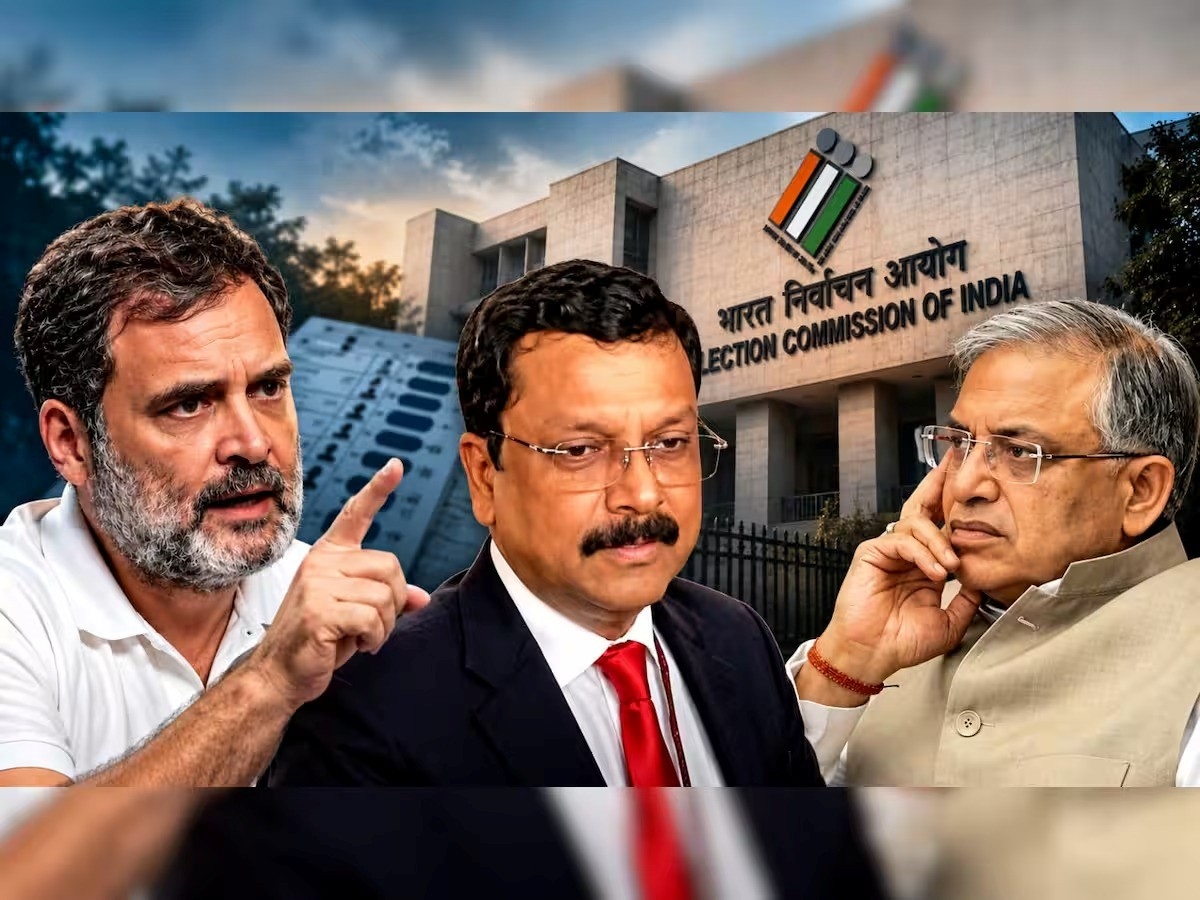
Image: Zee News
The Opposition has used the allegation to attack Chief Election Commissioner Gyanesh Kumar's credibility as Chief Election Commissioner. Yet, many are pointing to two Kerala examples involving former Chief Electoral Officers and asking whether the same standard has been applied in every case.
The Gyanesh Kumar controversy
The controversy began with former Kerala Chief Secretary Jiji Thomson speaking about an alleged conversation he says he had with Gyanesh Kumar in 2016.
According to Thomson, Kumar, then a Kerala-cadre IAS officer serving on central deputation, suggested that Thomson could consider contesting the 2019 Lok Sabha election from Pathanamthitta on a BJP ticket and eventually become a Union minister.
Thomson says he declined.
In his conversation with The Hindu, however, Thomson described what happened as a “friendly suggestion” rather than a formal political offer.
Tika Ram Meena served as Keralam CEO, later joined Congress and entered electoral politics.
— K Surendran (@surendranbjp) September 27, 2026
Rathan U. Kelkar served as Keralam CEO and was appointed Secretary to Keralam CM VD Satheeshan in 2026 just after his victory
No outrage. No breaking-news hysteria. No prime-time… pic.twitter.com/VLTDdVoMyU
What has given the episode a much larger political life is what happened to Kumar afterwards. He went on to become an Election Commissioner in March 2024 and Chief Election Commissioner in February 2025.
Opposition leaders have since connected the old allegation with their wider criticism of the Election Commission, particularly over the Special Intensive Revision of electoral rolls.
Rahul Gandhi has also used the episode to question whether officials who may have had political ambitions or political links can later be entrusted with the responsibility of overseeing elections.
That is the political argument now dominating the controversy.
But there is another side to the discussion.
Then look at Tika Ram Meena
Tika Ram Meena's career provides a different example of an election official eventually entering active politics.
A 1988-batch IAS officer, Meena served as Kerala's Chief Electoral Officer between 2018 and 2021. He later held other senior administrative positions before retiring from government service in February 2022.
More than a year after retirement, in September 2023, Meena joined the Congress.
He was subsequently made co-convenor of the party's Rajasthan Assembly manifesto committee. Meena also said that the possibility of giving him a Lok Sabha ticket had been discussed within the Congress, although he did not eventually contest.
There is an important distinction here. Meena entered party politics after retirement and after leaving the post of Kerala CEO.
But it does raise a broader question that is rarely absent from discussions about institutions: how much distance should there be between a senior election official and active party politics after retirement?
That question becomes particularly relevant when the same political establishment demands the highest possible standards of neutrality from others.
Then came Rathan U. Kelkar
The Rathan U. Kelkar episode is different again and in some ways, much closer to the issue of institutional optics.
Kelkar, a 2003-batch Kerala-cadre IAS officer, became Kerala's Chief Electoral Officer in December 2024. He remained in the post through the 2026 Assembly election.
Soon after the election, he was appointed Secretary to Kerala Chief Minister V.D. Satheesan.
That move did not pass quietly.
The BJP questioned the appointment. The CPI(M) also raised concerns over the propriety of an official who had just overseen an election moving into the office of the leader whose party had won that election.
The issue became a political controversy in Kerala, with questions being raised about whether some cooling-off period would have been more appropriate from the standpoint of public perception.
The Congress, however, defended the appointment. Leaders argued that Kelkar was an experienced bureaucrat and that his appointment was within the government's administrative powers.
Satheesan also defended the decision, pointing to Kelkar's previous experience in different departments and rejecting the suggestion that the appointment implied anything improper.
The difference was largely in the scale and national intensity of the controversy.
Three names. Three different situations.
This is where the comparison becomes politically interesting.
In the Gyanesh Kumar controversy, the allegation concerns an old private conversation, recalled publicly years later by another retired bureaucrat. At the time, Kumar was an IAS officer and not an Election Commissioner.
In the Tika Ram Meena case, the bureaucrat entered active party politics after retirement but potentially benefitting the party and hence getting reward of his work.
In the Rathan U. Kelkar case, an official who had served as Kerala CEO through a recent Assembly election moved into the office of the newly elected Chief Minister soon afterwards.
These are not identical situations.
But they all involve the same broad issue: the public perception of political proximity involving people who have held senior government or election-related positions.
Why the Opposition's argument is being questioned
The opposition says, election officials must not have political loyalties or political commitments that could compromise public confidence in their decisions.
That principle applies regardless of which party is involved.
If the possibility of political proximity is considered serious enough to question the credibility of a Chief Election Commissioner, then that similar scrutiny should also be applied when a former election official joins a political party after retirement or when a recently serving CEO moves directly into the office of a newly elected Chief Minister.
The political response, however, has not been uniform.
The Meena episode did not trigger a national political storm comparable to the current Gyanesh Kumar controversy.
The Kelkar appointment did face opposition from both BJP and CPI(M), but the controversy largely remained within the Kerala political arena.
That difference in attention has now become part of the argument over what many describe as selective outrage.
Where it will end for Rahul Gandhi?
Rahul Gandhi has repeatedly made the Election Commission a central target of his political criticism, raising questions over electoral rolls, election processes and the conduct of poll officials. The issue is not whether the Election Commission should be questioned, it should be held accountable wherever there is evidence of errors or procedural lapses. The larger question is why every electoral dispute is increasingly presented as a question of the credibility of the institution itself.
If the objective is to correct the electoral system, the focus should be on specific evidence, documented irregularities and available legal remedies. But repeatedly telling voters that the election mechanism is compromised risks creating a much larger problem: what happens to public trust when ordinary citizens are constantly asked to doubt the institution responsible for conducting elections? Political parties can challenge an election result, but questioning the credibility of the entire mechanism is a far more consequential step.
This also makes the comparison with Tika Ram Meena and Rathan U. Kelkar relevant. Meena joined the Congress after retiring as Kerala CEO, while Kelkar moved from the Kerala CEO's post to become Secretary to Chief Minister V.D. Satheesan soon after the 2026 election, a move that itself triggered political objections. If political proximity is considered sufficient reason to question one election official, the same standard should apply regardless of which party is involved.
The central question, therefore, is simple: is Rahul Gandhi seeking greater transparency from the Election Commission, or is his repeated campaign against poll officials gradually making voters lose faith in the electoral system itself? Election institutions must face scrutiny, but that scrutiny should be based on evidence and aimed at improving the process, not turning every election into a reason for citizens to doubt whether their vote and the system behind it can be trusted.