'Ayurveda for Tomorrow': Nagpur to host India’s 11th Ayurveda Day
Importantly, the government is seeking to move Ayurveda beyond nostalgia and place greater emphasis on "evidence, research and innovation"
Total Views |


Nagpur, Sep 8: India’s ancient medical tradition will take centre stage on September 23 as Nagpur is set to host the 11th Ayurveda Day under the theme “Ayurveda for a Healthier Tomorrow” (स्वस्थ भविष्य के लिए आयुर्वेद), signalling the government’s push to connect India’s traditional knowledge systems with the healthcare demands of the future.
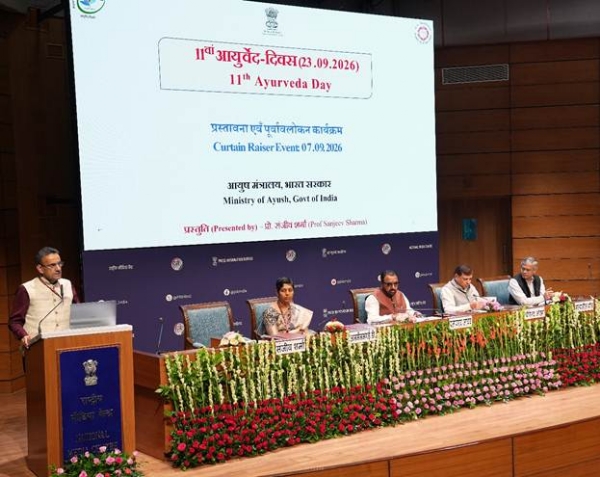
Union Minister of State for Ayush and Health & Family Welfare, Prataprao Jadhav, announced the programme at a curtain-raiser event in New Delhi on September 7, describing Ayurveda as more than a symbol of India’s heritage. He said its principles could contribute to preventive healthcare, healthy lifestyles, nutrition, wellness and holistic health, which are areas receiving increasing global attention.
The 2026 campaign is being positioned as part of the broader 'Viksit Bharat' vision, with an emphasis on health that extends beyond treating disease. Healthy habits, appropriate diets and daily routines, mental balance and harmony with nature are among the themes highlighted by the Ministry of Ayush.
Shri Sanjeev Sharma, Vice Chancellor, National Institute of Ayurveda (NIA), Jaipur, delivered a presentation highlighting key initiatives and perspectives on Ayurveda at the Curtain Raiser Event of the 11th Ayurveda Day at the National Media Centre, New Delhi.
— Ministry of Ayush (@moayush) September 7, 2026
He highlighted the… pic.twitter.com/VNMMIeCf44
Importantly, the government is seeking to move Ayurveda beyond nostalgia and place greater emphasis on 'evidence, research and innovation'. Three pillars will guide this year’s campaign: integrative healthcare, evidence-based research and innovation in Ayurveda, and community wellbeing and sustainable living. The stated objective is to strengthen Ayurveda’s contemporary relevance while improving its global acceptance.
Several initiatives are also planned, including the 'National Dhanwantari Ayurveda Awards 2026', safety dossiers on medicinal plants, Standard Treatment Guidelines for skin diseases, a report on the Ayush Services Sector and 'Ayush Vision 2030'.
Jadhav has called for the campaign to reach homes, schools, colleges, rural and urban communities, and particularly young Indians, including Gen Z. The larger message of the campaign is to the thought that India’s traditional knowledge of medicine and healing should not remain confined to history and that it can be tested, modernised and integrated into the healthcare architecture of tomorrow.
--