Dr. Bhagwat in Britain: Hindutva Beyond Borders, Unity Beyond Uniformity
Total Views |


Dr. Mohan Bhagwat’s address in London deserves to be read as more than another speech by the RSS Sarsanghchalak to the Indian diaspora. It was an articulated statement about civilisation, identity, nationalism and the responsibilities of Indians living beyond Bharat. At its heart was a simple proposition - diversity is natural, unity is truth.
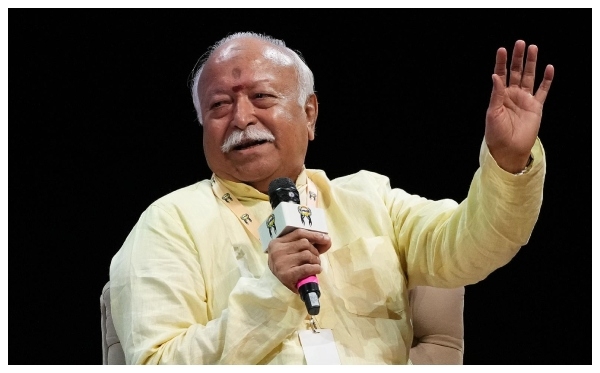 Dr. Bhagwat’s explanation of Hindu Rashtra also deserves attention. He placed it outside the narrow definition of a theocratic state. The purpose, he said, is to convey to the world that diversity is natural and unity is fundamental. The distinction is important because much of the criticism of the RSS begins with the assumption that Hindu Rashtra necessarily means religious domination. Dr. Bhagwat’s London formulation offers a realistic proposition: unity without uniformity, identity without exclusion and civilisation without compulsion. There was another remarkably important message in London the message to Indians and Hindus living in Britain.
Dr. Bhagwat was unequivocal - one’s Karma Bhumi, the land where one lives and works, commands loyalty. If there were ever a genuine conflict between Britain and Bharat, British Hindus should stand with Britain. Their birthplace gives them values; those values are to be lived in the land where they perform their duties.
This is a mature understanding of diaspora nationalism. It rejects the crude idea that cultural attachment to Bharat necessarily produces political disloyalty to another country. A person can retain his civilisational inheritance without becoming a fifth column. Indeed, the stronger the cultural confidence, the less insecure that person needs to be about his civic loyalty.
For Indians working in Britain, therefore, Dr. Bhagwat’s message is straightforward: work honestly, obey the law, contribute to British society, fulfil your civic responsibilities and carry your Indian civilisational values with dignity. Do not turn your ancestry into a political weapon. Do not treat your adopted country merely as an economic destination. If Britain is your Karma Bhumi, serve it sincerely.
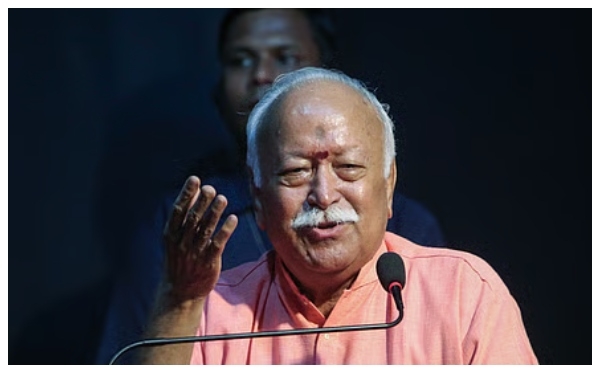
Young Indians in Britain do not need to choose between being modern and being Indian. They should not be told that technology, global citizenship and traditional values are mutually contradictory. Nor should tradition become a museum object handed down without explanation. The task is to understand the civilisational principles behind the tradition and reinterpret them intelligently for contemporary life. That is where the RSS has an important role to play.
A civilisation survives not by freezing itself in the past but by transmitting its essential values to every new generation. Dr. Bhagwat’s formulation give the young a purpose, not merely a prescribed method is therefore much more consequential than it may initially appear. The purpose can be humanity, social harmony, service, responsibility and universal brotherhood. The methods will necessarily change with technology, economics and social circumstances.
This also explains the significance of the RSS emphasis on Seva. Dr. Bhagwat presented service not as an act of charity from the superior to the inferior but as an opportunity for the individual to become connected with society and with something larger than himself. That is a powerful corrective to an increasingly individualistic age.
The RSS enters its second century with precisely this challenge: how does a civilisational organisation transmit inherited values without becoming imprisoned by inherited methods?
Dr. Bhagwat’s London address offers one answer. Apnapan belongingness. Diversity with unity. Service without superiority. Cultural rootedness without civic disloyalty. Tradition without stagnation. That is also why the speech should not be reduced to the familiar political binaries surrounding Hindutva.
The deeper question is whether India’s civilisational experience has something meaningful to contribute to a world increasingly fractured by identity, ideology and competing claims of belonging. Dr. Bhagwat believes it does. His answer is not uniformity but oneness.
The message from London is consequently more deep and meaningful. A Hindu in Britain can be completely British in civic loyalty and completely Indian in civilisational memory. A young person can be technologically modern without becoming culturally rootless. A society can contain enormous diversity without surrendering the idea of unity.
Dr. Bhagwat’s central proposition is therefore worth taking seriously - the future need not choose between diversity and unity. The Hindu civilisational idea says it can have both. And perhaps that is the real meaning of taking Hindutva beyond borders not exporting a political model, but demonstrating how civilisational confidence can coexist with pluralism, patriotism and universal human fraternity.
This is precisely where Dr. Bhagwat’s formulation of Hindutva becomes intellectually significant. He did not present Hindu civilisation as a demand for uniformity. He presented it as an acceptance of diversity rooted in an underlying unity. Hindu thought, he argued, does not insist that everyone must worship in the same manner or think through one prescribed theological route. The Hindu civilisational experience has accommodated the atheist and the theist, different philosophies, different forms of worship and different social traditions. That is not weakness. It is civilisational confidence.
This is a mature understanding of diaspora nationalism. It rejects the crude idea that cultural attachment to Bharat necessarily produces political disloyalty to another country. A person can retain his civilisational inheritance without becoming a fifth column. Indeed, the stronger the cultural confidence, the less insecure that person needs to be about his civic loyalty.
For Indians working in Britain, therefore, Dr. Bhagwat’s message is straightforward: work honestly, obey the law, contribute to British society, fulfil your civic responsibilities and carry your Indian civilisational values with dignity. Do not turn your ancestry into a political weapon. Do not treat your adopted country merely as an economic destination. If Britain is your Karma Bhumi, serve it sincerely.
And there is an important lesson here for India as well. The strength of the Indian diaspora should not be measured merely by remittances, professional success or the number of Indians occupying influential positions. It should also be measured by the values they carry family responsibility, respect for diversity, community service, intellectual openness and a civilisational confidence that does not require hostility towards anyone else.
Dr. Bhagwat’s message to the younger generation is equally significant. He expressed greater confidence in the coming generations, arguing that young people possess curiosity and the desire to make the world better. His advice was not to impose every method upon them but to give them a clear goal and allow them to discover the methods themselves. This is particularly relevant to Gen-Z and the generation now coming after it.
Young Indians in Britain do not need to choose between being modern and being Indian. They should not be told that technology, global citizenship and traditional values are mutually contradictory. Nor should tradition become a museum object handed down without explanation. The task is to understand the civilisational principles behind the tradition and reinterpret them intelligently for contemporary life. That is where the RSS has an important role to play.
A civilisation survives not by freezing itself in the past but by transmitting its essential values to every new generation. Dr. Bhagwat’s formulation give the young a purpose, not merely a prescribed method is therefore much more consequential than it may initially appear. The purpose can be humanity, social harmony, service, responsibility and universal brotherhood. The methods will necessarily change with technology, economics and social circumstances.
ALSO READ: Int'l Literacy Day: PM Modi shares wisdom of a bee as India's lesson for literacy in changing world
The RSS enters its second century with precisely this challenge: how does a civilisational organisation transmit inherited values without becoming imprisoned by inherited methods?
Dr. Bhagwat’s London address offers one answer. Apnapan belongingness. Diversity with unity. Service without superiority. Cultural rootedness without civic disloyalty. Tradition without stagnation. That is also why the speech should not be reduced to the familiar political binaries surrounding Hindutva.
The deeper question is whether India’s civilisational experience has something meaningful to contribute to a world increasingly fractured by identity, ideology and competing claims of belonging. Dr. Bhagwat believes it does. His answer is not uniformity but oneness.
The message from London is consequently more deep and meaningful. A Hindu in Britain can be completely British in civic loyalty and completely Indian in civilisational memory. A young person can be technologically modern without becoming culturally rootless. A society can contain enormous diversity without surrendering the idea of unity.
Dr. Bhagwat’s central proposition is therefore worth taking seriously - the future need not choose between diversity and unity. The Hindu civilisational idea says it can have both. And perhaps that is the real meaning of taking Hindutva beyond borders not exporting a political model, but demonstrating how civilisational confidence can coexist with pluralism, patriotism and universal human fraternity.