Significant Increase in Defence Budget to Bolster India's Security and Defence Capabilities
Significant hikes in the budgets for intelligence agencies will strengthen the "first line of Defence ," making data collection and preemptive strikes more effective.


| Category | FY 2025–26 (BE) | FY 2026–27 (BE) | Growth (%) |
|---|---|---|---|
| Total Defence Budget | ₹6,81,210 Crore | ₹7,84,678 Crore | +15.2% |
| Capital Expenditure (Capex) | ₹1,80,000 Crore | ₹2,19,306 Crore | +27.9% |
| Revenue Expenditure | ₹4,60,000 Crore (est.) | ₹5,53,668 Crore | +20.2% |
| Defence Pensions | ₹1,69,185 Crore (est.) | ₹1,71,338 Crore | +1.27% |
- Army: Receives the largest share due to the manpower needs of 1.2 million soldiers.
- Navy: Allocated ₹25,023 crore to address challenges in the Indo-Pacific region.
- Air Force: Received ₹63,733 crore to address the shortage of aircraft squadrons (current: 30, requirement: 42).
- Modernization Initiatives: ₹2.19 lakh crore is earmarked for Rafale-M (Navy), Akashteer Air Defence, and drone technology.
- Boosting Self-Reliance: Customs duty exemptions on aircraft parts and raw materials will benefit private Defence companies like L&T. The goal is to increase production in the Defence corridors of UP and Tamil Nadu.
- Infrastructure: Over ₹10,000 crore allocated to the BRO for roads and bridges along the LAC.
| Metric | Detail / Value |
|---|---|
| Share of Total Union Budget | 13–14% |
| Share of National GDP | ~1.9–2.0% |
| Global Rank (Defence Spending) | 4th (USD 93 Billion) |
| Capital Share of Total Defence Budget | 21.8% (Investment-focused) |
| Defence Exports (2025) | ₹23,000 Crore |
| BRO (Border Infrastructure Allocation) | ₹10,000+ Crore |
The Road Ahead: "Yeh Dil Maange More!"
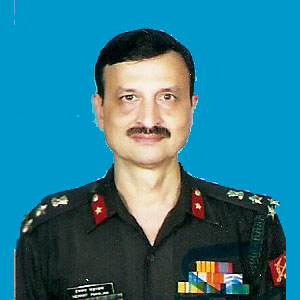
BRIG Hemant Mahajan
Passionate writer on National Security related issues, Brig Hemant Mahajan YSM (Retd) is M Sc, M Phil in Defence Studies. He joined IMA Dehradun in July 1973 and passed out as a Commissioned Officer on 15 June 1975. He was commissioned into 7 MARATHA LIGHT INFANTRY. He has served extensively in Counter Insurgency Operations in Insurgency and Terrorist prone areas of Jammu & Kashmir, Punjab and North East and has taken part in all important operations undertaken by the Army since 1975.
Brig Hemant Mahajan served in Jammu & Kashmir, in the deserts of Rajasthan, in Super High Altitude areas of Kargil and Leh, forward areas of Arunachal Pradesh. He was deployed in Punjab in ‘Operation Avert’. He was also involved in maintaining peace post ‘Operation Bluestar’ days in Punjab in the worst affected district of Gurdaspur, Taran Taran and Amritsar.He served in the areas of Darjeeling, Kurseong, Siliguri and Sikkim. He commanded his battalion 7 MARATHA LIGHT INFANTRY in Operation Rakshak in the most difficult areas of Poonch and Rajouri during the times of highest militancy. His unit was responsible for stopping terrorists from Pakistan into Jammu and Kashmir. His unit was awarded Unit Citation, 18 gallantry awards including YSM (gallantry) for the officer.