The Vedic Ancestry Of Kashmir - Part III (REVERE – REMEMBER) | Revere: The Sindhu Sarasvati Civilizational Ethos
The seat of the ancient Sharada Peeth — the seat of learning and wisdom — Kashmir was a beacon of spiritual, philosophical, and artistic excellence.
NewsBharati 30-Mar-2026 16:31:10 PM
Total Views |


In Part III of the series on Vedic ancestry of Kashmir, I shall elaborate, with great pride, on the origins and excellence of Literature of Kashmir including Grammar and Writing, Dance, drama, performing arts and Music, Architecture, sculpture, Craftsmanship, Education, Scientific discourse, philosophy, Astronomy, Medical Sciences and the like, which flourished since Vedic times in Bharat’s Kashmir.
These original creations in the field of art and science were templates for artistic and scientific endeavours in other nations worldwide.
Kashmir’s literary masterpieces even “inspired” creations such as Arabian Nights and Aesop’s Fables !!!
These facts need emphasising, because they have never been eulogised, or even acknowledged by generations of students in Bharat, because they were never taught to take pride in our Vedic achievements.
“The (Kashmir Literature) festival features … discussions on …. “Kashmir: The Cradle of Civilization””
“…… India’s civilizational ethos has always placed great value on knowledge and scholarship .…… referring to Vedic verses that celebrate learning and friendship with scholars.”(Ref. 1)
ANCIENT INDIA SHAPED THE WORLD – WITH CHESS, BINARY NUMBERS AND MUCH MORE
“ ….. the story of civilisation itself cannot be told without India, a land that once taught the world to think, count, and dream.”
“India, the birthplace of the game of chess, the concept of zero, and the idea that the
Earth revolves around the Sun, has long been the source of some of humanity’s
most revolutionary ideas”.
(see Fig.1- a 4 player chess board)(Fig.2 and Fig 3, the first recorded symbol for ZERO)
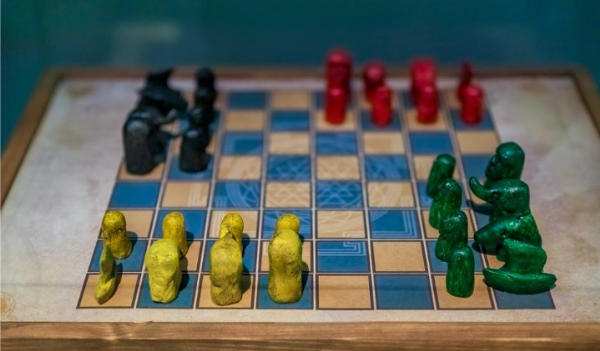
Fig.1. Board of CHATURANGA, a form of 4 player chess played in Ancient Bharat.( GETTY iStock image licensed to Dr.U.K.Sharma)
“ ‘We call our numbers Arabic numbers because that’s where the West got them from. But the Arabs got them from the Indians, they still call them Hindu numbers,’ he* said.”
“He*credited mathematician Aryabhatta with introducing the concept of zero and
place value, innovations that made modern mathematics and computing possible.
“ ‘Thanks to him, we have algebra, algorithms, and binary,’ he* added”. (Ref. 2)
(*William Dalrymple, author, scholar, historian)
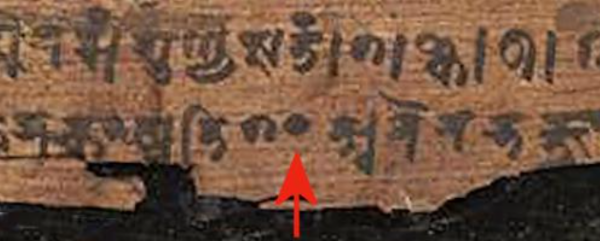
Fig.2. Detail of the BAKSHALI manuscript (OPEN DOMAIN image).
This handout photograph received from the Bodleian Libraries, University of Oxford on September 15, 2017, shows a close-up image of folio 16v, in which the use of a dot as a placeholder in the bottom line, which dot evolved into the use of zero as a number in its own right, is seen as part of the 70 leaves of birch bark which make up the Bakhshali manuscript. (Ref. 57)

Fig.3.Artists re-depiction of figures from THE BAKSHALI manuscript, (1700 years B.C.E.) The FIRST RECORDED use of nine numerals and a DOT to represent ZERO establishes the use of zero in mathematics. BAKSHALI was a region in NorthWestern Vedic India.
KASHMIR’S ANCIENT SHARDA SCRIPT
“The first-ever exhibition dedicated to Sharda, an ancient script that developed in Kashmir and was used primarily by Kashmiri Pandits ……. is a vital component of India’s cultural and linguistic heritage.”
“Dr Ajmal Shah, professor at the University of Kashmir's department of central Asian studies, said ….. recent archaeological findings in the Lolab Valley of Kupwara, … 21 lines of Sharda inscriptions were found on hero-stones…….. (and ) in Baramulla district ….. a vast trove of cultural material is yet to be unearthed in the Valley,’…. ”.(Ref. 3) (See Fig.4)
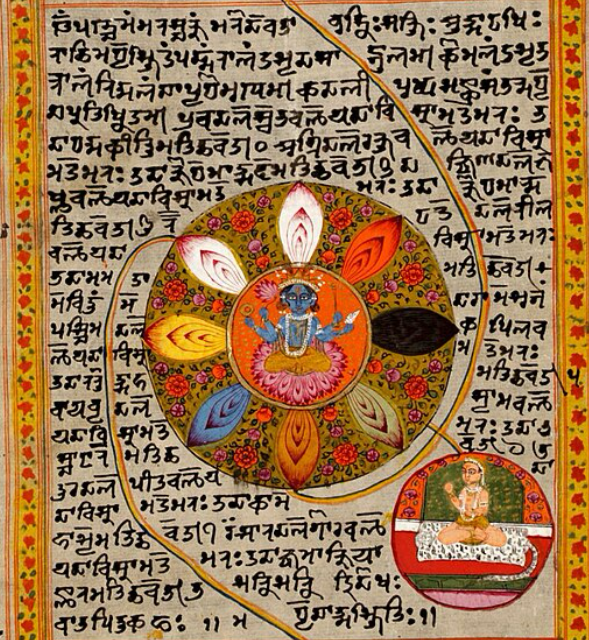
Fig. 4. Example of SHARADA script in an old manuscript, OPEN DOMAIN.(Ref. 58)
THE GREATNESS OF VEDIC KASHMIR
“ …. the important contributions of Kashmir to Indian culture …… the expertise of grammarians and Patanjali, and Bharata Muni in music and dance.”(Ref. 4)
“For upward of two thousand years Kashmir has been a home of Sanskrit learning, and from this small valley have issued masterpieces of history, poetry, romance, fable and philosophy. Kashmiris are proud, and justly proud, of the literary glories of their land.”
…. George Grierson”
“The extraordinary brilliance and creativity of Kashmir in various arts and sciences was sustained for over a thousand years.”
“The classic arts and the sciences of Kashmir came to an abrupt end when Islam became the dominant force in Kashmir in the fourteenth century. Sculpture, painting, dance, music could no longer be practiced.”(Ref. 5)
Join me on this journey to discover our very own brilliant intellectual civilisation, achievers in EVERY field, which our generation, and generations of Indians to come DESERVE to know about - the heritage and ancestry they can and should rightfully claim, uphold and cherish.
This discovery is necessitated by the deliberate suppression of the Truth by self styled historians– of the glossing over of the meaningless barbaric invasions and genocides unleashed on the generous and hospitable Nation of Bharat, and the WANTON LOOTING not only of the physical wealth of gold, gemstones, finery, but also, FAR WORSE, the DELIBERATE PLANNED DESTRUCTION of grand colossal Hindu TEMPLES, PALACES, and other ARCHITECTURAL MARVELS, hallmarks of progress; even EDUCATIONAL UNIVERSITIES famed far and wide were not spared.
Read on till the end of this article where I expose the full extent of the decimation of a vibrant and advanced civilisation by marauders, who recorded this destruction, and glorified it with unseemly contempt for their unarmed victims.
Let’s begin with what She had achieved before this.
KASHMIR: FOUNTAINHEAD OF HINDUISM
HINDU ROOTS
“The Hindu Roots of Kashmir.
Few regions in the Indian subcontinent carry as profound a Hindu legacy as Kashmir. The seat of the ancient Sharada Peeth — the seat of learning and wisdom — Kashmir was a beacon of spiritual, philosophical, and artistic excellence. Her valleys were once adorned with grand temples, resonating with the chants of Shaivite sages, and its kings were patrons of arts, letters, and the Sanatana Dharma”.
“Kashmir finds mention in several ancient Hindu scriptures. The Mahabharata refers to Kashmir as a kingdom allied with the Kurus”.
“The early rulers were ardent patrons of Shaivism and Vaishnavism. Under them, the building of temples and the patronage of Sanskrit learning flourished. Kashmir became a major center for the transmission of Vedic traditions and rituals.”(Ref. 6)
“ Kashmir is an ancient principality which is mentioned in (the Hindu) Puranas. The Vishnudharmottar Purana refers Kashmir as Vaitastika, the land of the river Vitasta (ancient name of river Jhelum). The Mahabharata and the Buddhist literature refer to it as Kashmira mandala.”(Ref. 7)
VEDIC EDUCATION IN ANCIENT KASHMIR
THE WORLD’S FIRST UNIVERSITY in 700 BC – 60 DISCIPLINES, 1000 INTERNATIONAL STUDENTS
Ancient Kashmir was a centre of learning for the regions surrounding it, as well as for students from faraway places.
“Kashmir has been an empowered destination of Sanskrit. ……… Chinese travelers Xuanzang and Aukang, ………. mentioned in their memoir, that no learned person was considered academically mature till he had participated in debates and discourse with scholars of Kashmir.”
“Kashi and Kashmir were the foremost centers for learning in ancient India. Kashmir had even surpassed Kashi. It was evident that Scholars of Kashi had to come to Kashmir to complete their education.”(Ref. 8)
Education and learning in Kashmir was intricately linked with Takshashila (now called Taxila), a renowned learning centre located not far away. The most renowned and eminent of scholars of Kashmir and other regions of Bharat acquired their training and experience in Takshashila, in diverse fields of expertise.
“Sharada Peeth (Sharada Pitha), the great center of Kashmiri learning and a repository of manuscripts, was at the northwest corner of the valley, less than 200 miles north of the ancient Taxila University (north of Kupwara on the Kishanganga River).”
“Takshashila and Sharada Peeth were centers of learning in the larger northwest Indian region. The early levels of buildings in Takshashila have been traced to 800 BCE. The first millennium BCE was a period of great intellectual activity in this region …. “(Ref. 5) (See Fig. 5)
“ Its (Taxila’s) prosperity in ancient times resulted from its position at the junction of
three great trade routes: one from eastern India, described by the Greek writer Megasthenes as the “Royal Highway”; the second from western Asia; and the third from Kashmir and Central Asia”.(Ref. 9)
“The World’s first major university and trade school was in Taxila (Takshila) then in northwestern India, around 700 BC (some scholars estimate). It boasted a thousand students from all over the known world who studied 60 disciplines taught there.”(Ref. 10)
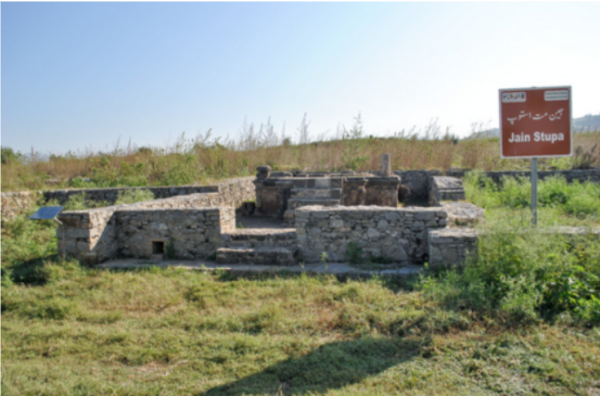
Fig.5. Ruins of the ancient University of Takshashila OPEN DOMAIN, (Ref.59)
THE FAME OF TAKSHASHILA
“The fame of Taxila rested on its status as a university town ….. a cluster of scattered colleges headed by the renowned professors of time. Panini* and Kautilya^ ……….. raised it to such a prominent position that students from distant areas accessed Takshashila to complete their education”. (* author of the world’s most comprehensive rules of grammar, Ashthadhyayi, ^ author of the famous Arthashastra)
“Takshashila derived its name from Taksha, a son of Bharata. It is referred in Ramayana in the following words:
“ ….. Bharata established Taksha in Takshashila and Pushkala in Pushkalavata, in the country of the Gandharvas ” (Gandhara, in current day Afghanistan). (Ref. 8) (See Fig. 6)
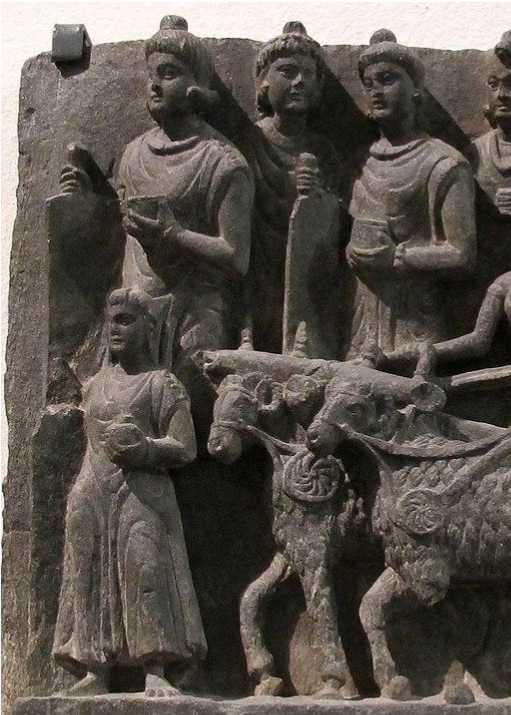
FIG. 6. Students with their oblong palettes used for writing, in the Greco-Buddhist art of Gandhara. The young Buddha accompanying them to go to school is also part of the complete scene. 2nd-3rd century CE. OPEN DOMAIN, (REF 60)
It was described as “……. a large city, thickly populated and extremely fertile, governed by good laws” (Strabo, renowned Greek philosopher and geographer).
“ ……… a famous city situated on a low but level plain, in a district called Amanda” (Pliny, Roman historian).
“………… as large as Egypt, with good pasturage and in the highest degree productive of beautiful fruits” (Plutarch Graeco-Roman philosopher).
“ ………… a town renowned for its commercial activities.”(Patanjali in Mahabhasya)
“An Aramaic* inscription, dated back to the 4th or 5th century B.C., discovered from Taxila reports that the city was reputed as a “ ……. ’University town’ known for the coaching of various disciplines of arts and sciences”. (*Ancient Syrian)
“Takshashila ‘stood as the main gate to India connecting her with the rest of the World’.”(Ref. 8)
“A graduate from Takshashila University was considered as a sign of merit”
“Will Durant as cited by Kamlesh Kapur states “Students flocked to Takshashila as in the Middle Ages they flocked to Paris … ”.
“It was in the ancient Takshashila University that the idea of a sovereign state sprouted which was conceived 1900 years later in Europe”.
“ ….. in addition to the Vedic courses, the arts which were taught at Takshashila included medicine, surgery, archery and military arts, astronomy, astrology, accountancy, commerce, agriculture…. “ (Ref. 11)
INDIA’s ZERO TRAVELLED WEST via KASHMIR and A UNIVERSAL LANGUAGE WAS BORN
“In matters of science, astronomy and mathematics, India was to be a teacher of the Arab world, and hence Mediterranean Europe too.”
“The father of the first Barmakid vizier of Baghdad …….. studied Indian mathematics in Kashmir, ….. his son who sent envoys to India to ……. study Indian mathematics and astronomy……….. translating the Sanskrit scientific classics into Arabic… a revolutionary Indian concept that would transform mathematics: zero.”
“ ….. the progress of the Indo-Arabic numerals was ultimately unstoppable: these are the numerals that we now almost all use, around the world, every day. They are arguably the nearest thing the human race has to a universal language.”( Ref.12, pg 409)
Also read: Price that Hindus Paid for a Zero …?
KASHMIRI LITERATURE
SHARADA - A KASHMIRI SCRIPT and BIRCH BARK a writing material
“ …. at the Bhandarkar Oriental Research Institute in Pune…….. important collection from Kashmir is the set of 838 birch-bark manuscripts written in the old Sharada script”(13) (See Fig.7)
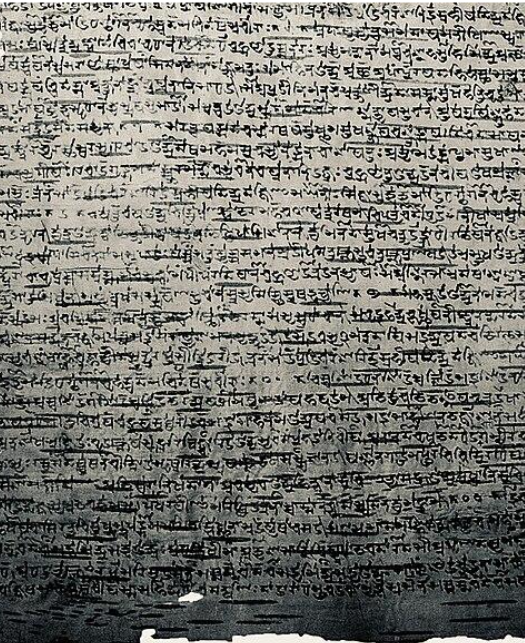
Fig.7. Manuscript on Birch Bark, of RIGVEDA in Sharada script, OPEN DOMAIN (REF.61).
This manuscript fragment is now preserved at the Bhandarkar Oriental Research Institute Pune Maharashtra.
“….. towards the last quarter of the 4th century B.C, Nearchos, (360-300 B.C), an officer of Alexander the Great refers to the fact that Hindus wrote letters on well beaten cloth. Quintus Curtius Rufus, a Roman historian of Ist Century A.D , in his note also mentions that tender bark of trees were also used by the Hindus for writing purposes.” (See Fig. 8.)
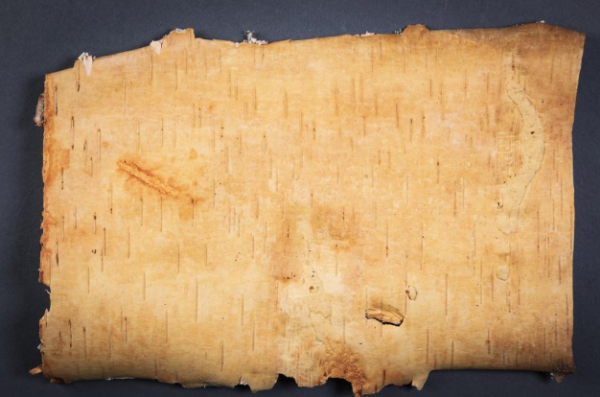
Fig.8. Sheet of Birch Bark used for writing. (GETTY iStock image licensed to Dr. Usha K. Sharma)
“The main writing materials used in Classical India for the preparation of manuscripts were palm leaves and birch bark.
“ ….. bhrjapatra called Birch bark, is mostly found in the Himalayan slopes, above 30,000 feet high. The tree is Baetula utiles or Baetula bhoj patra. Katre conjectures that this is probably the material mentioned by Curtius as the writing material used at the time of Alexander’s invasion. It has been in use only in the region from Kashmir to Sikkim …..”( Ref.14) (See Fig.9)
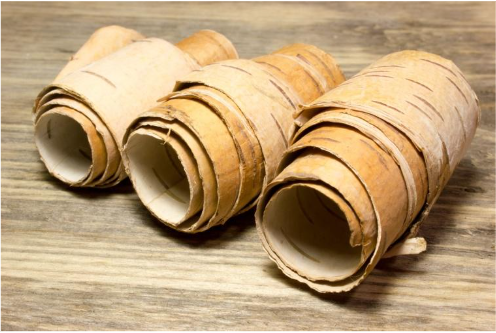
Fig.9. Rolls of Birch Bark showing softness and pliability similar to cloth. (GETTY iStock image licensed to Dr. Usha K. Sharma)
KASHMIRI LITERATURE (contd)
– AN ALGORITHMIC GRAMMARIAN SYNTAX – PANINI’S ASTHADHYAYI WAS BORN IN KASHMIR
“GREATEST ACHIEVEMENT OF THE HUMAN INTELLECT”
“Around 500 BCE, the early philosopher Panini systematized the grammar of Vedic Sanskrit, including 3,959 rules of arrangement, symbolism, and morphology.” (Ref.15)
“Panini’s grammar remains one of the greatest achievements of the human intellect. It described the grammar of the Sanskrit language by a system of 4,000 algebraic rules— a feat that has not been equalled for any other language to this day … set the tone for scientific studies in India with their emphasis on algorithmic explanations.”
“The algorithmic approach to knowledge became the model for scientific theories in the Indic world, extending from India to the East and Southeast Asia.”(Ref.16)(See Fig.10)
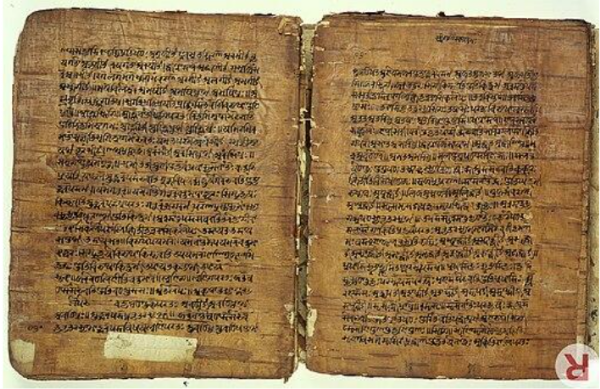
Fig.10. A birch bark manuscript from Kashmir of the Rupavatara, a grammatical textbook based on the Sanskrit grammar of Panini. (Wellcome IMAGES).OPEN DOMAIN, (REF.61).
“ …. Panini compiled his Sanskrit grammar while teaching at Takshashila University. His Sutras are comprised of eight volumes and collectively known as Ashtadhyayi. Modern works in ….. Sanskrit grammer… all based on the sutras of Panini ….. are committed to memory by the students of Sanskrit in India even today”.
“Takshashila University had its library with a vast collection of manuscripts on a variety of subjects such as Hinduism, political science, literature, medicine and philosophy.
The classification system employed in the library was devised by Panini.”( Ref.11)
“Kashmir's contributions to Indian civilization were not limited to kings and temples. It produced some of India's most illustrious figures in philosophy, grammar, medicine, and arts.”
“Patanjali, the great grammarian and author of the Mahabhashya — the authoritative commentary on Panini's Ashtadhyayi — hailed from Kashmir. Patanjali's erudition in grammar shaped the foundations of Sanskrit linguistic science for millennia.”(Ref. 6)
““Panini mentions images of deities in Asthadhyayi. We have evidence of images of Krishna, Shiva and the Goddess in regions just beyond Kashmir that go back to at least third century BCE. ……. silver coins showing Balarama-Sankarsana and Vasudeva-Krsna
…… ”
“ ……. Patañjali, the great author of the Mahabhasya commentary on Panini’s Ashtadhyayi, was a Kashmiri. ……… he belonged to 2nd century BC.”(Ref. 17)
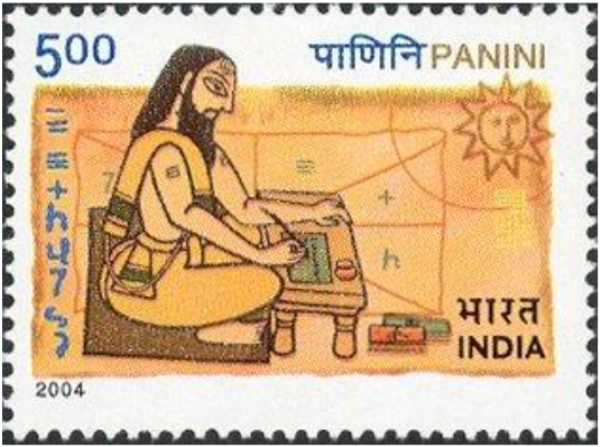
Fig. 11. India Postage Stamp 2004, Rs.5.00. Depicting the Sanskrit Grammarian PANINI OPEN DOMAIN.(REF. 62)
“The first clear reference to the geographical name of Kashmir in Sanskrit literature appears in Patanjali's Mahabhasya ….. The Mahabharata ….. also contains scattered references to Kashmir.”( Ref.18)
INFLUENCE OF PANINI’S ALGORITHM ON WESTERN GRAMMAR
FROM THE OFFICIAL DOMAIN OF STANFORD UNIVERSITY
“Panini’s grammar (ca 350 BC) seeks to provide a complete, maximally concise, and theoretically consistent analysis of Sanskrit grammatical structure. It is the foundation of all traditional and modern analyses of Sanskrit, as well as having great historical and theoretical interest in its own right. Western grammatical theory has been influenced by it at every stage of its development for the last two centuries.”
“Modern linguistics acknowledges it as the most complete generative grammar of any language yet written, and continues to adopt technical ideas from it.”( Ref.18B)(See Fig.12)
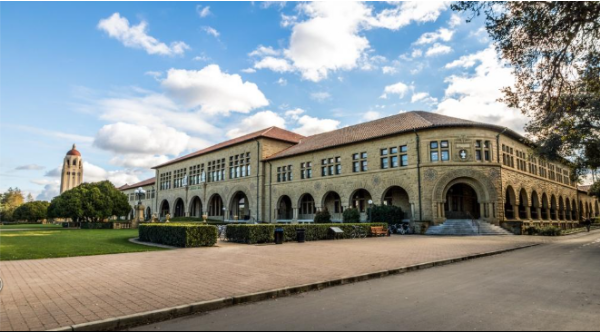
Fig. 12. STANFORD UNIVERSITY campus and tower.(GETTY iStock image licensed to Dr. Usha K. Sharma)
SUPPORTS THE USE OF SANSKRIT AS A COMPUTER LANGUAGE
“A ( i.e. Asthadhyayi) ……. provides a structure for the analysis of sentences… its algebraic nature and its comprehensiveness …. has been described as a machine generating words and sentences of Sanskrit. …. consists of definitions, theorems (linguistic facts), and meta-theorems (rules regarding rules).
“ ….. a computer program has exactly the same general features of context-sensitive rules, recursion, and sequential rule application.”(Ref.19)
KASHMIRI LITERATURE (contd.)
PROSE, POETRY AND CREATIVE WRITING FROM KASHMIR
ONE MORE UNESCO AWARD - 2024 FOR PANCHATANTRA FROM KASHMIR
“Sanskrit narrative literature boasts an unparalleled richness …. India was the birthplace of all folktales. …… incorporated into renowned works like The Arabian Nights, Boccaccio's Decameron, Hans Christian Andersen's Fairy Tales, and Jean de La Fontaine's Fables.”
“ …. translations in Persian, Arabic, Syrian, Hebrew, and Latin,…… "the most frequently translated literary product of India," the Pancatantra's stories are universally recognised, …… over 200 adaptations in more than 50 languages globally. Recently, in the year 2024, this text has been inscribed in the Regional Register of the UNESCO Memory of the World Programme.”( Ref. 20)(See Fig. 13)
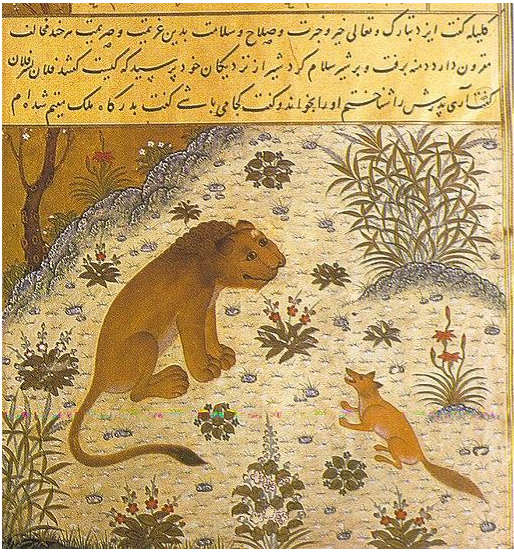
Fig.13. PERSIAN TRANSLATION of PANCHATANTRA: A page from Kelileh va Demneh dated 1429, from Herat, a Persian version of the original ancient Indian Panchatantra – depicts the manipulative jackal-vizier, Dimna, trying to lead his lion-king into war, OPEN DOMAIN (Ref. 63)
“Panchatantra ….. composed about 200 BCE, according to Sanskrit scholar Johannes Hertel. … known in Europe as The Fables of Bidpai. ……… narrated by an Indian sage, Bidpai—also referred to as Vishnuçarman, Pilpay”.
“The introduction ………… attributes the stories to a learned Brahmin named Vishnusharman ….. ”
“The Panchatantra, inscribed in the 2024 UNESCO Memory of the World Committee for Asia and the Pacific Regional Register, is recognized as an enduring literary treasure that contributes to the preservation and promotion of India’s rich traditional and cultural documentary heritage”.(Ref. 21)
PANCHATANTRA FABLES WERE CLAIMED BY THE WEST AS AESOP’S FABLES AND GRIMMS FAIRY TALES (See Fig.14)
“Scholars have noted the strong similarity between a few of the stories in The Panchatantra and Aesop's Fables. Examples are The Ass in the Panther's Skin and
The Ass without Heart and Ears.[52] The Broken Pot is similar to Aesop's The
Milkmaid and Her Pail, [53] The Gold-Giving Snake is similar to Aesop's (Fables) The Man and the Serpent and Le Paysan et Dame serpent by Marie de France [54]
Other well-known stories include The Tortoise and The Geese and The Tiger, the Brahmin and the Jackal.”(Ref.22)
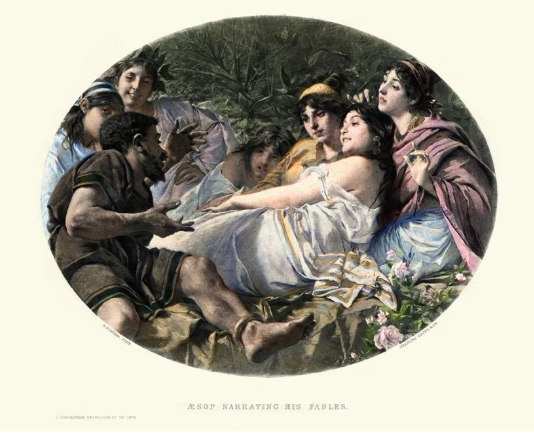
Fig. 14. AESOP – GREEK SLAVE AND STORY TELLER, NARRATING HIS FABLES (GETTY iStock image licensed to Dr. Usha K. Sharma)
“The French fabulist Jean de La Fontaine acknowledged his indebtedness to the work in the introduction to his Second Fables:
"This is a second book of fables that I present to the public... I have to acknowledge that the greatest part is inspired from Pilpay, an Indian Sage".[58]
The Panchatantra is the origin also of several stories in Arabian Nights, Sindbad, and of many Western nursery rhymes and ballads.[59]”
“The fables of Panchatantra are found in numerous world languages. It is also considered partly the origin of European secondary works, such as folk tale motifs found in Boccaccio, La Fontaine and the works of Grimm Brothers”
“(In article references) : Jacobs 1888, Introduction, p. xv; Ryder 1925, Translator's introduction, quoting Hertel: "the original work was composed in Kashmir, about 200 B.C. At this date, however, many of the individual stories were already ancient." (Ref. 22)
“The prelude to the Panchatantra identifies Vishnu Sharma as the author of the work.”
“Based on analysis of various Indian recensions and the geographical features and animals described in the stories, Kashmir [7] is suggested to be his birthplace by various scholars.”
Article referred: “Orissa review, Volume 22 (https://books.google.com/books?id=jZFiYtIcYycC), Home Department, Government of Orissa, 1965, 1965, "... He has concluded Kashmir as the birthplace of Vishnu Sharma taking into account the geographical features and the animals.”(Ref. 23)
THE VEDIC ORIGIN OF PANCHATANTRA
B. B. LAL, AND A VASE IN LOTHAL, A HARAPPAN SITE IN GUJARAT
A Harappan vase discovered by B. B. Lal, the renowned Indian archaeologist, is inscribed with the story of the crow and the pitcher which features in the Panchatantra.
“The paintings discovered on the pots at Lothal, the well-known Harappan site in Gujarat, bring out some of these stories and here we shall draw attention to one. Fig. 20 shows, from the left a crow, a pitcher, a tree, a deer and again a tree. The story depicted is a well known one, viz. that of The thirsty Crow.” (Ref. 24)(See Fig.15)
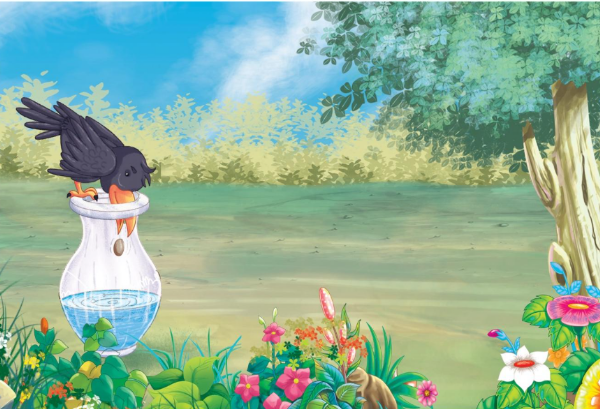
Fig 15. The Thirsty Crow and the Pitcher. (GETTY iStock image licensed to Dr. Usha K. Sharma)
“ …… 𝗿𝗲𝘀𝗲𝗺𝗯𝗹𝗮𝗻𝗰𝗲 𝗼𝗳 𝘁𝗵𝗲 𝗽𝗼𝗿𝘁𝗿𝗮𝘆𝗮𝗹 𝗼𝗻 𝘁𝗵𝗶𝘀 𝗽𝗶𝗲𝗰𝗲 𝗼𝗳 𝘃𝗮𝘀𝗲 𝗳𝗿𝗼𝗺 𝗟𝗼𝘁𝗵𝗮𝗹 𝘁𝗼 𝘁𝗵𝗲 𝗳𝗮𝗺𝗼𝘂𝘀 𝗣𝗮𝗻𝗰𝗵𝗮𝘁𝗮𝗻𝘁𝗿𝗮 𝘀𝘁𝗼𝗿𝘆 𝗼𝗳 “𝘁𝗵𝗲 𝘁𝗵𝗶𝗿𝘀𝘁𝘆 𝗱𝗲𝗲𝗿 𝗮𝗻𝗱 𝘁𝗵𝗲 𝗰𝗿𝗼𝘄………
𝗧𝗵𝗲𝗿𝗲 𝗮𝗿𝗲 𝗺𝗼𝗿𝗲 𝘀𝘂𝗰𝗵 𝗱𝗲𝗽𝗶𝗰𝘁𝗶𝗼𝗻𝘀 𝗼𝗻 𝗛𝗮𝗿𝗮𝗽𝗽𝗮𝗻 𝗽𝗼𝘁𝘁𝗲𝗿𝘆 𝘁𝗵𝗮𝘁 𝗵𝗮𝘀 𝗰𝗹𝗼𝘀𝗲 𝘀𝗶𝗺𝗶𝗹𝗮𝗿𝗶𝘁𝗶𝗲𝘀 𝘄𝗶𝘁𝗵 𝗼𝘁𝗵𝗲𝗿 𝗣𝗮𝗻𝗰𝗵𝗮𝘁𝗮𝗻𝘁𝗿𝗮 𝘀𝘁𝗼𝗿𝗶𝗲𝘀.”
Ref: Sanjib Kumar Singh in “Introduction to the Indus Valley Civilization” by the National Museum, Delhi.”
(This Author’s note: To see the actual photograph of the vase from Lothal, and a drawing to simplify it, readers may follow the link provided in the reference.) (Ref. 25)
“The popular tale of the ‘thirsty crow’ ……. dates back to the Harappan Civilisation.”
“This was discovered by the Archaeological Survey of India (ASI)’s find of a goblet vase
which was excavated at Lothal, Gujarat. The goblet has a painting, narrating the story
of the ‘thirsty crow’.”(Ref. 26)
THE FABLE IS PROOF OF CONTINUITY OF HINDU CIVILISATION
“The continuity of the Harappan civilization is expressed in many ways. ……
There is also a depiction of a well-known Hindu fable: The Thirsty Crow…. “ (Ref. 27)
KASHMIRI STAGECRAFT – THE FIFTH VEDA
THE WORLD’S FIRST BOOK ON STAGECRAFT, DANCE, DRAMA, PERFORMING ARTS, THEATRE DESIGN, and MUSICAL SCORES WERE BORN IN KASHMIR
UNESCO AWARD WINNER COMPENDIUM OF STAGECRAFT BHARAT MUNI’S NATYASHASTRA - 500 BCE
The reader is directed to Part II of this article for details of “2025 UNESCO AWARD for Memory of the world Register for Natyashastra”
“An early figure often associated with Kashmir is Bharata Muni, the great sage who composed the Natyashastra, the foundational treatise on drama, dance, and aesthetics. The Natyashastra not only formalized the canons of classical Indian performance arts but also linked artistic expression to deeper philosophical ideas of rasa (aesthetic essence) and dharma.”(Ref. 6)
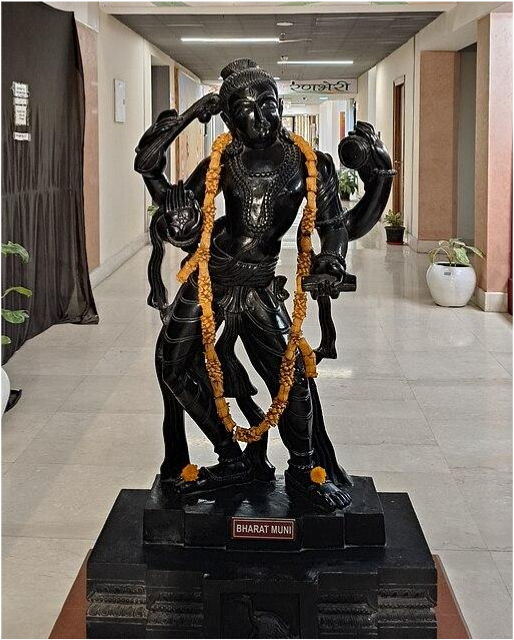
Fig.15. An image of Bharata Muni at Indira Gandhi National Centre for the Arts, Delhi OPEN DOMAIN (Ref.64)
“….. Bharata Muni’s Natyasastra not only presents the language of creative expression, it is the world’s first book on stagecraft …… lists 108 different postures that can be combined to give the various movements of dance. ……… Manomohan Ghosh, the modern translator of the Natyasastra, believes that it belongs to the fifth century BC .. (based on) ….. archaic pre-Paninian features of the language and the fact that Bharata mentions the Arthashastra of Brihaspati, and not that of the fourth century BC Kautilya.”
“The term “natya” is synonymous with drama. According to Bharata, the natya was created by taking elements from each of the four Vedas: recitation (pathya)from the Rigveda, song or melody (gita) from the Samaveda, Acting (abhinaya) from the Yajurveda, and sentiments (rasa) from the Atharvaveda.
By this synthesis, the Natyasastra became the fifth Veda, meant to take the spirit of the Vedic vision to the common man. Elsewhere, Bharata says:
“The entire nature of human beings as connected with the experiences of happiness and misery, and joy and sorrow, when presented through the process of histrionics (abhinaya) is called natya.””(Ref.16)
“Paul Kurtz suggests that the Rig Veda gives evidence that dramatic theatre in India came into being around the eighth century B.C.”
“Bharata’s Natyashastra is considered, traditionally, as an additional Veda; the fifth Veda. Written in Sanskrit, the vast treatise comprises 6,000 sutras. It has been divided into 36 chapters ……… title can be loosely translated as "A compendium of Theatre or A Manual of Dramatic Arts".
“Just as Panini standardized the classical form of Sanskrit, Bharata’s Natyashastra has standardized the classical form of drama”(Ref. 28)
“No other country in the world, apart from India can boast of an ancient classical text devoted solely to the production, technique and importance of music, dance and drama.
…… “ …… the Natyasastra is a holistic text that covers all aspects of drama and is of immense relevance even today. Most of the classical dances of India, the Bharatanatyam, Kuchipudi, Odissi and Kathak have taken many aspects from the Natysastra in the sense of the music, abhinaya and bodily expressions and movement. They have also taken the costume design and ornaments from the text .……. has remained the foundation of classical Indian dance forms, across the country, through the ages.”(Ref. 29)(See Figs. 15 B, and C )
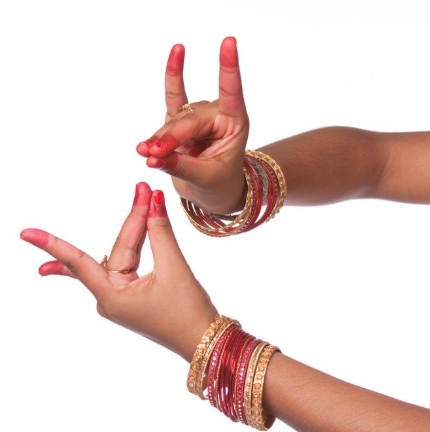
FIG 15B: Bharatnatyam mudra or “pose”
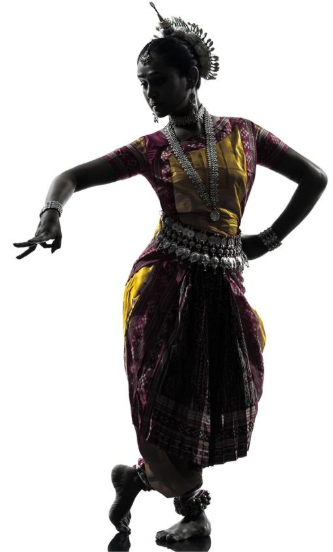
Fig. 15 C: Classical dancer, ODISSI style
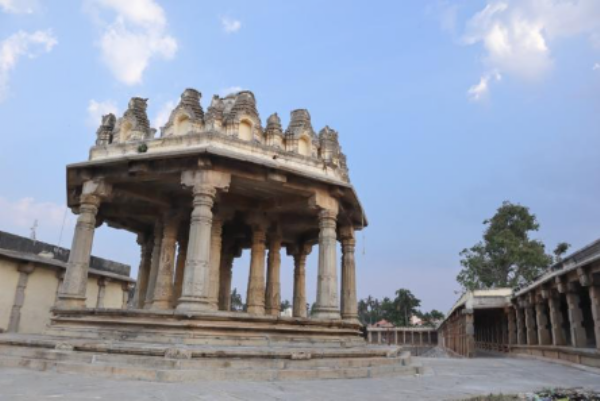
Fig 15 D. Old open air theatre, INDIA
(Figs 15 B, C, and D are GETTY iStock images licensed to Dr. Usha K. Sharma)
“Natya or theatre is an ancient practice of entertainment in India. Surviving texts and treatises suggest that theatre existed in the Indian subcontinent prior to the vedic age.”
“The Natyashastra of Bharata Muni brings out the evidence of theatre arts at festivals and public celebrations.”
“ …….. the elements of theatre were present even in the oldest civilization of India Indus valley civilization”.
“The Mahabharata refers to dancing halls attached to the palaces and known as nrutyashalas, where the artist used to teach to the princess”.(See Fig 15D)
“The Natyashastra’s ………… text elucidates and elaborates how theatre is performed. It prescribes in detail the construction of theatre spaces in India, the application of make-up, the design and building of props, arm, foot, eye and other body movements, ritual practices, the organization of theatre companies, the audience, dramatic competitions and the community of actors with additional chapters on music and audience appreciation. It elaborates the affectiveness of theatre. Primarily dealing with stagecraft, the Natyashastra prescribes and influences Indian music, dance and literature.”
“Natyashastra shapes our understanding of music and dance in ancient India.”
“ ………. the term rasa, which the Natyashastra identifies as a touchstone of aesthetic experience.” (Ref. 28)
“The word Rasa is derived from the root 'rasah' meaning juice, ‘taste‘ or ‘flavour‘ or ‘savour‘ or relish ……….. it is delight afforded by all forms of art; and the pleasure that people derive from their art experience. It is literally the activity of savoring an emotion in its full flavor.”(Ref.30)
NATYASHASTRA AND THE PRINCIPLES OF MUSIC - DEFINED 22 MUSIC MICROTONES OR SHRUTIS IN AN OCTAVE
“The Natya Shastra, ….. contained insights into acoustics. It discussed the principles of sound, including the classification of musical instruments based on their sound-producing mechanisms.”(Ref. 31)
A NOTABLE FRONTISPIECE DEDICATION IN A BOOK states:
“Dedicated to Bharatmuni. The proponent of Shruti-Nidarshanam or Sarana-Chatustaya experiment which is the first ever systematic exposition of the 22 shrutis (microtones) in Indian Music”.
“This experiment is so accurate and sophisticated, as discussed, that one gets awe-struck by the intellectual and mathematical genius of the creator of such an experiment.”(pg 12).
“Shruti is essentially a frequency or pitch position in an octave. This is the core property of a shruti.”
“ ….. whenever the term shruti is used in a technical or in an theoretical sense, it means a pitch position in an octave…. “ (page 20).
“Bharata uses the term shruti as a ‘unit’ of measurement or the ‘shrutyantara’ to define the relationship between two musical notes (page 22).”
“Bharata provides highly sophisticated description of shruti in his discussion on Gramas (musical scales). …………. his well established experiment called ‘Shruti Nidarshanam’ , to ascertain, verify, generate, demonstrate and validate twenty-two shrutis in an octave”. (page 22).(32)
“ ….. in Indian Classical Music, Shruti is recognized as the shortest interval of two audible
notes. It is believed that shruti was firstly illustrated in Rigveda and later used in a musical context which was clearly defined by Acharya Bharat Muni in Natyashastra.” (Ref. 33)
“ The shruti is the smallest interval of pitch that the human ear can detect and a singer or musical instrument can produce.”
“ The swara differs from the shruti: the shruti is the smallest gradation of pitch available, while a swara is the selected pitches from which the musician constructs the scales, melodies and ragas.
The Natya Shastra identifies and discusses twenty two shruti and seven swara per octave.”
“In ancient times, shruti was described in Sanskrit as Shruyate iti Shruti, meaning "What is heard is a shruti." (Ref. 34)
SCIENTIFIC ADVANCES IN VEDIC KASHMIR
KASHMIRI HEALTHCARE AND MEDICAL SCIENCE
“ ….. in addition to the Vedic courses, the arts which were taught at Takshashila included medicine, surgery, …. “
“Takshashila was prominent for its medical education; the duration of the course was
seven years after which the students acquired expertise in the field of medicine and
surgery. Complicated surgeries, like those of skulls and stomach were performed here.”
“The discovery of surgical instruments from Taxila strengthens the practicing of various surgeries in ancient times.
These instruments were made of copper … ”(Ref. 11)
“In the field of medicine, Charaka — the legendary physician and compiler of the Charaka Samhita, one of the foundational texts of Ayurveda — is also believed to have originated from Kashmir. His contributions systematized Ayurvedic thought, presenting a rational, detailed exposition of medical science, anatomy, pathology, diagnosis, and therapeutics that continues to influence traditional and modern healing practices.” (Ref. 6)
“The popularity and practices of Ayurvedic system of healthcare was established in Ancient Kashmir. Written Ayurvedic literature provides references to holding of conferences of learned Ayurvedic sages to decide controversial Ayurvedic concepts in Kashmir. ….. in Trang 3/461 there is description of establishment of hospital in ancient Kashmir ….. ”
“The drug manufacturing units or pharmacies also existed in ancient Kashmir. Reference to this exists in Trang 8/859 of Rajtarangani:”(Ref. 35)
“Takshashila was the first University of the World in the history of higher education …”
“Charaka Rishi ……… wrote a book titled "Charaka Samhita". He is the Indian "Father of Medicine" and one of the leading authorities in Ayurveda, taught and practiced in Takshashila.” (Ref. 36)
“Charaka has been identified by some as a native of Kashmir. Professor Sylvain Lévi after discovering Buddhist manuscripts in Central Asia and China, came to the conclusion that the famous Charaka, the author of Charaka Samhita belonged to Kashmir.” (Ref. 37)
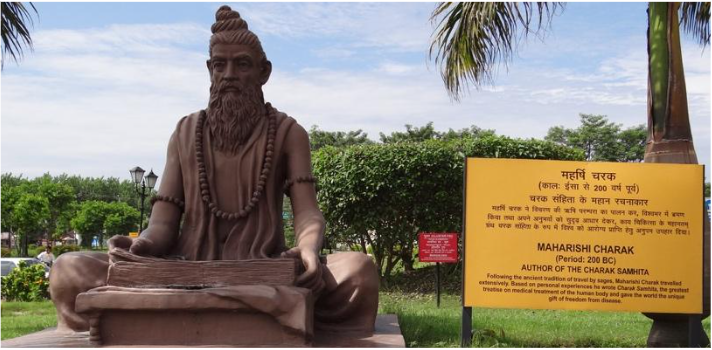
Fig. 16. Monument to Charaka, Father of Medicine and Surgery, in the Patanjali Yogpeeth campus, Haridwar, Uttarakhand, India. OPEN DOMAIN, (Ref.66)
“The Charaka Samhita, an ancient Ayurvedic text, contains references to medicinal plants found in the region (of Kashmir)…… Comprising 120 chapters across 8 books, this comprehensive work explores the causes of diseases, ethical principles of medical practice, physician training, human anatomy and embryology, diagnosis and treatment of diseases, as well as hygiene and healthy living (Nation, 2021). “
“Charaka possessed extensive knowledge of medicinal plants, with over 500 species identified.” (Ref. 38)
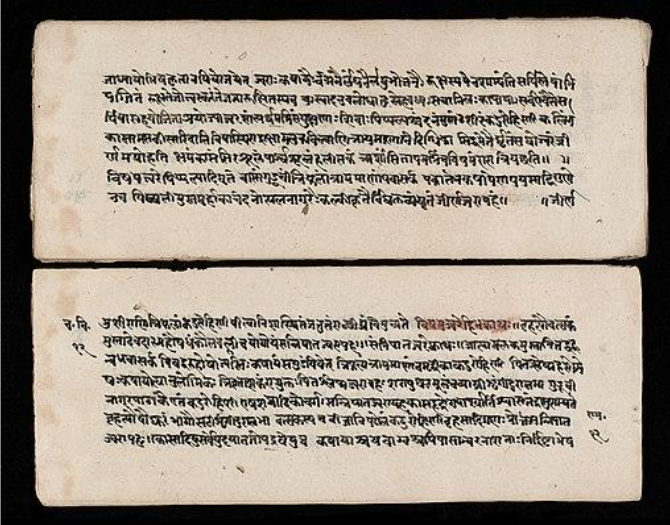
FIG. 17. A section of the Carakasamhita - sutrasthana (Charaka), from the Wellcome Collection OPEN DOMAIN (REF.65)
“The Charaka Samhita, ………… Composed between 1000 BCE and 200 CE, it[1]
forms the bedrock of internal medicine (KayaChikitsa). The Charaka Samhita stands as a monumental text, not only within Ayurveda but in the history of global medical literature.” (Ref. 39)
Acharya Charaka’s ten principles of investigation , called Dashavidha Parikshya Bhava…. “closely parallels the principles of clinical investigation currently practised in allopathic medicine today.” (Ref. 40)
AYURVEDA WAS THE SPARK FOR GREEK MEDICINE 1000 YEARS LATER
“The early history of western Europe, including the glory of ancient Greece, are sparks, brilliant though they be, from the great fire of knowledge of Vedic India.”.
“The Vedic civilization, far more ancient than the Greek, spread from India to Europe,
via Anatolia, Thrace, and Greece, and from there into Western Europe. The direction of
the flow was from India into Arabia and then to Europe. Evidence shows that the Vedic
tradition entered into Europe sometime before the early fourteenth century BC.”.
“Ayur-Veda, the earliest known system of medicine and surgery, was developed in the
Vedic period in India. Sushrut, the father of surgery, developed surgical procedures
including cesareans, cataract removals, setting fractures, removing urinary stones and
even plastic and brain surgery. Over 125 surgical tools are named in the ancient Sushrut
medical texts. Anesthesia was also well known. Detailed texts on anatomy, physiology,
etiology, embryology, digestion, metabolism, genetics, and immunity date from Vedic
times.”
“Sometime around 444 BC, Empedocles introduced a medical system into Greece
modeled on the then ancient Ayurvedic system of India.”
“Fragments from Empedocles’ book on Purification give the same definition of
health that the Charaka Samhita of the Vedic tradition did more than two thousand
years earlier. Heraclitus defines “health” as a balance of the fundamental elements (earth, air, fire and water) in all parts of the body, each part having the proper
proportion that is right for it. Plato’s Timaeus defines health in the same way. This is
how it is defined in Charaka Samhita.”
“Ancient legends in Greece speak of the early Pre-Socratics as traveling to India.
Thales, Pythagoras, Empedocles, Democritus, and Plato were all fabled to have made
the journey ….. it is not unthinkable, for there were well established commercial routes between India and Greece along the Silk Road, protected by Persian king, as well as between ports on the Red Sea that linked Greece with India in a thriving spice trade.” (Ref. 10)
“There is a close parallel between Indian and Greek medicine. For example, the idea of breath (prana in Sanskrit, and pneuma in Greek) is central to both. Jean Filliozat (1970) has argued that the idea of the correct association between the three elements of the wind, the gall, and the phlegm, which was described first by Plato in Greek medicine, appears to be derived from the earlier tridosha theory of Ayurveda. Filliozat suggests that the transmission occurred via the Persian empire.” (Ref. 41)
VEDIC KASHMIR’S ASTRONOMY RECORDS - OLDEST IN THE WORLD
“When did the humans begin astronomical observations? …… In India, a stone carving is excavated from a site in the Kashmir region, where permanent settlements are dated to a period around 3000 - 1500 BC (IAR, 1964). The stone slab shows two bright objects in the sky with a hunting scene in the foreground.”
“ …….. the records ……. suggest that the supernova drawn in the rock painting is HB9 ……… which exploded in 5700 BC ……… the drawing of the hunter and the stag seem to be correlated to Orion and Taurus in the vicinity of HB9. ……… this picture is not only the first record of a supernova, but also a sky-chart from 5500 BC making it by far the oldest such record.” (Ref. 42)
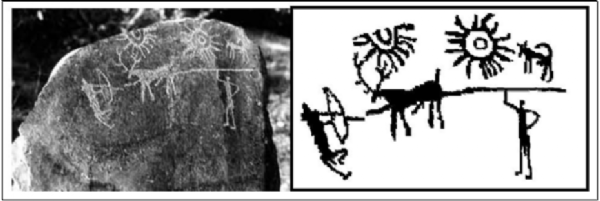
Fig. 18. Photograph of the stone carving found in Burzahom, Srinagar and its drawing.(Courtesy IGNCA (Indira Gandhi National Centre for the Arts) to authors of Ref. 42)
LAGADHA’S VEDANGA JYOTISHA – “REFERRED TO EVEN TODAY”
“Lagadha is one of the earliest known Hindu mathematician and astronomer. ……. believed to have lived during 1200 BC. ….. ranked as the topmost astronomer because he was the redactor of Vedanga Jyotisha, which is referred to even today.”
“Vedanga Jyotisha ….. deal with eclipses, a lunar calendar and units in time calculation.” (REF. 43)
ON TIME, SPACE, MATTER AND CONSCIOUSNESS
“Another book from Kashmir which has had enduring influence over Indian thought is the Yoga Vasishtha (YV). Professing to be a book of instruction on the nature of consciousness, it has many fascinating passages on time, space, matter and cognition.”
“ ….. summarise Indian ideas of physics, available to us through a variety of sources that are not widely known outside scholarly circles …. seeks to unify space, time, matter, and consciousness, an argument is made for relativity of space and time, cyclic and recursively defined universes, and a non anthropocentric view.”
“Yoga-Vasishtha
The (YV) is over 29,000 verses long, and it is traditionally attributed to Valmiki, author of Ramayana, the epic which is over two thousand years old. But scholars believe it was composed in the early centuries in Kashmir.”
“YV ………. describes the instruction given by Vasishtha to Rama of the Ramayana’
“Its most interesting passages from the scientific point of view relate to the description of the nature of space, time, matter, and consciousness.”
“Kashmiri understanding of physics was informed not only by astronomy and terrestrial experiments but also by speculative thought and by meditation on the nature of consciousness.” (REF. 44)
QUANTUM PHYSICS
“…… in Srinagar, on what’s today called the ‘Sankaracharya Hill’, Sri Adi Sankaracharya* composed the beautiful poetic verses of Soundarya Lahari in Sanskrit – meaning ‘Waves
of Beauty’. The beautiful hymn describes the universe as born from the vibrations of the
Divine Feminine.” (* circa 470 BC)
“These rhythmic forces (lahiri) and vibrations are poetic metaphors for cosmic
energy patterns underlying the Divine Universe and Life – resonating with modern physics, which describes how a wave-like behaviour is the fundamental aspect of all matter and energy in the Universe”.
“ …. centuries ago, Soundarya Lahiri sung from the sacred land of Kashmir captured
ideas that closely resemble the core principles of quantum physics!” (Ref. 45)
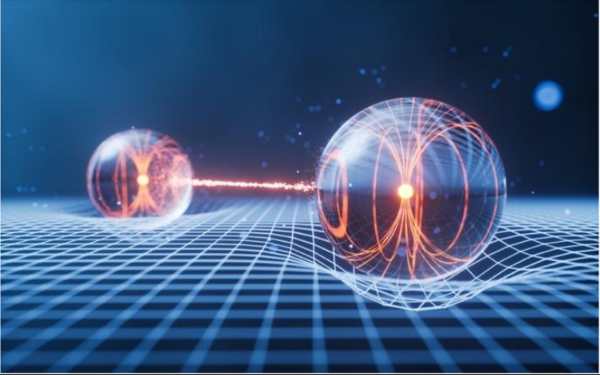
Fig.19. Quantum Physics concept. (GETTY iStock image licensed to Dr. Usha K. Sharma)
“ …. new experiments conducted by scientists from Quantum Physics challenged many conventional beliefs and assumptions of classical science. These new experiments have led to uncover what Vedanta and Kashmir Shaivism has been advocating many millennials back”.
“ ….. (in) Pratibhignya, the foundational text in the Kashmir Shaivism tradition, it also emphasises the interplay between the observer and the observed while exploring the nature of consciousness and reality”.
In New Experiments, “…… consciousness (observation) seems to play a role in determining whether particles behave like waves or particles. This suggests that consciousness might influence physical phenomena at the quantum level. Similarly, in Pratibhignya, consciousness is the fundamental essence that shapes reality.” (Ref. 46)
Fig. 20. Quantum waveform conceptualised (GETTY iStock image licensed to Dr. Usha K. Sharma)
METALLURGY IN VEDIC INDIA– “THE CENTRE OF ORIGIN OF IRON AND STEEL INDUSTRY” --- DAMASCUS SWORDS, WOOTZ STEEL AND IRON MINING IN KASHMIR
“India is the first producer of carbon steel (wootz). In fact, India was considered to be the centre of origin of iron and steel industry in the world. It is possible that iron age in India had started about 3000 years before the industry started in European countries. The Damascus swords which became famous in Europe were made from Indian wootz.”
“The process of wootz making was specially popular in the districts of Salem and Tiruchirappalli in Madras, besides the Hyderabad area, in Andhra Pradesh and Mysore.”.
“The possibility of a country wide manufacture of iron existing from quite early times is also indicated by the references to the working of iron mines in Bajuha, Subha Bengal, Keroh, Subha Kashmir, Kumaon, Khasi Hills, Subha Delhi, besides at Nirmal and Indore in Ain-i-Akbari.”, (Ref. 47)
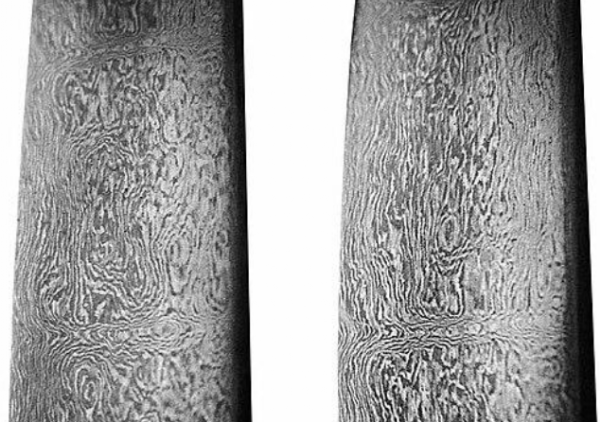
Fig. 21. Characteristic identifier Watered pattern on DAMASCUS sword blade made from Wootz steel, OPEN DOMAIN. (REF. 67)
“ … the hardest tools in ancient Egypt, such as drills for working the granite obelisks, were made of Indian Iron. …. It was again from India ……the Arabs and the Europeans learnt the tempering of steel, the best specimens of which were the famous Damascus blades of the Middle Ages …….. It appears that iron was first obtained from its ores in India…. The word iron appears to be connected with the Sanskrit ‘ayas’.” (Ref. 48)
CONCLUDING REMARKS
In PART IV which follows, I deal with the disaster that befell a great Vedic Civilisation with invasion by marauders, fanatics and bigots bent upon the pillage, destruction and annihilation of a peaceful people who rejected theological domination. The very same advantages that led to the prosperity and development of Kashmir, Her position on the junction of Trade routes, resulted in the ease of Her invasion as well.
The peaceful, non-violent and hospitable Kashmiris living in the valley were slaughtered in SEVEN episodes of genocide, one in every Century.
The last one, THE SEVENTH GENOCIDE occurred as recently as 1990, marking JANUARY 19TH 1990 AS HOLOCAUST DAY for KASHMIRI PANDITS.
IN REVERENCE AND REMEMBRANCE OF ALL THE BRILLIANT INTELLECTUALS WHO PLACED KASHMIR AND BHARAT ON THE WORLD MAP AND OF THE VEDIC CIVILISATION, DESTROYED FOR GREED, PLUNDER, RELIGIOUS SUPPRESSION AND BLOODLUST
AI NON-USE DISCLAIMER
The author emphatically states that NO generative artificial intelligence tool was used for researching, compiling, collating or writing this article.
The author EXPRESSLY FORBIDS the use of this article to train AI technologies in data search, compilation, collation, publication and dissemination and/or the generation of similar publications using this article.
References to Part III appear at the end of Part IV.
--

Dr. Usha Kamat Sharma
I am Dr. Mrs. Usha Kamat Sharma M.D., D.Cl.Pharm., Ph.D., who began my professional career as a lecturer in Pharmacology at the Seth G S Medical College affiliated to the KEM Hospital in Mumbai. I had the opportunity to conduct original research projects, graduate lectures and post graduate seminars in this period.
After earning my MD in the subject, I became a Pharmaceutical Physician, and retired after an innings of over 20 years in the Corporate Pharmaceutical world in India.
Thereafter I free lanced as a Pharmaceutical Medical and quality Consultant for a further 25 years or so. I indulged my love for writing by contributing invited articles to journals, and also contributed as a consultant editor for a few years on a couple of medical journals.
I turned once again to teaching, and accepted invitations as Visiting Faculty for various courses in Clinical Research for working professionals in the Pharmaceutical industry.
I designed and delivered a highly specialized course for several years at the Haffkine Institute for Training, Research and Testing, Government of Maharashtra, MUMBAI.
I soon turned to the pursuit of a new passion, the Ancient Civilisation and Culture of our beloved Motherland Bharat.
By this time I had written and published a Prescribed Textbook for Post-Graduates in Pharmacology, a Chapter in a Monograph on Tuberculosis, over 100+ Invited Reviews for a prestigious Pharmaceutical Bulletin, and assumed the Editorship of 2 Medical Journals for a few terms.
I have authored over 15 Original Medical Research Articles in Peer Reviewed Journals.
With this writing background I felt confident to venture into writing in what is essentially a new field for me. My love of teaching impels me to share what I learn with anyone who cares to listen and learn.
I look forward to writing this blog, and to incite curiosity and passion to learn about the riches of our heritage- verily treasures which our Vedic ancestors gifted to the World.
I am committed to providing the same thorough background research to this field as I had to Clinical Research.
I am excited to bring my fresh individual perspective to the subject, and hope I am able to stimulate thinking about this neglected topic.
It is revealing to come across so much national ownership and pride in the explorations carried out in other countries, while such rich treasures of knowledge and wisdom lie unfathomed, unseen, and untouched in the depths of a vast Ocean of the History of our Motherland.
The Time is now ripe for future generations to seek, even demand to know more about Her vast contributions to the World as they know it today.
Read on, and accompany me on this exhilarating journey of discovery into our past, the surest way to catapult meaningfully into the future.