Blame it on Congress, not the Hindu rate of Growth
NewsBharati 11-Jun-2026 16:56:24 PM
Total Views |


Prime Minister Narendra Modi's observation that the so-called “Hindu Rate of Growth” should actually be called the “Congress Rate of Growth” is more than a political remark. It is a challenge to one of the most enduring intellectual distortions in post-Independence India. For decades, Indians were taught to accept a phrase that subtly linked economic stagnation with their own civilizational identity. The result was not merely a misleading economic description but a deeper psychological assault on national self-esteem.
Modi is right in questioning this narrative. The slow growth of the period was not the consequence of Hindu civilization. It was the outcome of a specific economic model designed and implemented by Congress governments. The rigid licence-permit-quota raj, excessive state control, hostility towards private enterprise, and suspicion of wealth creation were policy choices. They were neither cultural inevitabilities nor civilizational traits. If growth remained trapped at low levels, responsibility lay with policymakers, not with the civilization that predated those policies by thousands of years.
This tendency reflected a lingering colonial mindset. Political independence had been achieved in 1947, but intellectual decolonisation remained incomplete. Colonial rulers had spent generations convincing Indians that their traditions, institutions, and cultural foundations were inferior. Tragically, many among the post-independence elite internalised this view. They became more comfortable criticising their own civilization than questioning imported doctrines.
The acceptance of the term “Hindu Rate of Growth” is a classic example. Imagine if economic stagnation in another country were attributed to its dominant religious or civilizational identity. Such terminology would be considered offensive and intellectually irresponsible. But when it came to Hindu civilization, many academics, commentators, and politicians saw nothing objectionable. The phrase entered textbooks, public discourse, and economic debates without serious challenge.
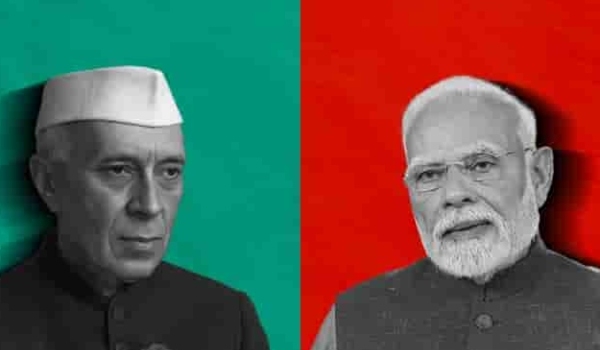
_202606111710270232_H@@IGHT_600_W@@IDTH_494.jpg "Hindu rate of Growth")
The consequences extended beyond economics. The Congress era frequently promoted a model of nation-building that treated civilizational consciousness as an embarrassment rather than an asset. Expressions of Hindu cultural identity were often viewed through the lens of backwardness, while Western approval was treated as a mark of modernity. Ancient knowledge systems were neglected, traditional institutions were weakened, and historical achievements were frequently downplayed. The message was subtle but persistent that progress required distancing oneself from indigenous roots.
Modi's broader contribution has been to challenge this inherited mindset. His political rise coincided with a growing rejection of narratives that portrayed Indian civilization as the source of India's problems. Instead, he has consistently argued that India's cultural heritage is a source of strength, resilience, and inspiration. Whether through the revival of civilizational symbols, the promotion of cultural confidence, or the emphasis on India's historical continuity, his message has been clear: Indians need not apologise for who they are.
The debate over the “Hindu Rate of Growth” therefore goes far beyond economics. It concerns the language through which a nation understands itself. Words matter because they shape perceptions. When policy failures are attributed to a civilization, the result is intellectual dishonesty. When responsibility is assigned to the governments and ideologies that actually made those decisions, the discussion becomes more accurate and more honest.
Calling it the “Congress Rate of Growth” may be politically provocative, but it also directs attention to the real source of the problem: the policy choices that constrained India's economic potential for decades. More importantly, it rejects the unfair burden that was placed upon Hindu civilization for failures it did not create. In that sense, Modi's intervention is not merely a critique of Congress economics. It is part of a larger effort to restore India's civilizational self-respect. A confident nation must be willing to examine its history honestly, acknowledge policy mistakes, and reject narratives that undermine its cultural foundations. Correcting the distortion surrounding the “Hindu Rate of Growth” is one step in that direction. It is, fundamentally, a correction of both economics and national psychology
The term “Hindu Rate of Growth” was coined to describe India's sluggish economic expansion during the first few decades after independence. But the phrase itself carried an implicit assumption that something inherent in Hindu civilization, culture, or social ethos was responsible for economic backwardness. This was an extraordinary conclusion. A civilization that had sustained flourishing trade networks, advanced mathematics, metallurgy, urban centres, and prosperous kingdoms for centuries was suddenly portrayed as the reason for modern India's economic underperformance.
Modi is right in questioning this narrative. The slow growth of the period was not the consequence of Hindu civilization. It was the outcome of a specific economic model designed and implemented by Congress governments. The rigid licence-permit-quota raj, excessive state control, hostility towards private enterprise, and suspicion of wealth creation were policy choices. They were neither cultural inevitabilities nor civilizational traits. If growth remained trapped at low levels, responsibility lay with policymakers, not with the civilization that predated those policies by thousands of years.
The deeper question is why such a phrase gained acceptance in the first place. The answer lies in the intellectual orientation of the Congress establishment after Independence. Instead of drawing confidence from India's own civilizational strengths, large sections of the ruling elite remained deeply influenced by foreign ideological frameworks. Whether it was Fabian socialism from Britain, Marxist interpretations of history, or Western academic theories, imported ideas often enjoyed greater prestige than indigenous perspectives. The roots of this stagnation lay largely in the socialist economic framework embraced by Congress. Influenced by left-wing thinking, policymakers placed excessive faith in state control while viewing private enterprise with suspicion. It was socialism, not Hindu civilization, that constrained India's growth potential.
This tendency reflected a lingering colonial mindset. Political independence had been achieved in 1947, but intellectual decolonisation remained incomplete. Colonial rulers had spent generations convincing Indians that their traditions, institutions, and cultural foundations were inferior. Tragically, many among the post-independence elite internalised this view. They became more comfortable criticising their own civilization than questioning imported doctrines.
The acceptance of the term “Hindu Rate of Growth” is a classic example. Imagine if economic stagnation in another country were attributed to its dominant religious or civilizational identity. Such terminology would be considered offensive and intellectually irresponsible. But when it came to Hindu civilization, many academics, commentators, and politicians saw nothing objectionable. The phrase entered textbooks, public discourse, and economic debates without serious challenge.
This reveals an important asymmetry. Congress and its intellectual ecosystem often displayed remarkable sensitivity towards the sentiments and identities of others while showing little hesitation in attaching negative labels to India's majority civilizational heritage. Such an approach did not foster national confidence. Instead, it encouraged generations of Indians to view their own cultural inheritance with suspicion.
The consequences extended beyond economics. The Congress era frequently promoted a model of nation-building that treated civilizational consciousness as an embarrassment rather than an asset. Expressions of Hindu cultural identity were often viewed through the lens of backwardness, while Western approval was treated as a mark of modernity. Ancient knowledge systems were neglected, traditional institutions were weakened, and historical achievements were frequently downplayed. The message was subtle but persistent that progress required distancing oneself from indigenous roots.
This approach had a profound impact on the national psyche. A nation that loses confidence in itself finds it difficult to achieve greatness. Economic development is not merely a matter of policies and investments; it is also linked to collective self-belief. Societies that take pride in their history and culture are better positioned to innovate, compete, and pursue ambitious goals. Societies burdened by civilizational self-doubt often struggle to realise their full potential.
Modi's broader contribution has been to challenge this inherited mindset. His political rise coincided with a growing rejection of narratives that portrayed Indian civilization as the source of India's problems. Instead, he has consistently argued that India's cultural heritage is a source of strength, resilience, and inspiration. Whether through the revival of civilizational symbols, the promotion of cultural confidence, or the emphasis on India's historical continuity, his message has been clear: Indians need not apologise for who they are.
The debate over the “Hindu Rate of Growth” therefore goes far beyond economics. It concerns the language through which a nation understands itself. Words matter because they shape perceptions. When policy failures are attributed to a civilization, the result is intellectual dishonesty. When responsibility is assigned to the governments and ideologies that actually made those decisions, the discussion becomes more accurate and more honest.
Calling it the “Congress Rate of Growth” may be politically provocative, but it also directs attention to the real source of the problem: the policy choices that constrained India's economic potential for decades. More importantly, it rejects the unfair burden that was placed upon Hindu civilization for failures it did not create. In that sense, Modi's intervention is not merely a critique of Congress economics. It is part of a larger effort to restore India's civilizational self-respect. A confident nation must be willing to examine its history honestly, acknowledge policy mistakes, and reject narratives that undermine its cultural foundations. Correcting the distortion surrounding the “Hindu Rate of Growth” is one step in that direction. It is, fundamentally, a correction of both economics and national psychology

Editor's Desk
Editor's Desk