Elon Musk & RSS chief: Same ‘3 kids’ appeal, different media response
NewsBharati 12-Jun-2026 16:33:19 PM
Total Views |


A few days ago, the world’s richest person, Elon Musk, expressed concern over Total Fertility Rate (TFR) in India dipping to 1.9, that is, below the replacement level of 2.1. It quickly trended on ‘X’. Read with his previous statement that a family must have three children, this also attracted criticism.
Prior to that, Rashtriya Swayamsevak Sangh (RSS) chief Dr. Mohan Bhagwat also had sounded an alarm over falling TFR and appealed to couples to have three children. He, too, drew criticism.
However, there was a difference between criticism of Musk and Dr. Bhagwat. The criticisms differed in tone and texture. Both faced a backlash. But, compared to Musk, Dr. Bhagwat’s statement received significantly more critical and politically charged media scrutiny.
If one analyses the tone of the critical media coverage of Musk’s statement, it was a bit skeptical. The criticism largely came from media persons covering technology, science, and the economy. The debate largely centred on how overpopulation was a threat to depleting resources on Earth. Some accused Musk of being an ‘eccentric’ or ‘alarmist’ billionaire who ‘did not know family budgets’. Some quoted the UN data. After some heated debate on social media, and some science-oriented opinion pieces in some global media, it stopped.
Prior to that, Rashtriya Swayamsevak Sangh (RSS) chief Dr. Mohan Bhagwat also had sounded an alarm over falling TFR and appealed to couples to have three children. He, too, drew criticism.
However, there was a difference between criticism of Musk and Dr. Bhagwat. The criticisms differed in tone and texture. Both faced a backlash. But, compared to Musk, Dr. Bhagwat’s statement received significantly more critical and politically charged media scrutiny.
If one analyses the tone of the critical media coverage of Musk’s statement, it was a bit skeptical. The criticism largely came from media persons covering technology, science, and the economy. The debate largely centred on how overpopulation was a threat to depleting resources on Earth. Some accused Musk of being an ‘eccentric’ or ‘alarmist’ billionaire who ‘did not know family budgets’. Some quoted the UN data. After some heated debate on social media, and some science-oriented opinion pieces in some global media, it stopped.
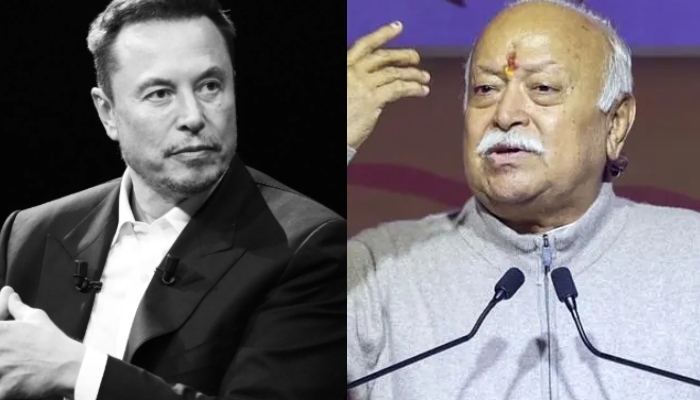
In contrast, the criticism of Dr. Mohan Bhagwat’s statement came from mediapersons covering politics, culture, religion, and gender. He was accused of pushing a ‘divisive’ and ‘majoritarian’ agenda. Some comments interpreted his statement as infringing upon women’s autonomy. Leaders like Asaduddin Owaisi of AIMIM said the appeal reflected hatred against Muslims. The debate raged on for weeks in Indian as well as foreign media. Some stretched their political imagination to link this to Hindu nationalism in general, RSS ideology, and also to target the ruling party – BJP.
The issue was simple: As per the data, India’s TFR has dropped to 1.9, which is below the replacement of 2.1. This means that any social group or country with TFR below 2.1 faces population decline in the years to come. Because the birth rate is lower than the death rate. If a country has TFR below 2.1, and the neighbouring country has TFR above 2.1, the latter is likely to migrate to the former country. This migration from the country with a higher population to that with an ageing population is more likely to settle in the destination country. In a way, one country’s population gradually alters the demography of another. In such cases, higher population proves advantageous.
ALSO READ: Conspiracies Being Brewed to Divide Hindu Society
Similarly, within a country, if a social group’s TFR falls below 2.1 and another group’s remains higher than 2.1, the group with higher TFR is likely to emerge dominant in due course of time. The imbalance may also have other implications like the civilisational clashes witnessed in European countries. In Europe, ‘demographic decay’ is also being discussed.
Similarly, within a country, if a social group’s TFR falls below 2.1 and another group’s remains higher than 2.1, the group with higher TFR is likely to emerge dominant in due course of time. The imbalance may also have other implications like the civilisational clashes witnessed in European countries. In Europe, ‘demographic decay’ is also being discussed.
India’s birth rate has fallen below replacement.
— Elon Musk (@elonmusk) June 6, 2026
Among those most educated, India’s birth rate fell below replacement many years ago. https://t.co/RsWf0PK6wx
What Musk and Dr. Bhagwat did was to sound an alarm over this and appeal for couples having three children. There is a greater psycho-social angle to this debate. If a couple has only one child, his/her child does not have an extended emotional family comprising aunts, uncles, cousins. Gradually, the psycho-social support base of a family erodes.
Unfortunately, the media coverage, even if critical, did not go into the depths of the social phenomenon. Musk was, in a way, pardoned with scientific debates or accusations of being an ‘eccentric billionaire’. Dr. Bhagwat was branded ‘communal’ because he heads the 100-year-old Hindu organisation called RSS. Instead of examining the logic from a scientific social or demographic perspective, criticism was weaponised to malign RSS, Hindutva, BJP, and also Indian culture.
ALSO READ: Country of Origin Filter: India has notified the right reform; now it must not wait till 2027
India is the world’s most populous country. In such a situation, having three children will require families to have more resources. But, there is another side to the story. Whether it be China or India, their biggest advantage has been their populations. More population means bigger markets. And, bigger markets mean a larger economy. In a way, population helps a country grow and evolve more competitively. Media debates missed this part of the demographic dividend.
India, that crowds to buy the latest expensive gadgets, mobile phones, and automobiles, must have resources to raise children. Declining TFR of a social group also affects the language spoken by that group, its traditions, culture, cuisine, attire, preservation of heritage, and economic participation. Media debates missed these points too.
The statement of Musk and Dr. Bhagwat had immense potential to stir a multi-dimensional social debate. However, the media confined itself to criticism. Dr. Bhagwat was subjected to criticism that was restricted to political and communal overtones. There could only be one rationale of the media – view people through stereotypical lenses. Hence, Musk’s statements were considered to be those of a billionaire, and Dr. Bhagwat’s to be of a Hindutva leader.
Barring a few exceptions, the media appears to be stuck between cementing stereotypes and looking at everything through a ‘majority vs minority’ political lens. This doesn’t help the larger cause of sensitising people about issues as serious and deep as falling TFR.
India is the world’s most populous country. In such a situation, having three children will require families to have more resources. But, there is another side to the story. Whether it be China or India, their biggest advantage has been their populations. More population means bigger markets. And, bigger markets mean a larger economy. In a way, population helps a country grow and evolve more competitively. Media debates missed this part of the demographic dividend.
India, that crowds to buy the latest expensive gadgets, mobile phones, and automobiles, must have resources to raise children. Declining TFR of a social group also affects the language spoken by that group, its traditions, culture, cuisine, attire, preservation of heritage, and economic participation. Media debates missed these points too.
The statement of Musk and Dr. Bhagwat had immense potential to stir a multi-dimensional social debate. However, the media confined itself to criticism. Dr. Bhagwat was subjected to criticism that was restricted to political and communal overtones. There could only be one rationale of the media – view people through stereotypical lenses. Hence, Musk’s statements were considered to be those of a billionaire, and Dr. Bhagwat’s to be of a Hindutva leader.
Barring a few exceptions, the media appears to be stuck between cementing stereotypes and looking at everything through a ‘majority vs minority’ political lens. This doesn’t help the larger cause of sensitising people about issues as serious and deep as falling TFR.

Kartik Lokhande
Kartik Lokhande is a senior journalist with experience of 26+ years. He is a former Deputy Editor of The Hitavada, Nagpur. Naxalism, defence, and security issues are the topics of particular interest.