BrahMos Diplomacy: How India is building a strategic counter to China's "String of Pearls"
The emergence of what analysts increasingly describe as a "BrahMos Belt" across Southeast Asia has the potential to create a strategic counterweight to China"s military expansion.


Among the most significant instruments of India's emerging strategy is the export of the BrahMos supersonic cruise missile. The sale of BrahMos missiles to the Philippines, ongoing negotiations with Vietnam, and discussions with Indonesia represent more than commercial defence transactions. They constitute a carefully crafted geopolitical strategy aimed at strengthening regional deterrence against Chinese expansionism while simultaneously establishing India as a credible security provider in the Indo-Pacific.
_202607141430324811_H@@IGHT_400_W@@IDTH_700.jpg "Brahmos")
China's String of Pearls Strategy
China's growing military and economic presence around India is part of a broader effort to secure sea lines of communication, protect energy supplies, and project military power into the Indian Ocean Region (IOR).
The most prominent components of this strategy include:
Gwadar, Pakistan
Located near the Strait of Hormuz, Gwadar Port provides China with strategic access to the Arabian Sea. Developed under the China-Pakistan Economic Corridor (CPEC), the port serves both economic and potential military purposes. It allows Beijing to monitor maritime traffic and potentially support People's Liberation Army Navy (PLAN) deployments in the western Indian Ocean.
Hambantota, Sri Lanka
China's acquisition of a 99-year lease on Hambantota Port has become a textbook example of strategic influence through infrastructure investment. While Sri Lanka maintains that the facility is commercial, its strategic location close to major sea lanes gives China a valuable logistical foothold.
Chittagong, Bangladesh
China has significantly expanded its economic and military relationship with Bangladesh. Although Chittagong is not a Chinese military base, Chinese investments and defence cooperation provide Beijing with growing influence in the Bay of Bengal.
Myanmar: Kyaukpyu and Strategic Access
Djibouti
China's first overseas military base in Djibouti marks its transition into a global military power. Situated near critical maritime chokepoints, the base supports Chinese naval operations extending from Africa to the Middle East and the Indian Ocean.
Arms Transfers and Military Partnerships
China has complemented its infrastructure strategy with extensive arms sales to Pakistan, Bangladesh, Myanmar, and other countries. These include fighter aircraft, submarines, warships, missiles, air-defence systems, and surveillance equipment. Such transfers strengthen China's influence while creating long-term military dependencies.
Collectively, these developments provide China with the ability to monitor India's maritime activities, protect Chinese shipping, and potentially constrain Indian strategic options during crises.
India's Response: The Rise of BrahMos Diplomacy
India's response has increasingly focused on building deterrence through partnerships rather than establishing overseas military bases. At the centre of this strategy lies the BrahMos supersonic cruise missile, one of the world's fastest operational cruise missiles. Capable of speeds approaching Mach 3 and possessing high precision and survivability, BrahMos presents a formidable anti-ship and land-attack capability.
Philippines: The First Breakthrough
The Philippines became the first foreign customer for BrahMos in 2022. The deployment of BrahMos coastal defence batteries significantly enhances Manila's ability to defend its maritime interests in the South China Sea.
For China, the presence of BrahMos missiles in the Philippines complicates naval operations and raises the costs of coercive actions. For India, the deal represents a major strategic breakthrough, demonstrating its ability to contribute directly to regional security.
Vietnam: A Natural Strategic Partner
Vietnam has long resisted Chinese territorial claims in the South China Sea. The country possesses one of Southeast Asia's most capable militaries and shares India's concerns regarding Chinese assertiveness.
The acquisition of BrahMos missiles by Vietnam would significantly strengthen Hanoi's anti-access and area-denial capabilities. Given Vietnam's geographic location along China's southern maritime approaches, such a deployment would have substantial strategic implications.
Indonesia: Guarding the Maritime Crossroads
Indonesia occupies a critical position astride major maritime routes connecting the Pacific and Indian Oceans. Chinese activities near the Natuna Islands have generated growing concern in Jakarta.
Potential BrahMos deployment in Indonesia would strengthen maritime deterrence and contribute to regional stability. Together with the Philippines and Vietnam, Indonesia could form part of a broader network of states capable of resisting coercion.
The Emerging "BrahMos Belt"
_202607141431039657_H@@IGHT_515_W@@IDTH_700.jpg "Brahmos")
A strategic map would reveal that:
- The Philippines covers the eastern approaches to the South China Sea.
- Vietnam dominates the western flank of the South China Sea.
- Indonesia controls vital maritime chokepoints connecting the Pacific and Indian Oceans.
- This network does not constitute a military alliance in the traditional sense. Rather, it creates multiple centres of deterrence that complicate Chinese military planning.
Unlike China's model based on overseas bases and infrastructure control, India's approach empowers sovereign partner nations to defend themselves. This distinction enhances India's image as a responsible and trusted security partner.
India's Strategic Geography: The Andaman and Nicobar Advantage
While BrahMos diplomacy is important, India's own geographic position remains a major strategic asset.
Andaman and Nicobar Islands
The Andaman and Nicobar Islands occupy a commanding position near the Malacca Strait, through which a substantial portion of China's energy imports and trade passes.
Often described as India's "unsinkable aircraft carrier," the islands provide:
- Surveillance over critical sea lanes.
- Forward deployment opportunities for naval and air assets.
- Long-range missile deployment potential.
- Enhanced maritime domain awareness.
Lakshadweep and Western Maritime Security
On the western seaboard, Lakshadweep offers opportunities for strengthening surveillance and maritime operations in the Arabian Sea. Enhanced infrastructure and military presence would improve India's ability to monitor activities around Gwadar and the western Indian Ocean.
Strategic Partnerships and Overseas Access
India has increasingly pursued logistics agreements and strategic partnerships that provide access to critical facilities without establishing traditional overseas bases.
These include:
- Access to Duqm Port in Oman.
- Defence cooperation with Mauritius and Seychelles.
- Naval cooperation with Vietnam.
- Logistics agreements with the United States, Australia, Japan, France, Singapore, and other partners.
Military Exercises and Security Cooperation
The Quad and Malabar Exercise
The Quad grouping—comprising India, the United States, Japan, and Australia—has emerged as a major pillar of Indo-Pacific security.
The Malabar naval exercise enhances:
- Interoperability among participating navies.
- Anti-submarine warfare capabilities.
- Maritime surveillance cooperation.
- Collective deterrence.
- Bilateral and Multilateral Exercises
India also conducts numerous exercises with Southeast Asian nations, including:
- SIMBEX with Singapore.
- Naval exercises with Vietnam.
- AUSINDEX with Australia.
- Varuna with France.
Defence Training and Capacity Building
One of India's most underappreciated strategic tools is military training.
Thousands of foreign military officers have received training in Indian institutions such as:
- National Defence Academy.
- Indian Military Academy.
- Defence Services Staff College.
- National Defence College.
Intelligence, Cyber, and Space Dimensions
Modern strategic competition extends far beyond conventional military power.
Intelligence Sharing
India increasingly cooperates with Quad members and regional partners in intelligence sharing, maritime domain awareness, and surveillance.
Information Fusion Centre–Indian Ocean Region (IFC-IOR) has become a valuable platform for tracking maritime activities and enhancing regional cooperation.
Space-Based Surveillance
India's growing constellation of military and dual-use satellites provides:
- Maritime surveillance.
- Missile tracking.
- Intelligence collection.
- Monitoring of Chinese naval deployments.
- Cyber Security
Given China's advanced cyber capabilities, India is investing heavily in cyber defence, network resilience, and protection of critical infrastructure.
The integration of cyber, space, intelligence, and conventional military capabilities is becoming central to India's deterrence strategy.
Despite significant progress, several challenges remain.
First, China's economic influence in South Asia remains substantial. Infrastructure investments under the Belt and Road Initiative continue to provide Beijing with leverage.
Second, India's defence-industrial capacity must expand rapidly to meet growing export demand.
Third, Southeast Asian countries often seek strategic autonomy and may hesitate to be seen as aligning explicitly against China.
_202607141431325753_H@@IGHT_400_W@@IDTH_700.jpg "Brahmos")
Recommendations for India
To strengthen its strategic position, India should pursue the following measures:
- Accelerate BrahMos exports to Vietnam and Indonesia.
- Develop next-generation BrahMos variants with greater range and enhanced capabilities.
- Transform the Andaman and Nicobar Command into a powerful forward-operating tri-service hub.
- Expand maritime surveillance networks across the Indian Ocean.
- Strengthen defence-industrial production and export capacity.
- Deepen Quad cooperation while maintaining ASEAN centrality.
- Enhance counter-drone, missile defence, and electronic warfare capabilities.
- Expand intelligence-sharing arrangements with regional partners.
- Use economic diplomacy, infrastructure development, and connectivity initiatives to compete with Chinese influence.
The strategic competition between India and China is increasingly being fought across the maritime domain. China's String of Pearls strategy seeks to establish a network of ports, bases, and partnerships that enhance its influence in the Indian Ocean and constrain India's strategic freedom.
India's response, centred on BrahMos diplomacy, strategic partnerships, military exercises, intelligence cooperation, and maritime modernization, represents an innovative form of counter-encirclement. The emergence of a BrahMos-equipped network stretching from the Philippines through Vietnam to Indonesia has the potential to alter the strategic balance in the Indo-Pacific.
Unlike traditional power politics based solely on military bases, India's approach focuses on empowering partner nations, strengthening collective deterrence, and preserving a free, open, and rules-based maritime order. The result is not merely a defensive response to Chinese expansion but the gradual emergence of India as a leading architect of Indo-Pacific security.
In the coming decade, the success of this strategy will determine whether India remains a regional power reacting to events or evolves into a major maritime power shaping the strategic future of Asia.
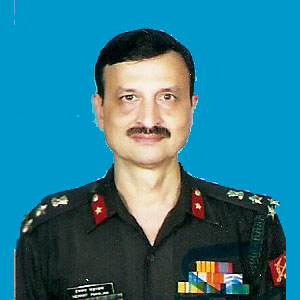
BRIG Hemant Mahajan
Passionate writer on National Security related issues, Brig Hemant Mahajan YSM (Retd) is M Sc, M Phil in Defence Studies. He joined IMA Dehradun in July 1973 and passed out as a Commissioned Officer on 15 June 1975. He was commissioned into 7 MARATHA LIGHT INFANTRY. He has served extensively in Counter Insurgency Operations in Insurgency and Terrorist prone areas of Jammu & Kashmir, Punjab and North East and has taken part in all important operations undertaken by the Army since 1975.
Brig Hemant Mahajan served in Jammu & Kashmir, in the deserts of Rajasthan, in Super High Altitude areas of Kargil and Leh, forward areas of Arunachal Pradesh. He was deployed in Punjab in ‘Operation Avert’. He was also involved in maintaining peace post ‘Operation Bluestar’ days in Punjab in the worst affected district of Gurdaspur, Taran Taran and Amritsar.He served in the areas of Darjeeling, Kurseong, Siliguri and Sikkim. He commanded his battalion 7 MARATHA LIGHT INFANTRY in Operation Rakshak in the most difficult areas of Poonch and Rajouri during the times of highest militancy. His unit was responsible for stopping terrorists from Pakistan into Jammu and Kashmir. His unit was awarded Unit Citation, 18 gallantry awards including YSM (gallantry) for the officer.