Shortage of doctors: How to fix it?
Once you finish your MBBS, you have to do a one-year internship with a hospital to get experience before you can qualify to practice.
NewsBharati 30-Jul-2026 14:55:39 PM
Total Views |


"Wherever the art of Medicine is loved, there is also a love of Humanity.”
― Hippocrates
In the last few weeks, the NEET exam conducted centrally for MBBS vacancies in medical colleges in India was the national highlight, basically because of the paper leak. Though our masses of all ages are so much glued to social media that most of them are really clueless about what we called GK- general knowledge in the good old days.
Now it is generally known knowledge and hardly known to hardly any people.
Be that as it may, we have a large number of aspirants who want to do their MBBS (Bachelor of Medicine and Bachelor of Surgery). Some aspirants may not even know this.
Neatness of NEET
Around 22 to 24 lakh (2.2 to 2.4 million) students appear for the NEET-UG exam each year. This is a humungous number. To conduct an exam of this level and this high volume is no joke. For students, unfortunately, it is a do-or-die situation. It is a ‘one-and-done’ type of scenario- you clear this with flying colours; to get into the list, you become a doctor- no further hurdles like prelims to mains or interview. It is mainly score-based.
While over 12 lakh students "pass/qualify" NEET each year, only about 1 in 20 candidates secures an MBBS seat, and roughly 1 in 40 candidates secures a coveted government college MBBS seat.
There are roughly 5,000 to 8,000 seats in top Tier-1 MBA colleges in India, and around 3 lakhs sit for the CAT exam and then, of course, the interview process. Cracking ratio is roughly 1:38 for top gun colleges. But here the big hurdle is the interview. One and done does not work here.
What next?
Once you finish your MBBS, you have to do a one-year internship with a hospital to get experience before you can qualify to practice. Many of them start working and also try to go for a PG (postgraduate) degree.
World over, there is a shortage of doctors, especially in developing countries with larger populations. We in India churn out roughly 1.3 lakh MBBS doctors every year through around 820 hospitals. The WHO has a standard of 1:1000 doctor-patient ratio, and we are roughly 1:1300, which needs to improve. The US has about 1 doctor for every 330 to 380 patients, and the UK roughly 1:312
Still, our patients, by and large, get better medical attention than abroad and even much cheaper care. But the load on our system (doctors and staff) is much higher, almost three and a half times if you do simple math. And our doctors are the best in the world.
The rural doctor-patient ratio is very bad, almost 1:10,000- primary health centres and rural clinics.
This means we need to have more doctors and not engineers or commerce graduates.
How to augment the system?
We need to open more medical colleges, too, created by the government. Though there is a big expense to build a medical college, the hurdle seems to be that a medical college must have its own hospital- like a lab in an engineering college. A hospital requires land, approvals, and medical hardware. All are difficult areas.
The National Medical Commission (NMC) mandates that any institution applying to set up a medical college must have a fully functional, attached teaching hospital on the same campus or within a strictly defined physical radius. A minimum bed count (e.g., 300 to 500+ beds depending on intake capacity) and an operational track record are mandatory before admitting students. A hospital costs a lot, and running a hospital is also expensive.
Some nations do not have a mandate like this. America, the UK, Australia, and Canada are examples
In these countries, accreditation bodies mandate that medical students receive hands-on clinical training, but the university is not legally required to own, build, or exclusively operate its own hospital campus. Instead, medical schools form formal partnerships with independent public, private, or regional healthcare networks.
Iconic institutions like Harvard Medical School and Columbia University do not own a single main hospital on campus; their students complete clinical rotations through deeply affiliated independent hospital systems like Massachusetts General Hospital.
Yet another hybrid model is allowed in many European countries.
European Union (e.g., Poland, Georgia, Czech Republic, Italy)
While European directives require a minimum number of clinical contact hours, universities are generally allowed to partner with municipal or regional state hospitals rather than maintaining a dedicated, single-purpose university hospital facility. This makes sense for India, which has thousands of hospitals.
We need to relook at our system of internships. We have plenty of patients and plenty of hospitals.
We have hospitals spread across the country.
Taking public institutions (District Hospitals and Medical Colleges) and private multi-specialty centres together, India has an estimated 5,000 to 7,000 hospitals with over 100 beds.
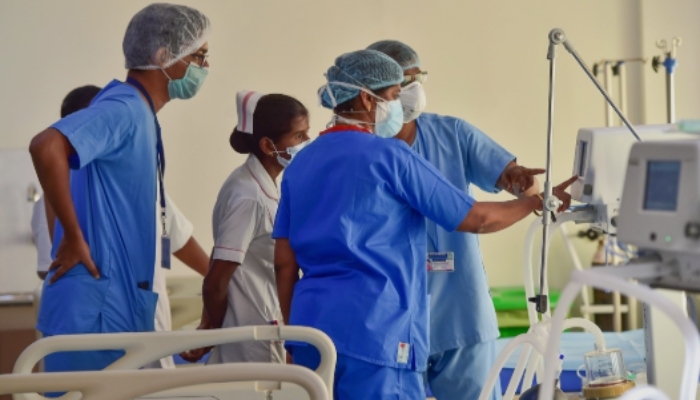
_202607301459548833_H@@IGHT_400_W@@IDTH_700.jpg "Doctors newsbharati")
Rural district level
District Hospitals (DH)101 to 500+ beds-760 to 800+ across India, located at district headquarters; serve as the primary secondary/tertiary referral hubs for surrounding rural populations.
Since the college and hospital are not collocated, students can be and should be attached to district hospitals or sub-district level hospitals to get hands-on experience.
In nutshell
Strictly speaking, almost all modern Western and global accreditation bodies allow medical schools to operate without owning or running an exclusive, dedicated hospital—provided they have formal affiliation agreements with external teaching hospitals and clinics. This can be done in our medical education too.
Owning/Building an attached hospital is MANDATORY only in India, Bangladesh, China, and several South/Southeast Asian regulatory systems.
Having access to clinical rotations (via partnerships) is mandatory, but owning an attached hospital IS NOT required in the United States, the United Kingdom, Canada, Australia, Ireland, the Caribbean, and most of Western Europe.
Nuts and bolts of the issue
This will improve the doctor-patient ratio as interns are available in smaller rural hospitals to augment the strength. Actually, regular doctors are averse to getting posted to remote areas, and there is always a shortage. With this, let the incoming young doctors get a taste of rural India. It is like getting a feel of ‘shram daan’ and ‘nation first’, learning on the job, and their stipend can be increased to meet extra expenses.
A proper system needs to be created to coordinate all this. But this can be done with political and organizational will.
The student’s problems
There is a major problem for the students as there are a large number of seats for the reserved category. Not going into this subject in this article, let me put some figures to sink in how big a problem it is.
Total Reserved quotas: 59.5%. Remaining 40.5% seats are Unreserved / Open Merit. For a hard-working, sincere student, this is highly lopsided. A person scoring a high score and is from the open category is denied admission, and a student scoring dismally low from the reserved category gets it. When he complains, he is told, ‘just too bad- the system is like this’.
Doctors work on qualifications and experience
If you go to a doctor, you will need some point of reference. One way is if some friend or relative has had a good experience, he recommends a doctor. The moment you enter his clinic or chamber, you see some framed degrees and certificates like an Olympic gold medal winner or a film star puts his Oscar or Filmfare award on display- and why not.
Doctors display a specific mix of mandatory legal credentials, academic degrees, and professional recognitions on their clinic walls and letterheads. Like MBBS, MD (med), FRCP (Edin), FICP
Before displaying degrees, every practicing doctor must prominently display their legal authorization to practice.
Medical Council / State Medical Council Registration Certificate: The foundational document issued by the NMC (formerly MCI) or the respective State Medical Council (e.g., MMC, DMC). It features their unique Medical Registration Number. These are highly prestigious post-doctoral recognitions and international college admissions that doctors display proudly.
Royal College Qualifications (UK/Ireland)
MRCP (Member of the Royal College of Physicians) / FRCP (Fellow)
MRCS (Member of the Royal College of Surgeons) / FRCS (Fellow)
MRCOG (Obstetricians & Gynaecologists) / MRCPCH (Paediatrics)
These are the badges of honour.
But they also should proudly display their NEET scores, which are the star point of their journey and have a lot to say. A fellow from IIM would flaunt his high CAT score during every interview. That is his achievement. So why not NEET? A guy getting selected in NDA- National Defence Academy would always say he stood first in the all-India merit list. A sword of honour says it too.
You get a NEET certificate, on the basis of which even the coaching centres give a full-page front-page advertisement costing a bomb, displaying their star performers in major national daily newspapers.
Here is exactly what that scorecard includes for every student who appears in the NEET exam.
Total and Subject-Wise Marks: Your exact raw score out of 720, broken down by subject (Physics, Chemistry, and Biology/Botany & Zoology).
Percentile Score: A relative metric showing the percentage of total test-takers who scored lower than you.
This should also be mandated to be displayed. You will get to know how brilliant a guy is.
“In our job, you will never go home at the end of the day thinking that you haven’t done something valuable and important.”
― Dr. Suneel Dhand
Virender Kapoor
A thinker, educationist and an inspirational guru. Kapoor is an Indian who wears many hats. An educationist of repute, he was the Director of a prestigious management Institute under the Symbiosis umbrella. He has emerged as a leading think tank in human behavior, motivation and success. As a celebrity author, his name appears with the likes of Thomas Friedman and Dale Carnegie. He has authored more than 30 books as of now which are on Amazon worldwide and several of his books are in the pipeline.