Manusmriti for Rahul, Quran for Silence?
Total Views |


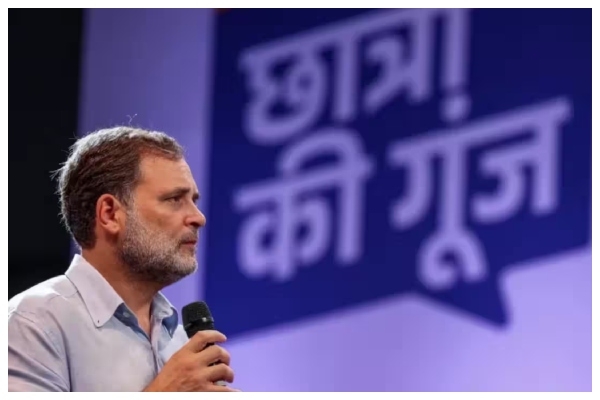
Rahul Gandhi has discovered patriarchy. In Pune, he told young women to “smash” the patriarchal mindset and attacked what he described as the Manusmriti's prescription regarding a woman's identity. His message was unequivocal: a woman belongs to herself, not to her father, husband or son. Good.
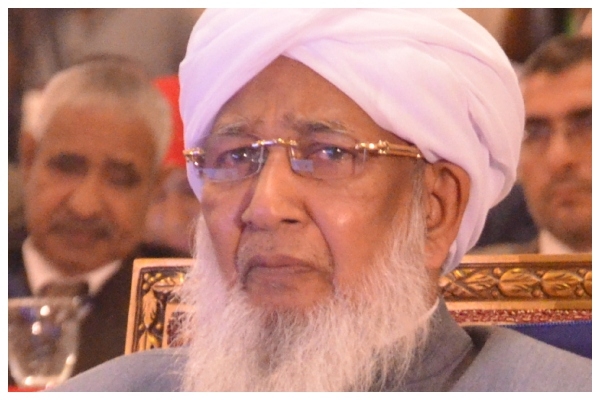
Now Rahul Gandhi has an opportunity to prove that he actually believes what he said. In Kerala, a prominent Islamic cleric, Sheikh Abubakr Ahmad, has said that women should remain confined to their homes and should not enter the public sphere. He invoked Islamic religious teachings and defended the purdah system. His most astonishing analogy was that women are like gold ornaments: just as a necklace must be kept safely inside a box to preserve its beauty, women should remain protected inside the home.
So, Mr Gandhi, here is your test.What do you call this?
Patriarchy?
Or does patriarchy become patriarchy only when Rahul Gandhi finds it in a Hindu text?
A woman is not a gold necklace.
Gold is an object. A woman is a citizen.
Gold has no voice. A woman has a voice.
Gold cannot choose where it wants to be. A woman can.
Gold can be locked in a box. A woman cannot be locked away from society in the name of protecting her dignity.
The cleric's analogy is therefore not merely old-fashioned. It is profoundly paternalistic. It reduces an adult woman to something valuable that must be guarded by men. Her safety, her movement, her work and her participation in public life are all made dependent upon somebody else's authority.
That is patriarchy.
Call it by its name.
And Rahul Gandhi should call it by its name too.
The problem becomes even more serious because the cleric did not present this merely as a personal preference. He invoked religious authority for his position. That raises a legitimate question about the relationship between religious interpretation and constitutional citizenship.
India's Constitution does not create one standard of freedom for Hindu women and another for Muslim women.
ALSO READ: Security Forces Bust Naxal Explosives Dump in Sukma, Recover IEDs and Detonators
If Rahul Gandhi can lecture India about the Manusmriti, he cannot suddenly become silent when a Muslim cleric cites the Quran while prescribing restrictions on women.
And Congress has history here.
The Shah Bano episode remains one of the most uncomfortable chapters in the history of Indian "secular" politics. In 1985, the Supreme Court ruled in favour of maintenance for Shah Bano, a divorced Muslim woman. Faced with opposition from conservative Muslim leaders, the Rajiv Gandhi government used its parliamentary majority to enact the Muslim Women (Protection of Rights on Divorce) Act, 1986, effectively overturning the political impact of the Supreme Court's judgment.
The message was devastating.
When a woman's rights collided with the political demands of a conservative religious constituency, Congress chose political accommodation. The Shah Bano episode became a symbol of what critics called minority appeasement and, more importantly for today's debate, of the willingness of the political establishment to compromise women's rights when religious pressure became inconvenient.
The triple talaq debate offers another chapter.
For decades, instant triple talaq remained a deeply controversial practice affecting Muslim women. The Supreme Court declared instant triple talaq unconstitutional in 2017. The subsequent legislation criminalising the practice was brought by the Modi government in 2019 amid strong political opposition from Congress and other parties. Reality is that reform eventually came when political leadership was prepared to confront religious conservatism rather than negotiate endlessly with it.
This is why the Keralam statement cannot be dismissed as just another controversial speech.
It exposes an old fault line in Indian politics.
On one side is the Constitution, which recognises women as equal citizens.
On the other is the argument that religious or customary authority should determine how women live.
And somewhere in between stands Congress, which has historically struggled to choose consistently between constitutional modernity and electoral calculations.
Today, Congress has an even greater responsibility.
Keralam is governed by Congress. V. D. Satheesan heads the Congress-led UDF government.
So this is no longer simply a question for Rahul Gandhi as a national politician.
It is a question for the Congress government in Keralam.
What does Chief Minister Satheesan think of a prominent cleric telling women to remain inside their homes?
Will Congress condemn the statement as unequivocally as it condemns perceived patriarchy in Hindu society?
ALSO READ: The Uzbekistan nobody wanted to talk about: A closer look at the country now being held up as a compliment
Will he say that a woman belongs to herself even when the restriction is justified through a religious text?
Or will Congress suddenly discover the vocabulary of “sensitivity”, “community sentiment” and “religious freedom”?
There should be no confusion between religious freedom and the freedom to deny women their constitutional agency.
Every religion has traditions that have had to negotiate with modernity. Hindu society has undergone enormous internal reform. Practices defended in the name of tradition have been challenged and abandoned. Social reformers fought religious conservatism within Hindu society itself.
That is what living societies do.
They reform.
They argue.
They adapt.
They change.
The real question for Islamic societies and religious establishments is not whether Islam has a history. Every civilisation has a history. The question is whether interpretations and social practices can evolve with changing circumstances, women's education, constitutional democracy and modern ideas of individual liberty.
No faith should be placed beyond questioning.
No scripture should become a licence for denying constitutional equality.
And no political party should protect conservative religious authority merely because it fears losing votes.
The cleric has given Rahul Gandhi a remarkable opportunity.
He can prove that his fight against patriarchy is genuine.
He can say: I opposed patriarchy when I saw it in Manusmriti. I oppose it when I see it defended in the name of any other religious text.
That would be consistency.
Silence would be more vocal.
For Congress, this is an even bigger test.
The Shah Bano chapter should not be repeated. The politics that once allowed religious conservatism to override a woman's claim to equality should belong to history.
The gold-box analogy belongs to another age too.
India's women have already walked out of that box.
ALSO READ: Jan Dhan: When the Last Layer Entered the Economy
They do not need to be preserved like jewellery.
They need to be free.
So Rahul Gandhi should answer.
If a woman belongs to herself, as you told the girls of Pune, does that principle also apply to the women of Keralam?
And Congress should answer an even larger question:
Will it stand with the Constitution or once again stand behind political convenience?
The box is not the protection of a woman.
The box is the denial of her freedom.