“Judiciary and Criticism: The Test Is Democratic Temperament”.
Total Views |


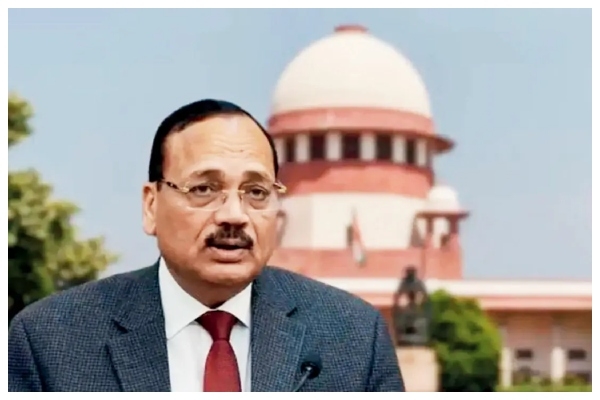
The Supreme Court has done well to say that the judiciary is not, and cannot be, averse to criticism. A Bench headed by Chief Justice of India Surya Kant and comprising Justices Joymalya Bagchi and V. Mohana recently observed that fair, informed and constructive criticism of judicial functioning is a legitimate and necessary feature of a vibrant constitutional democracy. Such criticism, the Court said, contributes to institutional accountability and self-correction. This is a welcome statement. But perhaps it should also be the beginning of a larger conversation.
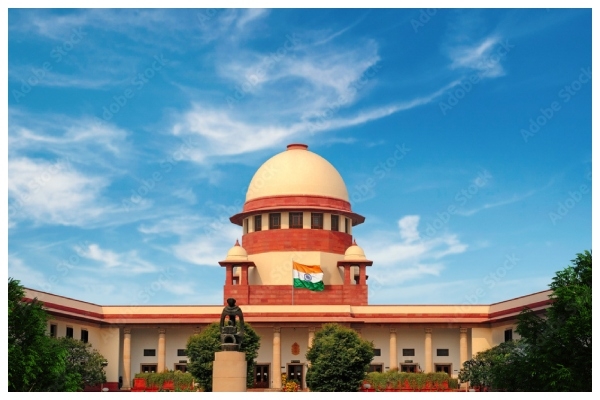
If the judiciary is open to criticism, the next question is whether that openness will also reflect itself in the way the judiciary functions. In other words, is the judiciary now ready to take the initiative? A democratic institution cannot demonstrate openness merely by saying that criticism is welcome. Its openness should also be visible in its judgments, its reasoning, its language and, above all, its willingness to recognise that institutions can make mistakes.
That is not a demand for judicial surrender. Far from it. Judicial independence is indispensable to constitutional democracy. But independence and insulation are not the same thing. An independent institution can be questioned. A strong institution can acknowledge criticism. In fact, an institution that is confident of its own constitutional position should have little reason to fear reasoned disagreement.
The Supreme Court has also raised an interesting question about what constitutes “fair”, “informed” and “constructive” criticism. There can hardly be a permanent dictionary for these words. What is regarded as fair or constructive can vary with circumstances, social attitudes and the nature of the criticism. Yet there must be some broad democratic test. The first condition is social acceptance.
ALSO READ: Rahul Gandhi: Minister for Other People’s Plates
The distinction drawn by the Supreme Court is therefore important. The issue is not criticism versus silence; it is responsible discourse versus uninformed assertion. The Court was dealing with an NCERT textbook and specifically objected to unverified criticism being presented to impressionable schoolchildren.
But the principle should travel beyond the classroom.
India needs a democratic culture in which criticism is neither treated as an act of hostility nor used as a licence for irresponsible allegations. We have perhaps become too accustomed to seeing disagreement in binary terms. If one criticises the judiciary, one is accused of attacking the judiciary. If one criticises a political party, one is accused of political bias. If one questions the media, one is accused of suppressing the press. This is not a healthy democratic culture.
The judiciary cannot, and should not, operate in isolation from this larger national environment. The same democratic attitude must be visible in Parliament, the executive, political parties, universities, the media, civil society and ordinary public discourse.
Democracy cannot mean that everyone must tolerate my criticism while I refuse to tolerate yours. That is perhaps the deeper lesson in the Supreme Court's observation.
Every institution must have the capacity for self-correction. Parliament must be open to criticism. Governments must be open to criticism. Political parties must be open to criticism. The media must be open to criticism. The judiciary must be open to criticism. Citizens themselves must develop the capacity to hear an argument with which they disagree without immediately questioning the patriotism, integrity or motives of the person making it. This is where India has a special advantage.
India's democratic tradition did not begin with the Constitution in 1950. The Constitution gave institutional and legal form to a much older civilisational experience of debate, argument, dialogue, dissent and accommodation. Indian civilisation has historically produced competing schools of philosophy, intellectual traditions that questioned established positions and public life in which disagreement did not necessarily mean the destruction of the opponent.
Our democratic temperament, therefore, need not be an imported political habit. It can draw upon our own civilisational inheritance. But inheritance alone is not enough. Every generation has to renew it.
The real challenge before India today is not merely to preserve democratic institutions but to develop a democratic attitude. That means accepting that no institution is infallible, no political party possesses a monopoly over patriotism, no government is beyond scrutiny and no citizen has a monopoly over truth.
ALSO READ: The Veto Must Go: An Imperial Relic in a Changed World
There is, of course, a line. Deliberate falsehood, malicious personal attacks and attempts to destroy an institution through fabricated allegations cannot be passed off as democratic criticism. But the existence of irresponsible criticism cannot become an excuse to discourage responsible criticism.
The Supreme Court has now made an important beginning. The next step should be institiutional. If fair criticism contributes to judicial accountability and self-correction, as the Court itself has said, then the judiciary should demonstrate through its functioning that it genuinely welcomes that process. And the same principle must apply everywhere else.
A mature democracy does not seek a society without criticism. It seeks a society capable of giving criticism without malice, receiving criticism without insecurity and resolving disagreement without hatred. That is not merely a judicial principle. It is a national requirement.
India can achieve it because democracy is not alien to its civilisational character. But civilisational inheritance becomes meaningful only when it is converted into contemporary conduct. The real test, therefore, is not whether we can say that criticism is welcome. The real test is whether we have the democratic temperament to listen to it.