‘Look who's talking': Rebel TMC leader Kakoli Dastidar tears into Sagarika Ghose as Mamata's Party descends into open warfare
The rebellion inside the Trinamool Congress has turned into a full-blown public slugfest. Days after leading a dramatic breakaway of TMC MPs, Kakoli Ghosh Dastidar hit back at Mamata Banerjee loyalist Sagarika Ghose over her "traitor" remark, asking instead whether she belonged to a "team of thieves and criminals"
Total Views |


The political war inside the Trinamool Congress (TMC) intensified sharply on June 16, with rebel MP Kakoli Ghosh Dastidar launching a blistering attack on Rajya Sabha MP Sagarika Ghose in what is being seen as another sign of the widening fracture within Mamata Banerjee's party.
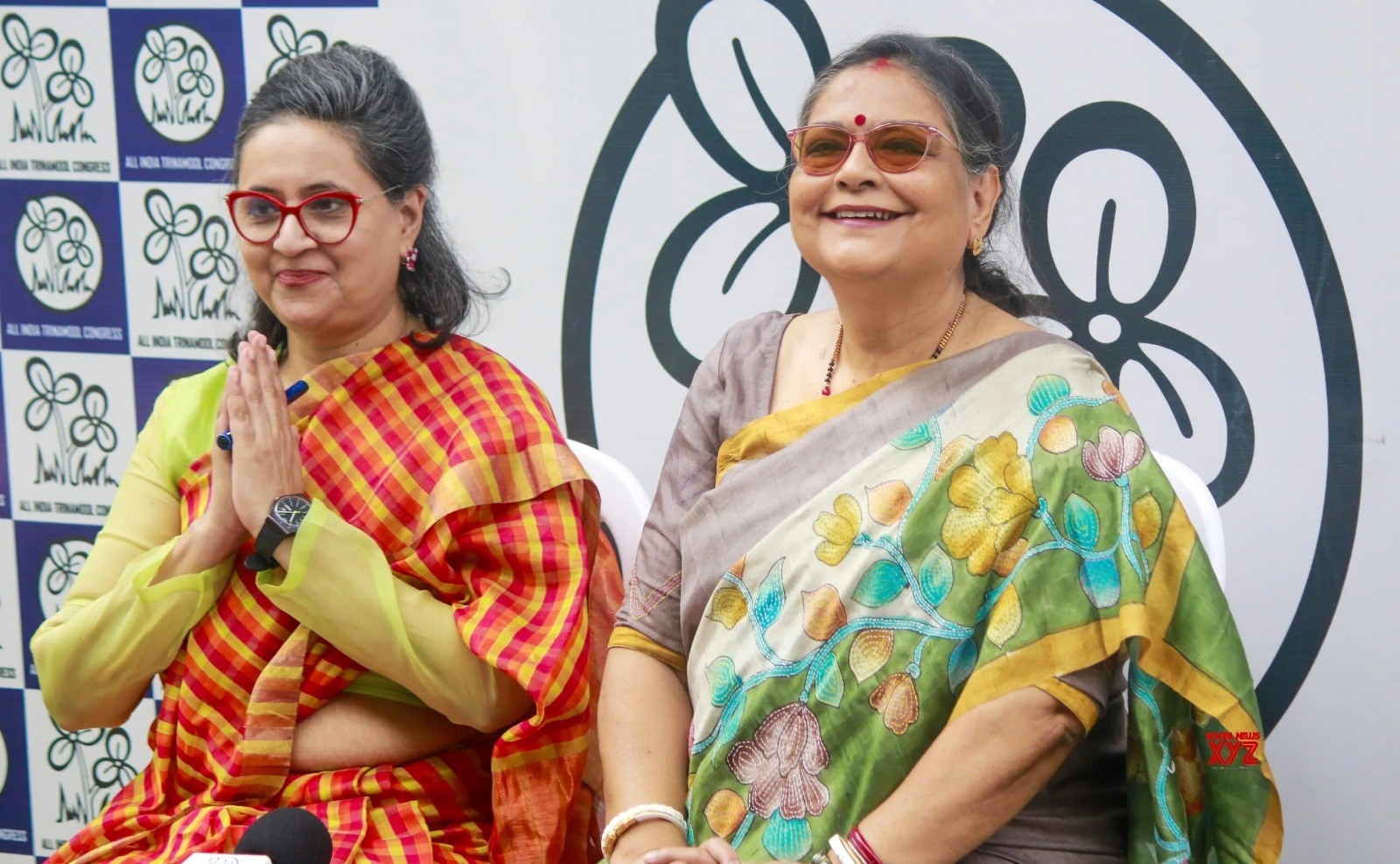
The confrontation began after Sagarika Ghose, one of Mamata Banerjee's closest political loyalists, took to social media to target the growing rebel faction within the TMC. In a strongly worded post, she drew a clear line between those standing with the party leadership and those who had chosen to rebel.
"There are TWO teams. Team TMC and team of gaddars or traitors," she wrote.
There are TWO teams . Team TMC or team @AITCofficial and team of gaddars or traitors. pic.twitter.com/4nGy4NNYlx
— Sagarika Ghose (@sagarikaghose) June 17, 2026
The remark was widely interpreted as a direct attack on the group of MPs led by Kakoli Ghosh Dastidar, who recently revolted against the party leadership and later aligned themselves with the NDA-backed Nationalist Citizens Party of India (NCPI).
ALSO READ : Its Rebels vs Didi in Bengal: 20 MPs move to form ‘Real TMC’ in biggest challenge to Mamata
Dastidar wasted little time in responding.
In a sharp counterattack, the Barasat MP questioned the moral authority of the TMC leadership and its loyalists.
"What about the team of thieves and criminals to which you belong?" she wrote, escalating an already bitter political confrontation.
What about the team of thieves and criminals to which you belong
— Dr. KakoliGDastidar (@kakoligdastidar) June 17, 2026
The exchange is the latest flashpoint in what has become an existential crisis for the Trinamool Congress following its crushing defeat in the 2026 West Bengal Assembly elections.
What initially began as murmurs of dissatisfaction after the electoral setback has rapidly evolved into a coordinated rebellion involving MPs and MLAs, many of whom were once considered trusted members of Mamata Banerjee's inner circle.
The first major shock came when rebel MLA Ritabrata Banerjee, reportedly backed by dozens of legislators, staked claim to the position of Leader of Opposition in the Assembly, openly challenging the authority of the party leadership.
The crisis deepened further when a group of Lok Sabha MPs led by Kakoli Ghosh Dastidar reportedly wrote to Lok Sabha Speaker Om Birla expressing support for the BJP-led NDA. The rebellion subsequently took a more formal shape when the MPs merged with the NCPI, a relatively small party from Tripura that is aligned with the ruling alliance at the Centre.
The revolt has exposed long-simmering grievances within the party.
Dastidar and other rebel leaders have repeatedly accused the TMC leadership of corruption, favouritism and abandoning the ideals on which the party was founded. Several rebels have also raised concerns over the increasing concentration of power around Abhishek Banerjee, Mamata Banerjee's nephew and the party's national general secretary, who is widely viewed as her political successor.
According to the rebels, decision-making within the party became increasingly centralised, leaving many senior leaders feeling marginalised and unheard. The crushing electoral defeat only accelerated those tensions and brought them into the open.
For Mamata Banerjee, the rebellion represents perhaps the biggest internal challenge of her political career. A party that once appeared unshakeable in West Bengal is now battling defections, leadership disputes and open public warfare among its own leaders.
The latest clash between Kakoli Ghosh Dastidar and Sagarika Ghose is more than a social media spat. It is a reflection of a party at war with itself, where former colleagues are now openly accusing one another of betrayal, corruption and political opportunism.
With the rebel camp attempting to establish itself as a credible alternative and the loyalist faction rallying behind Mamata Banerjee, the battle for the future of Bengal's opposition politics appears far from over.