Connecting open links: FCRA bill, Sonam Wangchuk's hunger strike, US involvement, and CJP's violent protest
What connects the FCRA amendment bill, Sonam Wangchuk"s hunger strike, the alleged US involvement, and the Cockroach Janta Party? Here"s an attempt to piece together how these threads supposedly fit
Total Views |


Amid the ongoing 'peaceful' protests led by the CJP members that took a violent turn on July 20 and 21, 2026, a massive revelation has raised weird speculations about the involvement of the US in creating the chaos in the national capital under the disguise of the 'NEET paper leak' scam. On July 17, the US Embassy in Delhi released a document saying that a massive crowd would take over the surrounding Jantar Mantar, Parliament House, and Kishan Ghat in Delhi on July 20 and 21.
_202607221739130305_H@@IGHT_400_W@@IDTH_700.jpg "FCRA")
"Additionally, a protest at Kisan Ghat in Central Delhi is expected on July 21, 2026. An alliance of approximately 250 national farmer organizations plans to arrive in New Delhi on motorcycles and assemble at Kisan Ghat," the report further said, showcasing that the entire scene of the protest was preplanned and that 'substantial disruptions' were expected in New Delhi on the first day of the Monsoon session when the Foreign Contribution Regulation Act (FCRA) would be considered for introduction.
Now, what connects the FCRA amendment bill, Sonam Wangchuk's hunger strike, the alleged US involvement, and the Cockroach Janta Party? Here's an attempt to piece together how these threads supposedly fit.

On July 17, 2026, social media suddenly started singing the praises of the CJP protest, which is 'falsely fighting for the cause of students'. Under the guise of the students' protest, several communist and Islamist organizations like the Students Federation of India (SFI), the AISF, and even the LGBTQ+ protest actors are leading the protest at Jantar Mantar, New Delhi.
Among these was Ladaki activist Sonam Wangchuk, who had been on hunger strike for around 20 days and was demanding the resignation of Minister Dharmendra Pradhan over the alleged NEET paper leak scam. Everything was fine until social media and Gen Z users sympathized with Wangchuk just because he chose not to eat or drink anything. This clearly wasn't the first time that Wangchuk had done a hunger strike. However, odd as it sounds, he has a habit of 'gaining sympathy' by choosing to quit food.
No, nobody is heartless here, but we are just speaking the truth. He did the same in Leh in September 2025 while demanding statehood for Ladakh and its inclusion in the Sixth Schedule, after which he was notably arrested for allegedly having Pakistan connections and inciting violence against the state, as exposed by the Ladakh Director General of Police, S D Singh Jamwal. We know it's hard to believe. But truth has always been a bitter pill to swallow.
Congress exposed Sonam Wangchuk of misapproriation of foreign funds in 2007
In September 2025, the Ministry of Home Affairs cancelled the FCRA licence of Sonam Wangchuk’s NGO, Students Educational and Cultural Movement of Ladakh, after the Central Bureau of Investigation had initiated an inquiry into the institution. After the MHA action, BJP's Amit Malviya had pointed to alleged violations by Wangchuk dating back to 2007, emphasising that the irregularities were flagged long before the BJP came to power at the Centre or in Jammu and Kashmir.
ALSO READ: Chaos at Jantar Mantar: Police forced to lathi charge after 1000s CJP protesters illegally gather for 'Chalo Sansad march'
Sharing a copy of the 2007 official notice, he said, “Sonam Wangchuk’s NGO has finally had its FCRA licence cancelled, a step that should have been taken long ago. Even back in 2007, when the BJP was not in power at the Centre or in J&K, the government had flagged several violations by him and made sharp observations. The record speaks for itself.”
Sharing a copy of the 2007 official notice, he said, “Sonam Wangchuk’s NGO has finally had its FCRA licence cancelled, a step that should have been taken long ago. Even back in 2007, when the BJP was not in power at the Centre or in J&K, the government had flagged several violations by him and made sharp observations. The record speaks for itself.”

The 2007 notice, allegedly issued by the Deputy Commissioner of Leh under the UPA government, listed serious allegations against Wangchuk and his NGO. These included misappropriation of foreign funds under the Foreign Contribution Regulation Act (FCRA), illegal occupation of 200 Kanals of land without paying government dues, maintaining anti-national connections in China and other places, and destabilising the harmony of Ladakh through remarks, actions, and threats to the Council and District Administration. The document also accused Wangchuk of attempting to influence Ladakh’s political stability, reinforcing the government’s longstanding concerns about his operations. Following this, he was allegedly received funds from a foreign country and was accused by Leh Police of instigating massive violence in the area that killed 4 and injured around 80.
Ladakh Police arrested a Pakistan intelligence operative directly linked to him in 2025
In September 2025, Ladakh Director General of Police S D Singh Jamwal said that Sonam Wangchuk was being probed for having links with Pakistan after he was arrested under the National Security Act (NSA), days after protests demanding statehood for the Union Territory resulted in violence. The DGP said Wangchuk was being probed in the context of the arrest of a Pakistani Intelligence Operative who sent videos of his protests across the border.
The police chief accused Wangchuk of being the key person behind violence in 2025 that resulted in the killing of four people when police opened fire at youth protesting in support of long-standing demands of statehood for Ladakh and inclusion in the Sixth Schedule. Two days after the violence, which also left more than 80 injured, Leh police detained Wangchuk near his residence under the NSA, 1980.
Ladakh Police arrested a Pakistan intelligence operative directly linked to him in 2025
In September 2025, Ladakh Director General of Police S D Singh Jamwal said that Sonam Wangchuk was being probed for having links with Pakistan after he was arrested under the National Security Act (NSA), days after protests demanding statehood for the Union Territory resulted in violence. The DGP said Wangchuk was being probed in the context of the arrest of a Pakistani Intelligence Operative who sent videos of his protests across the border.
The police chief accused Wangchuk of being the key person behind violence in 2025 that resulted in the killing of four people when police opened fire at youth protesting in support of long-standing demands of statehood for Ladakh and inclusion in the Sixth Schedule. Two days after the violence, which also left more than 80 injured, Leh police detained Wangchuk near his residence under the NSA, 1980.
Since then, as per the Republic TV report, Wangchuk has been talking about Nepal-like violence and instigating the people against the Indian government.
Imprints of US deep state hard to ignore
Notably, the US Deep State's involvement in the violent Nepali protests that overthrew the KP Sharma Oli government in 2025 can't be ruled out. The Gen-Z protests in Nepal appeared organic, but when their layers are peeled, the imprint of the US Deep State is hard to ignore. The sudden ban of 26 social media platforms acted as a trigger, but the scale, speed, and narrative management of these protests suggest external orchestration. The US Deep State has a pattern. It exploits genuine youth anger, amplifies it through covert networks, and directs it towards destabilising governments that don't align with their strategic interests.
For India, the implications are serious. Any instability here directly impacts our security, trade, and social harmony across the open border. What does the Deep State gain? Simple. For a developing nation like India, internal instability means New Delhi must spend its energy managing crises at home rather than asserting itself on the world stage. It undercuts India's regional standing, complicates its diplomatic maneuvering, and opens up vulnerabilities that outside actors could exploit to influence its strategic decisions. India needs to stay watchful. The "deep state", the theory goes, flourishes wherever democracies allegedly let their guard down. Nepal's upheaval was never confined to Nepal alone; in the same way, India's current turmoil isn't India's problem in isolation. It's a measure of the country's alertness against an unseen hand said to be shaping South Asia's trajectory, maybe.
On July 21, similar violence could be noticed in New Delhi when hundreds of CJP 'peaceful student' protesters gheraoed an RAF officer and brutally assaulted him. Some individuals, posing as students, were reportedly heard chanting "bhaga diya, bhaga diya" (we made them run), aimed at Delhi Police officers who allegedly retreated amid the chaos that erupted at the protest site involving CJP members. Who is behind these individuals? And who is driving a protest that bears a resemblance to the unrest in Nepal that brought down KP Oli's government, or the one in Bangladesh that forced Sheikh Hasina from power?
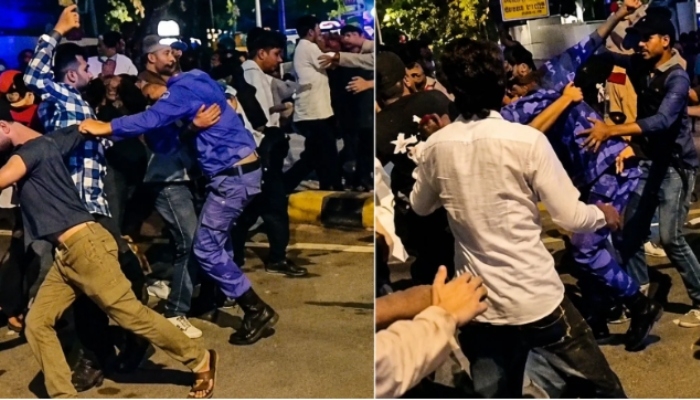
It's worth noting the timing of the protest; it coincided with the opening day of Parliament's Monsoon session, when the FCRA amendment bill was slated for introduction. The bill has faced significant pushback from NGOs accused of diverting foreign funds toward purposes other than those officially declared. The push for greater transparency around foreign funding has similarly drawn opposition from prominent figures affected by it, including Ladaki Activist Sonam Wangchuk and actresses such as Shabana Azmi.
Bollywood actress Shabana Azmi's support for Wangchuk explained in context of FCRA
As already discussed, Wangchuk's role in the CJP protest now needs no further explanation. He misused the foreign funds, got caught by the government in 2025, and now he revolted. Several Bollywood figures, including Anurag Kashyap, Swara Bhasker, Shreya Dhanwanthary, Zeenat Aman, Abhay Deol, Swanand Kirkire, Soni Razdan, Shabana Azmi, Ratna Pathak Shah, and Naseeruddin Shah, publicly backed Wangchuk's hunger strike. Whether that support reflects full awareness of the underlying facts, or a broader public narrative that's taken shape around him, is a separate question worth examining.
Azmi appeared at Jantar Mantar on July 19, 2026, expressing solidarity with the CJP's protest and Wangchuk's fast. This came the same morning Delhi Police hospitalized Wangchuk given his deteriorating health conditions. Azmi stood with CJP leaders in criticizing the Union Education Ministry over alleged structural corruption and leaked exam papers, calling for institutional accountability. She returned on July 20 ahead of the protest march. The CJP subsequently alleged that a vehicle carrying Azmi, Prakash Raj, Wangchuk's wife Gitanjali, and CJP founder Abhijeet Dipke came under a violent police assault, with over 170 people, more than 100 of them police personnel, reportedly injured.
Bollywood actress Shabana Azmi's support for Wangchuk explained in context of FCRA
As already discussed, Wangchuk's role in the CJP protest now needs no further explanation. He misused the foreign funds, got caught by the government in 2025, and now he revolted. Several Bollywood figures, including Anurag Kashyap, Swara Bhasker, Shreya Dhanwanthary, Zeenat Aman, Abhay Deol, Swanand Kirkire, Soni Razdan, Shabana Azmi, Ratna Pathak Shah, and Naseeruddin Shah, publicly backed Wangchuk's hunger strike. Whether that support reflects full awareness of the underlying facts, or a broader public narrative that's taken shape around him, is a separate question worth examining.
Azmi appeared at Jantar Mantar on July 19, 2026, expressing solidarity with the CJP's protest and Wangchuk's fast. This came the same morning Delhi Police hospitalized Wangchuk given his deteriorating health conditions. Azmi stood with CJP leaders in criticizing the Union Education Ministry over alleged structural corruption and leaked exam papers, calling for institutional accountability. She returned on July 20 ahead of the protest march. The CJP subsequently alleged that a vehicle carrying Azmi, Prakash Raj, Wangchuk's wife Gitanjali, and CJP founder Abhijeet Dipke came under a violent police assault, with over 170 people, more than 100 of them police personnel, reportedly injured.
ALSO READ: How 'Cockroach Party' founder Abhijeet Dipke 'supported separatists', spread fear in Kashmir during abrogation of Article 370
Azmi chairs the Governing Board of ActionAid Association (India), which is legally a domestic non-profit registered under Section 8 of the Companies Act, 2013 (formerly Section 25 of the 1956 Act), with an Indian board and staff. Operationally, though, ActionAid India is formally affiliated with ActionAid International, headquartered in Johannesburg and originally UK-incorporated, following the federation's global strategy while running India-specific projects funded via ActionAid UK and ActionAid International.

A Form FC-6 filing, the statutory return NGOs submit to the Home Ministry disclosing foreign contributions under FCRA, shows ActionAid received Rs 108.02 crore in foreign funds for the year ending March 2007, categorized under "Religious (Christian)." This traces back to ActionAid's founding as a UK child-sponsorship charity with Christian roots in 1972, before it repositioned as a secular, rights-based organization. A later audited filing (year ending March 2015, signed by B S R & Company and Executive Director Sandeep Chachra) recorded Rs 87.13 crore in foreign contributions: Rs 55.57 crore in restricted recurring donations, Rs 23.98 crore from restricted institutional donors, and Rs 2.06 lakh in general giving. Of this, Rs 48.58 crore was disbursed to grassroots partner NGOs, Rs 9.49 crore went to direct humanitarian work, and Rs 14.18 crore covered staff salaries, with smaller amounts for rent and travel. The federation's funders per that filing include the UK's Foreign, Commonwealth & Development Office, the European Commission, UN agencies, and the governments of Denmark, Norway, Italy, and Australia.
In April 2023, the Home Ministry asked the CBI to conduct a preliminary inquiry into four organizations over potential FCRA violations: the Centre for Equity Studies (led by Harsh Mander), Aman Biradari Trust, Oxfam India, and ActionAid Association. When that inquiry became a formal FIR in February 2024, it named only Harsh Mander and the Centre for Equity Studies, whose Delhi offices were raided. ActionAid was not raided, and no FIR was ever filed against it or its board.
Azmi's Jantar Mantar appearance fits a pattern spanning over two decades. As a nominated Rajya Sabha MP in 2002, she called for Narendra Modi's removal as Gujarat Chief Minister after the Godhra violence, visited relief camps in Ahmedabad, and told reporters the state administration was running what she called a "Modi Massacre Machine." On April 6, 2002, she co-signed a civil society statement with Javed Akhtar and Farooque Shaikh invoking NHRC findings to argue for Modi's removal. She has continued to surface in Modi-related controversies since; signing a 2014 pre-election appeal for secular candidates; supporting the 2015 "Award Wapsi" protests (without returning her own award); leading 2018 protests over the Kathua and Unnao cases; drawing attention in 2019 for criticizing the "anti-national" label applied to government critics; opposing the CAA/NRC and condemning police action against students at Jamia Millia Islamia and AMU; and criticizing the 2022 release of 11 men convicted in the Bilkis Bano gang-rape case.
In April 2023, the Home Ministry asked the CBI to conduct a preliminary inquiry into four organizations over potential FCRA violations: the Centre for Equity Studies (led by Harsh Mander), Aman Biradari Trust, Oxfam India, and ActionAid Association. When that inquiry became a formal FIR in February 2024, it named only Harsh Mander and the Centre for Equity Studies, whose Delhi offices were raided. ActionAid was not raided, and no FIR was ever filed against it or its board.
Azmi's Jantar Mantar appearance fits a pattern spanning over two decades. As a nominated Rajya Sabha MP in 2002, she called for Narendra Modi's removal as Gujarat Chief Minister after the Godhra violence, visited relief camps in Ahmedabad, and told reporters the state administration was running what she called a "Modi Massacre Machine." On April 6, 2002, she co-signed a civil society statement with Javed Akhtar and Farooque Shaikh invoking NHRC findings to argue for Modi's removal. She has continued to surface in Modi-related controversies since; signing a 2014 pre-election appeal for secular candidates; supporting the 2015 "Award Wapsi" protests (without returning her own award); leading 2018 protests over the Kathua and Unnao cases; drawing attention in 2019 for criticizing the "anti-national" label applied to government critics; opposing the CAA/NRC and condemning police action against students at Jamia Millia Islamia and AMU; and criticizing the 2022 release of 11 men convicted in the Bilkis Bano gang-rape case.

Viewed against that history, her Jantar Mantar appearance is consistent with a stance she's held since 2002, this time directed at a different government initiative, with her NGO's older paperwork resurfacing alongside it.
Nationwide churches plan to back CJP; how they and political parties including DMK, AITC, join Congress, CPIM demanded its rollback
In an exclusive update obtained by Newsbharati, several Christian missionaries are planning to organize a protest against the Indian government over the alleged NEET paper leak scam. The missionaries are planning to launch protests in Mumbai, Delhi, etc where students from Christian colleges will be sent to participate in the protest.
It is important to note that multiple Christian churches and missionary organisations in Kerala voiced apprehensions over the recently notified amendments to the Foreign Contribution (Regulation) Rules, issued by the Union Ministry of Home Affairs on June 22. These bodies alleged that certain provisions within the amended rules could potentially 'impinge upon freedom of expression and religion.'
The revised rules significantly strengthen disclosure obligations for organisations receiving foreign contributions. Under the new framework, NGOs and associations registered under the Foreign Contribution (Regulation) Act, 2010, are now required to provide detailed information about their activities, geographical areas of operation, social media accounts, and official websites. Furthermore, the amendments introduce an additional layer of transparency by mandating that associations disclose whether they or any of their key functionaries have released any form of publication during the year, which includes books, magazines, newspaper articles, and other similar content.
Nationwide churches plan to back CJP; how they and political parties including DMK, AITC, join Congress, CPIM demanded its rollback
In an exclusive update obtained by Newsbharati, several Christian missionaries are planning to organize a protest against the Indian government over the alleged NEET paper leak scam. The missionaries are planning to launch protests in Mumbai, Delhi, etc where students from Christian colleges will be sent to participate in the protest.
It is important to note that multiple Christian churches and missionary organisations in Kerala voiced apprehensions over the recently notified amendments to the Foreign Contribution (Regulation) Rules, issued by the Union Ministry of Home Affairs on June 22. These bodies alleged that certain provisions within the amended rules could potentially 'impinge upon freedom of expression and religion.'
The revised rules significantly strengthen disclosure obligations for organisations receiving foreign contributions. Under the new framework, NGOs and associations registered under the Foreign Contribution (Regulation) Act, 2010, are now required to provide detailed information about their activities, geographical areas of operation, social media accounts, and official websites. Furthermore, the amendments introduce an additional layer of transparency by mandating that associations disclose whether they or any of their key functionaries have released any form of publication during the year, which includes books, magazines, newspaper articles, and other similar content.
ALSO READ: Pakistan links to the 'Cockroach Janata Party'? Netizens react to 'party's' Islamic country followers, debate sparks
Reacting to the changes, Fr Dr Michael Pulickal, secretary of the Jagratha Commission of the Kerala Catholic Bishops’ Council (KCBC), said several provisions in the amended rules have raised serious concerns among church-run institutions and voluntary organisations. The Kerala Latin Catholic Association (KLCA) said the amendments had been introduced without adequate consultation with stakeholders directly affected by the law. Bishop Yuhanon Mar Diascoros, associated with the Syrian Church, commented on the same development, saying that the amendment was undemocratic and that it would affect the 'noble' cause of charity undertaken by the churches.
Reacting to the changes, Fr Dr Michael Pulickal, secretary of the Jagratha Commission of the Kerala Catholic Bishops’ Council (KCBC), said several provisions in the amended rules have raised serious concerns among church-run institutions and voluntary organisations. The Kerala Latin Catholic Association (KLCA) said the amendments had been introduced without adequate consultation with stakeholders directly affected by the law. Bishop Yuhanon Mar Diascoros, associated with the Syrian Church, commented on the same development, saying that the amendment was undemocratic and that it would affect the 'noble' cause of charity undertaken by the churches.

Earlier, political parties like the Congress, CPIM, DMK, AITC, SDPI, and other minority groups voiced their opinion against the FCRA. Demanding the withdrawal of the amendment, they unitedly indicated that the bill was being introduced with alleged malicious intent.
Parent Foreign Contribution (Regulation) Act, 2010, not altered; just the rules tightened
It is important to note that the recent amendment proposed by the Indian government in no way alters the main FCRA itself, the Foreign Contribution (Regulation) Act, 2010. However, the Rules, which are the subordinate, delegated laws formed under the parent Act, are what have been changed.
As per the official gazette, if any religious NGO registered under FCRA wants to change its area of operation or alter any purpose from its already available registration certificate, it must seek government approval. Notably, the Central Government can then approve or reject the application after due inquiry.
Parent Foreign Contribution (Regulation) Act, 2010, not altered; just the rules tightened
It is important to note that the recent amendment proposed by the Indian government in no way alters the main FCRA itself, the Foreign Contribution (Regulation) Act, 2010. However, the Rules, which are the subordinate, delegated laws formed under the parent Act, are what have been changed.
As per the official gazette, if any religious NGO registered under FCRA wants to change its area of operation or alter any purpose from its already available registration certificate, it must seek government approval. Notably, the Central Government can then approve or reject the application after due inquiry.

This section lists 16 permitted activities that religious organisations can carry out using foreign contributions, which include, construction and maintenance of places of worship, preservation of sacred scriptures, supporting institutions studying religious philosophy, pilgrim amenities, dharamshalas and langars, religious education and meditation retreats, devotional music and theatre, documentation of indigenous faith practices, protection of sacred relics and heritage sites, archiving of religious rituals, inter-faith dialogue, religious publications and research, religious libraries and museums, faith-based counselling and de-addiction centres, training in traditional sacred crafts, and burial or cremation ground maintenance. However, any of these activities undertaken with the intention of performing proselytisation has been specifically excluded.
CPIM, Congress, all those opposing FCRA protecting proselytisation networks?
A crucial distinction that must be understood is that the recent government notification does not amend the parent legislation, the Foreign Contribution (Regulation) Act, 2010, in any manner whatsoever. What has been revised are the Rules, which are subordinate or delegated legislation framed under the authority of the parent Act. These Rules serve as the operational framework that governs how the provisions of the Act are implemented on the ground.
Opposition parties and missionary organisations raising objections to these changes must recognise this fundamental difference. The core Act remains entirely intact and unchanged. What the government has done is tighten the procedural rules, particularly those governing foreign funding channelled into activities associated with proselytisation. This is well within the executive's legitimate rule-making authority under the Act and does not constitute any overreach or alteration of the law as passed by Parliament.
In essence, the criticism that the government is dismantling the FCRA framework is misplaced. The amendments are targeted, subordinate, and procedural in nature, aimed at bringing greater accountability and transparency to how foreign contributions are received and utilised, especially in the context of religious conversion activities. Those opposing these rules would do well to engage with the actual text of the amendment rather than misrepresent its scope and intent.
By demanding a rollback of the FCRA Amendment Rules, Congress and CPI(M) and all those opposing the amendment are, knowingly or otherwise, providing a political shield to foreign-funded proselytisation networks operating across India. These rules specifically tighten oversight on religious conversion activities financed from abroad. The Opposition's resistance, therefore, raises serious questions about whose interests they are truly representing.
Notably, this is not the first time that the opposition parties have opposed the said amendment. On April 2, 2026, the Parliament witnessed a ruckus as opposition parties, including the Congress, Left parties, and Trinamool Congress, staged a visible protest in the Parliament premises, holding banners and demanding the immediate withdrawal of the Bill. They described the FCRA Bill as ‘draconian’ and an attempt to grant sweeping executive powers that could lead to arbitrary action.
CPIM, Congress, all those opposing FCRA protecting proselytisation networks?
A crucial distinction that must be understood is that the recent government notification does not amend the parent legislation, the Foreign Contribution (Regulation) Act, 2010, in any manner whatsoever. What has been revised are the Rules, which are subordinate or delegated legislation framed under the authority of the parent Act. These Rules serve as the operational framework that governs how the provisions of the Act are implemented on the ground.
Opposition parties and missionary organisations raising objections to these changes must recognise this fundamental difference. The core Act remains entirely intact and unchanged. What the government has done is tighten the procedural rules, particularly those governing foreign funding channelled into activities associated with proselytisation. This is well within the executive's legitimate rule-making authority under the Act and does not constitute any overreach or alteration of the law as passed by Parliament.
In essence, the criticism that the government is dismantling the FCRA framework is misplaced. The amendments are targeted, subordinate, and procedural in nature, aimed at bringing greater accountability and transparency to how foreign contributions are received and utilised, especially in the context of religious conversion activities. Those opposing these rules would do well to engage with the actual text of the amendment rather than misrepresent its scope and intent.
By demanding a rollback of the FCRA Amendment Rules, Congress and CPI(M) and all those opposing the amendment are, knowingly or otherwise, providing a political shield to foreign-funded proselytisation networks operating across India. These rules specifically tighten oversight on religious conversion activities financed from abroad. The Opposition's resistance, therefore, raises serious questions about whose interests they are truly representing.
Notably, this is not the first time that the opposition parties have opposed the said amendment. On April 2, 2026, the Parliament witnessed a ruckus as opposition parties, including the Congress, Left parties, and Trinamool Congress, staged a visible protest in the Parliament premises, holding banners and demanding the immediate withdrawal of the Bill. They described the FCRA Bill as ‘draconian’ and an attempt to grant sweeping executive powers that could lead to arbitrary action.

Interestingly, the Congress also joined in the recent protest by CJP against the Indian government alongside the Communists and the Islamists.
International support for the demands of rollback of FCRA
The proposed changes have also drawn criticism from abroad, particularly in the United States. James Risch, Chairman of the US Senate Foreign Relations Committee, described the amendments as "deeply concerning" and cautioned against using the FCRA to harass US-linked Christian organisations. Democratic congressional staff also reportedly expressed concerns over the proposed asset-management provisions, describing them as an issue of bipartisan interest.
The reason is not difficult to understand. The United States has consistently remained the largest source of foreign contributions to India. Over the years, American philanthropic foundations, churches, missionary organisations, charitable trusts and advocacy groups have supported thousands of Indian non-governmental organisations working in education, healthcare, disaster relief, human rights and community development. Any tightening of the FCRA framework therefore has direct implications for donors and recipient organisations with longstanding financial and institutional links between the two countries.
This also reflects a bigger difference in outlook. Many Western governments and advocacy groups view cross-border philanthropy as an important pillar of civil society and democratic engagement. India, on the other hand, maintains that foreign funding must remain subject to strict oversight to prevent its misuse for political mobilisation, religious conversion, public unrest or activities that threaten national security. The debate over the FCRA has therefore evolved into something much larger than a regulatory dispute; it has become a broader conversation about where international philanthropy ends and national sovereignty begins.
International support for the demands of rollback of FCRA
The proposed changes have also drawn criticism from abroad, particularly in the United States. James Risch, Chairman of the US Senate Foreign Relations Committee, described the amendments as "deeply concerning" and cautioned against using the FCRA to harass US-linked Christian organisations. Democratic congressional staff also reportedly expressed concerns over the proposed asset-management provisions, describing them as an issue of bipartisan interest.
The reason is not difficult to understand. The United States has consistently remained the largest source of foreign contributions to India. Over the years, American philanthropic foundations, churches, missionary organisations, charitable trusts and advocacy groups have supported thousands of Indian non-governmental organisations working in education, healthcare, disaster relief, human rights and community development. Any tightening of the FCRA framework therefore has direct implications for donors and recipient organisations with longstanding financial and institutional links between the two countries.
This also reflects a bigger difference in outlook. Many Western governments and advocacy groups view cross-border philanthropy as an important pillar of civil society and democratic engagement. India, on the other hand, maintains that foreign funding must remain subject to strict oversight to prevent its misuse for political mobilisation, religious conversion, public unrest or activities that threaten national security. The debate over the FCRA has therefore evolved into something much larger than a regulatory dispute; it has become a broader conversation about where international philanthropy ends and national sovereignty begins.
ALSO READ: Leaked WhatsApp chats from 'CJP Protest Pune' show how 'cockroaches' consumed alcohol to celebrate a mere gathering of 300
Much of the criticism followed sustained lobbying by US-based Christian organisations, which argued that the proposed changes could restrict the activities of faith-based charities operating in India. New Delhi, however, has maintained that the amendments do not impose a blanket ban on foreign funding. The government's position is that the changes are intended to strengthen oversight and apply only to organisations found to violate the law.
The United States Commission on International Religious Freedom, in its March 2026 report, again recommended that India be designated a "Country of Particular Concern" over issues relating to religious freedom. India has consistently rejected USCIRF's findings, and the Ministry of External Affairs categorically dismissed the report as "motivated and biased" and based on "questionable sources." It is also worth noting that USCIRF is an advisory body. Its recommendations are not binding, and the US State Department has repeatedly declined to designate India as a "Country of Particular Concern."
Licenses cancelled over misutilising foreign contributions in the past
The Foreign Contribution (Regulation) Act (FCRA) has been viewed as the most debated regulatory instrument governing India's NGO sector, but in fact, it is not. It is often characterized as a restrictive tool. However, a critical assessment must acknowledge its fundamental purpose, ensuring that foreign funds entering India's civil society ecosystem are received and utilised with full transparency.
Foreign contributions can legitimately support charitable, educational, and humanitarian work. At the same time, nations have a reasonable interest in monitoring how foreign money flows into domestic civil society. Most countries maintain some form of regulatory framework for this purpose, and India is no exception.
The FCRA has emerged as one of the government's principal tools for monitoring the flow and utilisation of foreign funds by NGOs and religious organisations operating in India. Over the past decade, investigations conducted under the FCRA framework have led to the suspension or cancellation of the licences of several organisations accused of violating funding norms, misutilising foreign contributions, or engaging in activities that authorities alleged were linked to unlawful religious conversion practices. The Act requires organisations receiving foreign funds to disclose their sources of funding, maintain separate accounts, and submit periodic financial reports, thereby increasing
Much of the criticism followed sustained lobbying by US-based Christian organisations, which argued that the proposed changes could restrict the activities of faith-based charities operating in India. New Delhi, however, has maintained that the amendments do not impose a blanket ban on foreign funding. The government's position is that the changes are intended to strengthen oversight and apply only to organisations found to violate the law.
The United States Commission on International Religious Freedom, in its March 2026 report, again recommended that India be designated a "Country of Particular Concern" over issues relating to religious freedom. India has consistently rejected USCIRF's findings, and the Ministry of External Affairs categorically dismissed the report as "motivated and biased" and based on "questionable sources." It is also worth noting that USCIRF is an advisory body. Its recommendations are not binding, and the US State Department has repeatedly declined to designate India as a "Country of Particular Concern."
Licenses cancelled over misutilising foreign contributions in the past
The Foreign Contribution (Regulation) Act (FCRA) has been viewed as the most debated regulatory instrument governing India's NGO sector, but in fact, it is not. It is often characterized as a restrictive tool. However, a critical assessment must acknowledge its fundamental purpose, ensuring that foreign funds entering India's civil society ecosystem are received and utilised with full transparency.
Foreign contributions can legitimately support charitable, educational, and humanitarian work. At the same time, nations have a reasonable interest in monitoring how foreign money flows into domestic civil society. Most countries maintain some form of regulatory framework for this purpose, and India is no exception.
The FCRA has emerged as one of the government's principal tools for monitoring the flow and utilisation of foreign funds by NGOs and religious organisations operating in India. Over the past decade, investigations conducted under the FCRA framework have led to the suspension or cancellation of the licences of several organisations accused of violating funding norms, misutilising foreign contributions, or engaging in activities that authorities alleged were linked to unlawful religious conversion practices. The Act requires organisations receiving foreign funds to disclose their sources of funding, maintain separate accounts, and submit periodic financial reports, thereby increasing
transparency and regulatory oversight.
Union Home Minister Amit Shah has consistently called for stricter FCRA regulations time and again, arguing that while genuine social service organisations have nothing to fear, some NGOs have allegedly misused foreign funds for activities detrimental to national interests, including religious conversions and other unlawful activities. In 2022, Shah stated that the government had strengthened the FCRA and cancelled the licences of certain organisations because some NGOs were allegedly involved in religious conversions, anti-national activities, and misuse of foreign contributions. According to the government, stronger compliance requirements are intended to enhance accountability, ensure transparency in foreign funding, and safeguard national interests while allowing legitimate charitable and developmental work to continue.
US deep state has been at the center of everything; we're just late in recognizing it, maybe
The ongoing protests should be viewed not merely as a spontaneous expression of domestic discontent but in the context of allegations of coordinated external influence. Reports alleging that journalists and social media influencers were offered between Rs 50,000 and Rs 65,000 for a single post supporting the CJP have raised serious questions about the scale of the campaign. With nearly 10,000 social media posts reportedly published in support of the so-called "peaceful" protests, the estimated expenditure on digital outreach alone could amount to nearly Rs 65 crore. When additional expenses such as transportation, accommodation, food, logistics, and mobilization are considered, the obvious question arises: who is financing such a large-scale operation?
The role of Dipke has also attracted attention. Having returned from the United States to spearhead the agitation, he is said to have conceptualized the Cockroach Janata Party while in the US. At the same time, the US Senate Foreign Relations Committee publicly expressed concerns over India's proposed FCRA amendment. Interestingly, several organisations and political groups opposing the amendment, including church-linked groups, missionary networks, the Congress, communist organisations, and Islamist groups such as the SDPI and AISF, have also demanded that the legislation be withdrawn, adding another dimension to the debate surrounding the protests.
On July 17, three days before the violence, the US Embassy in New Delhi issued a security advisory warning American citizens about anticipated large gatherings around Jantar Mantar, Parliament House, and Kisan Ghat on July 20 and 21. The advisory specifically mentioned that nearly 250 farmer organisations were expected to converge on Kisan Ghat on motorcycles on July 21, cautioning that significant disruptions were likely across the capital.
For many observers, the timing of this advisory has raised questions. The anticipated protests coincided with the opening of the Monsoon Session of Parliament, the very period during which the Foreign Contribution (Regulation) Act (FCRA) Amendment Bill was scheduled to be introduced. While such developments do not, by themselves, establish foreign involvement, they have strengthened calls for a thorough investigation into the planning, funding, and coordination behind the agitation.
Ultimately, the debate surrounding the protests extends far beyond a single policy issue. It touches upon larger concerns of national sovereignty, transparency in political activism, and the influence of foreign-funded networks on India's democratic processes. External financing or coordinated attempts to influence domestic policy warrant a fair, impartial, and evidence-based investigation. Equally, safeguarding democratic dissent must go hand in hand with ensuring that public movements remain transparent, accountable, and free from undisclosed external influence.